Why Should You Integrate a Live Odds API into a Betting App

November 20, 2025

9 min read
The sports betting industry is growing fast, and users now expect instant updates. They don’t want outdated odds or slow information. They want real-time data they can trust.
Because of this, betting apps need stronger tools to keep users informed during every moment of a game. That’s where a Sports Odds API becomes important.
Modern bettors expect quick updates, accurate pricing, and reliable live odds before placing a wager. If your app can’t deliver that, they will switch to a platform that can.
A Live Sports Odds API helps solve these issues by automatically delivering a live sports odds feed from trusted sources. This improves accuracy and creates a better experience for your users.
In this blog, you’ll learn what a live odds feed is, why you should integrate a Live Odds API into a Betting App, how it improves betting accuracy, and the steps to add it to your platform. Let’s begin.
What is a Live Odds API?
A Live Odds API is a service that sends real-time betting odds straight into your app. Instead of updating odds manually or checking multiple data sources, the API does all the work for you by delivering fresh, accurate odds every few seconds.
During a match, odds can change fast. A goal, a foul, an injury, or even a small change in the game can affect the betting markets. A live sports odds feed captures these moments instantly and updates your platform without delay. This keeps your app reliable and helps bettors feel confident while placing bets.
A live sports odds API usually provides pre-match odds, in-play odds, moneylines bet, spreads, totals, and many prop markets. Some APIs also include live scores and basic match stats to give users more helpful information while betting.
In simple terms, a Live Odds API acts as a connection between official odds providers and your sports betting app. It ensures you always show real-time sports odds that are fast, accurate, and trusted by users.
Key Benefits of Integrating a Live Odds API into a Betting App
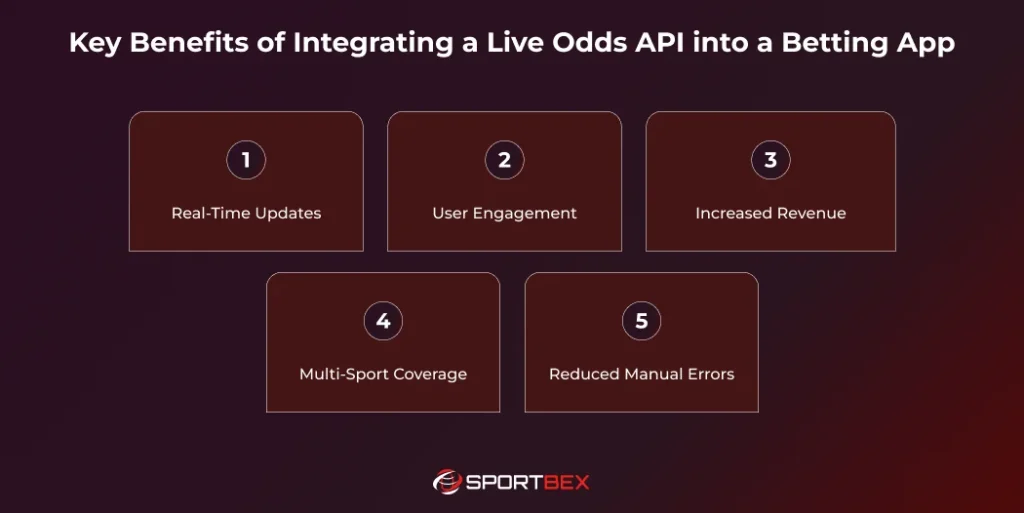
1. Real-time updates
One of the biggest benefits of a Live Odds API is how quickly it updates the betting markets. Bettors depend on timing, and even a few seconds of delay can change the value of a bet. Real-time odds make sure users never see outdated information, which builds trust and reduces confusion.
Fast updates also create a smoother experience during live games where everything happens quickly. This helps your betting app stand out from platforms that still use slower or less reliable systems.
2. User engagement
When users see fresh and accurate odds, they stay active for longer. Real-time updates make bettors feel more confident, especially during key moments in a match. Features like live markets and instant pricing changes keep the app exciting to use.
A reliable Live Odds API keeps your platform active throughout the entire game, not just before it starts. This encourages users to explore more markets, place more bets, and stay connected to the action.
3. Increased revenue
Real-time odds encourage users to place more bets because they can trust the information they see. When odds are accurate and update instantly, people feel more confident betting, especially during live or in-play betting. This type of betting is growing fast, and it relies on quick and reliable odds.
More user activity means more transactions, which increases your revenue. A good odds feed also helps keep pricing accurate, reducing unnecessary financial losses. This improves your margins and strengthens your overall risk control.
4. Multi-sport coverage
Most API for Sports Betting solutions cover a large variety of sports, including football, cricket, basketball, baseball, tennis, and many others. This helps you attract a wider audience and support users with different sports interests.
Instead of using different feeds for each sport, one API gives you everything in one place. This saves time, reduces technical complexity, and makes your platform easier to scale as your business grows.
5. Reduced manual errors
Updating odds manually is slow and risky. A small mistake can lead to serious financial issues. A Live Odds API removes these risks by automating the entire process.
Because the updates come directly from trusted sources, the odds on your platform remain consistent and accurate. This builds user trust and prevents costly mistakes. Your team also gets more time to focus on improving features instead of constantly monitoring odds.
How a Live Odds API Improves Betting Accuracy
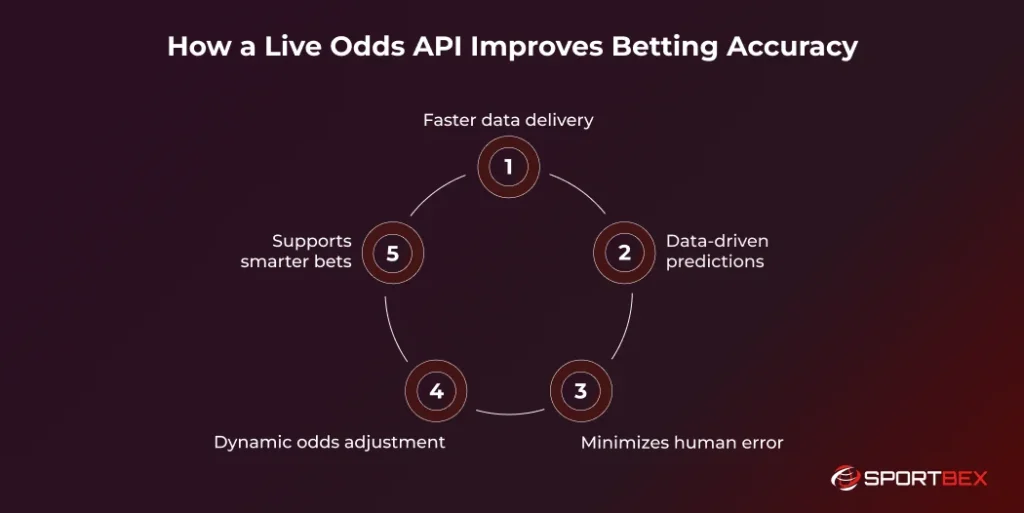
1. Faster data delivery
Accuracy starts with how fast your app receives odds. A Live betting Odds API sends updates almost instantly, and a real-time sports odds data feed API further enhances speed and reliability, so users never see outdated numbers.
This matters even more during live matches because odds can change many times in a minute. Fast updates help users react at the right moment instead of guessing.
2. Data-driven predictions
When users can see real-time sports odds, they understand the game better. Changing odds show what’s happening. Maybe a team is playing stronger, or the match is shifting.
With a Live Sports Odds API, your app can share these updates quickly. Bettors can make predictions based on real data, not just feeling. You can also add small tools, trends, or insights to make things even easier for them.
3. Minimizes human error
Updating odds by hand is slow and can easily lead to mistakes. Even one wrong number can confuse users or cause losses. Manual updates also take time, which increases the chance of delays and inconsistencies.
A Live Odds API avoids this. All updates are automatic and come directly from trusted sources. Your platform stays accurate and much easier to manage, without the stress of manual work.
4. Dynamic odds adjustment
A match can change in a second. A goal, a missed chance, an injury, or any shift in pressure can affect the odds right away.
A Live Odds API updates your odds the moment something happens. Users see these changes instantly, which makes your app feel active and reliable. It also helps them trust that your odds always match what’s happening on the field.
5. Supports smarter bets
When users get correct and real-time odds, they make better choices. They know when to place a bet, when to wait, and when the odds aren’t good.
This makes them feel more confident and satisfied with your platform. Over time, they come back more often and stay loyal because your app helps them make smarter decisions. This leads to a better overall user experience and more consistent engagement.
Steps to Integrate a Live Odds API into Your Betting App
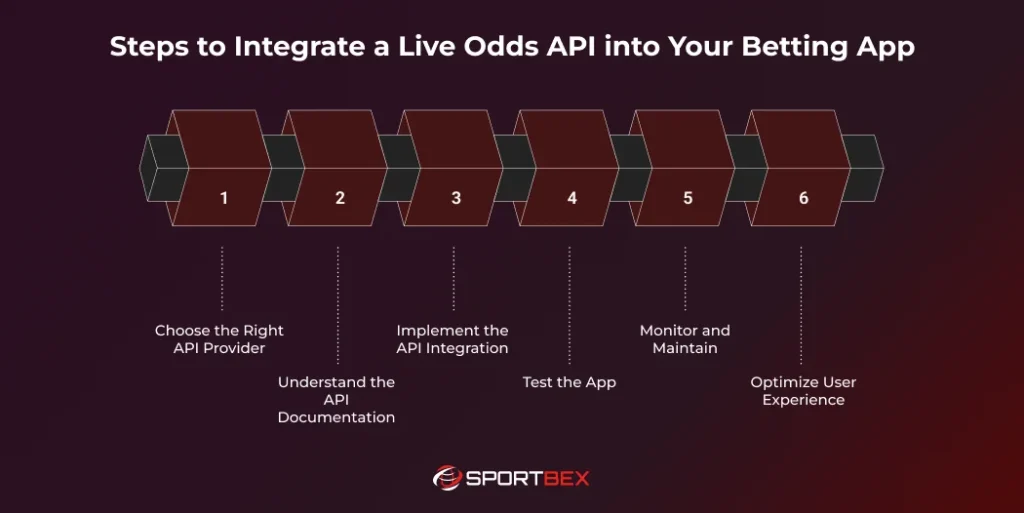
Step 1: Choose the Right API Provider
Your first step is choosing a reliable and trusted provider. Look for accuracy, fast updates, wide sports coverage, fair pricing, and good customer support. A strong Sports API Provider that offers an odds feed API ensures different market types, quick refresh rates, and stable uptime so your app runs smoothly.
This stage is also a good time to explore options through Odds API Provider resources. Compare a few providers, check their features, and choose one that matches your needs, budget, and long-term plans.
Step 2: Understand the API Documentation
Before connecting anything, take time to read the documentation carefully. It explains how to set up the connection, how each endpoint works, and how to authenticate your app. You’ll also learn about data formats, response structures, and rate limits.
Clear and well-understood documentation saves your team a lot of development time and helps prevent mistakes during integration.
Step 3: Implement the API Integration
Once your developers understand the documentation, they can start connecting your backend to the live odds feed. This API integration in betting ensures real-time data flows without delays. Additional technical materials can be used as needed, avoiding repeated sources.
During this stage, you may also explore additional technical materials related to sport API integration, but use them only when needed to avoid repeating the same sources too often.
Step 4: Test the App
After the integration is complete, test your app thoroughly. Make sure odds update correctly, load quickly, and stay aligned with what’s happening in the live match. Also test how the system performs during busy times, such as major games or tournaments.
Testing helps you catch issues early and gives you more confidence that your platform will work smoothly once users start betting.
Step 5: Monitor and Maintain
Once your app is live, ongoing monitoring becomes important. Watch the update speed, check error logs, and review data accuracy regularly. Stay aware of version updates from your provider to keep everything compatible.
Good maintenance prevents downtime and ensures your users always get a smooth and reliable experience. It also helps you catch small issues early before they turn into bigger problems.
Step 6: Optimize User Experience
Odds data should be easy for users to read. Use clean layouts, simple formatting, and clear labels. Organize your live markets in a way that helps users quickly find what they want.
A smooth and user-friendly interface builds confidence and encourages more betting activity. This is also a good place to include resources like live Sports Betting Odds or Sportsbooks Odds, used only once, to give users helpful information without repeating keywords too often.
Get a Ready-Made Platform On Rent.
Get Started Today
Conclusion
A sports betting app can only succeed when it gives users fast and accurate information. Bettors want updates that match what is happening in the game right now. They don’t want slow or outdated odds.
When users see fresh updates the moment something changes, they feel more comfortable placing bets. This builds trust and makes the experience smoother. It also reduces the work for your team because you don’t have to update odds by hand.
If you are creating a new betting app or improving an existing one, adding a live odds feed is no longer optional. It has become a basic feature that users expect from any modern sports betting platform.
As the sports betting industry grows, the apps that use reliable data and simple, user-friendly features will stay ahead. Integrating a Live Odds API is one of the best steps you can take to give users a better experience and support your platform’s long-term growth.
Frequently Asked Questions
A Live Odds API is a data service that delivers real-time betting odds directly to your app. It updates automatically whenever something changes in the game, helping users see the latest and most accurate odds.
It gives users fast and accurate odds, which improves their betting experience. It also reduces manual work, lowers the chance of errors, and helps your platform stay competitive.
Users trust your platform more when the odds update quickly and match what’s happening in the game. Real-time information helps them feel confident while placing bets.
Yes. Live or in-play betting depends heavily on quick updates. A Live Odds API delivers odds in real time, making live betting smoother and more reliable for users.
Most providers offer odds for popular sports like football, cricket, basketball, baseball, tennis, and many others. Coverage depends on the sports API provider you choose.
Recent Blog



How to build a low-latency live sports streaming app using APIs
September 9, 2026
 12 min

Cricket API Uptime & Availability: What Developers Should Know
August 27, 2026
13 min
Access Real-Time Sports Odds and Boost Your Betting Platform
API Free Trial