Why Developers Prefer API for Sports Data for Real-Time Updates

April 16, 2026

10 min read

Sports move fast. A goal is scored, a wicket falls, a player gets injured and fans want to know about it instantly. Waiting even a few minutes for an update feels too long. That is why developers who build sports apps always look for the fastest and most reliable way to serve data to their users.
It has completely changed the way sports applications are built and delivered. Instead of collecting data manually or building complex systems from scratch, developers can simply plug into a ready-made data feed using an API for Sports Data and focus on building great user experiences.
From live score apps and fantasy sports platforms to betting tools and analytics dashboards, every modern sports application depends on a reliable sports data API. The demand for accurate, instant and scalable data has never been higher and the right API makes all of that possible without the need for heavy infrastructure.
In this blog, we will explore what a sports data API is and why real-time data matters so much. This complete guide on Why Developers Prefer API for Sports Data for Real-Time Updates covers everything from key reasons and common use cases to the real challenges of building without one.
What is an API for Sports Data?
An API for sports data is a software interface that lets developers access sports-related information from an external data provider. This data can include:
- Live match scores
- Player statistics
- Team standings
- Injury updates
- Betting odds
- Match fixtures
The way it works is simple. Your application sends a request to the API, and it returns the required data in formats like JSON or XML. It is fast and efficient. A sports API for developers works like a live feed, allowing you to receive real-time data without managing complex systems.
If you are new to this, a proper sports data api Guide can help you understand how to integrate it easily. Many companies offer API for sports data solutions covering different sports, making them essential for building modern sports applications.
Why Real-Time Data Matters in Sports Applications
Sports applications depend heavily on Real-Time Sports Data. In live sports, every second matters. A small delay in updating scores or stats can confuse users and reduce their trust in the platform. People expect instant updates, especially during live matches where things change quickly.
For example:
- In live score apps, users expect instant updates
- In betting platforms, real-time odds are critical
- In fantasy sports, player stats must update continuously
These use cases clearly show how important speed and accuracy are. If the data is delayed, users may leave the platform or switch to another app that provides faster updates.
A Real-time sports data API helps solve this problem by delivering information instantly and accurately. It ensures that users always see the latest data without any delay, which improves engagement and reliability.
When developers use a Live sports data API, they can provide a smooth experience where updates happen automatically in real time. This not only improves user satisfaction but also helps in building a strong and trusted sports application.
Key Reasons Developers Prefer API for Sports Data

Developers choose an API for Sports Data because it offers multiple benefits that are difficult to achieve with manual systems.
Real-Time Data Access
One of the biggest advantages of using an API for Sports Data is instant access to live information. In sports applications, timing is everything and users expect updates the moment something happens during a match.
Developers can fetch:
- Live scores
- Match updates
- Player statistics
This real-time access helps developers build fast and responsive applications with accurate and up-to-date information. A Live sports data API continuously delivers the latest updates, allowing users to stay informed in real time and enjoy a smooth, reliable experience.
Comprehensive Data Coverage
A good sports data API provides data for multiple sports, leagues and tournaments, making it a complete solution for developers.
This includes:
- Football
- Cricket
- Basketball
- Tennis
With a single integration, developers can access a wide range of data without connecting to multiple sources. This makes it easier to build scalable platforms that offer diverse and engaging sports content.
Ease of Integration and Speed
Developers prefer solutions that are simple and quick to implement. A well-designed API makes the integration process smooth and developer-friendly, saving both time and effort.
Most APIs come with:
- Clear documentation
- Ready-to-use endpoints
- Quick setup process
This makes it easy to integrate a Sports API for developers into applications without complex development work. As a result, developers can launch features faster and focus more on improving the overall user experience.
High Reliability and Data Consistency
When you build a sports app, downtime is not an option, especially during major live events. A trusted API for sports data provider ensures smooth performance with features like:
- 99.9% uptime guarantees
- Redundant servers
- Real-time monitoring
This helps keep the data flowing without interruption, even during high-traffic matches.
Data consistency is equally important for stable applications. When working with an Accurate Sports API Data provider, the data structure remains uniform across all sports and matches, making it easier to manage and integrate. This reduces development errors, minimizes bugs and ensures a reliable experience for users.
Customization and Flexibility
Every application has different requirements. A well-designed API offers flexibility, allowing developers to choose exactly what data they need.
They can:
- Select specific leagues
- Filter match data
- Customize data requests
A well-structured API allows you to request only the required data by filtering based on sport, league, team, player or time period. This makes the application more efficient, faster, and optimized for performance, while also ensuring better resource usage.
Scalability
Traffic on a sports app is never steady. During major events like the FIFA World Cup final or IPL playoffs, user activity can increase suddenly by 10x or more within minutes. A well-built system ensures the platform continues to perform smoothly even under heavy load.
An API for sports data is designed to handle this kind of high demand without slowing down or crashing. It supports:
- Sudden traffic spikes during live matches
- High concurrent user requests
- Continuous real-time data updates
- Stable performance under peak load
When you partner with a reputable Sports data APIs Provider, you get infrastructure that automatically scales with traffic. This ensures your application remains stable and responsive, even during the most critical live moments.
Automation
Automation is one of the biggest advantages of using a sports data API because it removes the need for manual work in updating sports information. In traditional systems, developers or teams would have to constantly track matches, collect data and update it manually, which is slow and highly error-prone.
They:
- Fetch live sports data directly from trusted sources
- Update scores, stats, and events in real time
- Reduce dependency on manual data entry
This automation not only saves a lot of time but also improves accuracy and reliability. Developers can focus more on building features like better UI, analytics and user experience instead of worrying about managing or updating data constantly.
Common Use Cases of Sports Data APIs
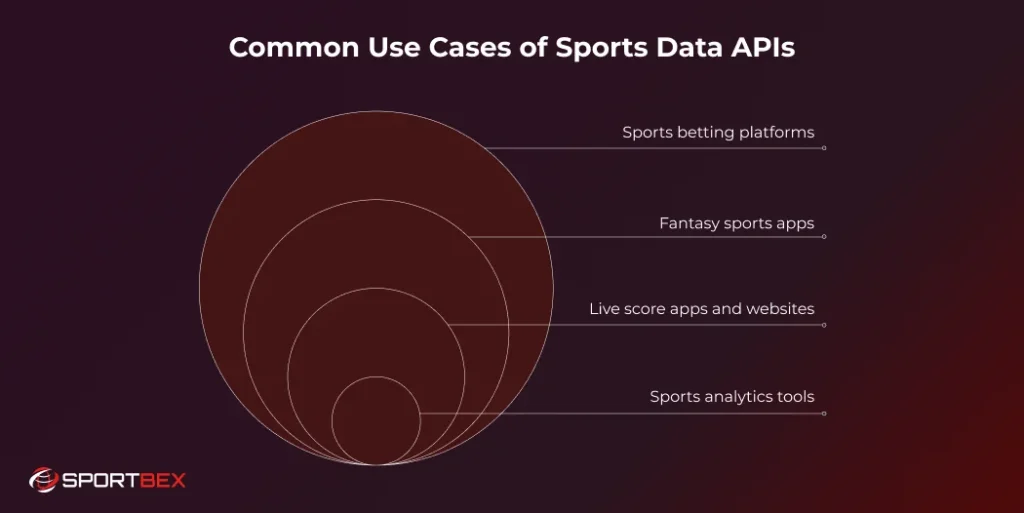
Sports data APIs are used across different types of platforms to deliver real-time information and improve user experience. Let’s look at some common use cases.
Sports betting platforms
Betting platforms are among the most demanding consumers of sports data. They need live odds, match statistics, real-time events and score updates, all delivered with millisecond-level accuracy. This is one of the most important Sports API Use Cases where fast and reliable data is essential. An API handles all of this seamlessly. Without reliable live data, a betting platform cannot function., a betting platform simply cannot function.
Fantasy sports apps
Fantasy platforms like Dream11, FanDuel and MPL use real-time player data to run contests smoothly. They provide live updates like scores, stats, and injuries to keep users informed instantly. A Live Sports Data Provider ensures accurate and reliable information for a better gaming experience.
Live score apps and websites
This is the most popular use case for a live sports data API. Millions of fans across the world open live score apps every single day to follow their favourite teams. These apps depend entirely on a fast and reliable data API to serve instant goal alerts, over-by-over updates, quarter scores and match summaries without any delay.
Sports analytics tools
Coaches, analysts, journalists and broadcasters rely on data and sports analytics to understand performance and match trends. A real-time data API provides access to both live and historical information for deeper analysis. This helps professionals study team strategies, player performance and overall game patterns more effectively.
Challenges Developers Face Without Using a Sports Data API
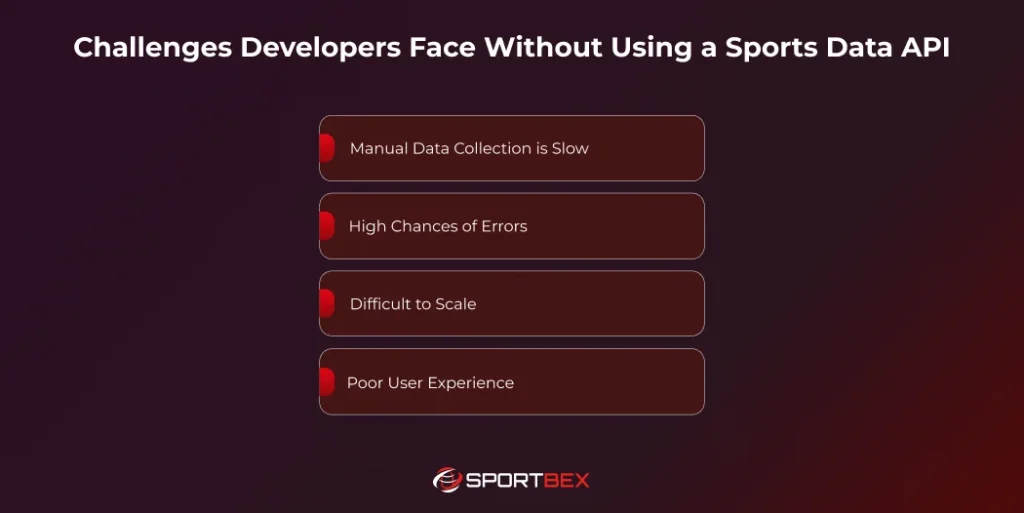
Without an API for Sports Data developers face several challenges that can affect the quality of their applications.
Manual Data Collection is Slow
Without an API for sports data, the only alternative is collecting data manually either by scraping websites or entering it by hand. Managing both Static Data and Live Data in this way is very slow and inefficient, especially during live matches where data changes every few seconds. It makes building real-time applications practically impossible.
High Chances of Errors
Manual data handling introduces significant room for mistakes. Wrong scores, outdated player stats and missing match events can all hurt the user experience and seriously damage your app’s reputation. A professional sports data API delivers clean, verified data that you can trust completely.
Difficult to Scale
If your app relies on manual data processes, scaling becomes a nightmare. When user numbers grow, your data management processes break under the pressure. Only a robust API for sports data can handle the kind of traffic spikes that live sporting events generate.
Poor User Experience
Slow or inaccurate data leads directly to frustrated users who abandon your app and leave bad reviews. In a market where fans have dozens of options, even a small delay or error can cost you users permanently. Without a reliable system, it is nearly impossible to deliver the kind of seamless, real-time experience that fans expect.
Conclusion
The modern sports fan expects speed, accuracy and reliability and will not accept anything less. Whether you are building a live score app, fantasy sports platform, betting tool or analytics dashboard, your success depends on data quality. From real-time access and wide coverage to easy integration, automation and flexibility, the benefits of using an API for Sports Data are clear and proven.
If you are serious about building in the sports space, choosing the right data solution is not just a technical decision. It is a business decision. It saves you time, reduces costs, improves your product and keeps your users coming back every single day.
Do not build your sports app on guesswork or manual processes. Build it on a solid, reliable sports data API and give your users the real-time experience they deserve.
Get a Ready-Made Platform On Rent.
Get Started Today
Frequently Asked Questions
Yes, there are many APIs available for sports data that provide real-time updates such as live scores, player statistics and match results. These APIs help developers easily integrate fast, accurate and reliable sports data into their applications.
Developers use sports data APIs to get fast, accurate, and real-time updates for apps. It helps them save time, reduce manual work and build reliable sports platforms with better performance.
The Real-time Data API is a collection of API calls that provide access to real-time data on the platform.
A real-time sports data API works by sending requests to a data provider and receiving instant updates like scores, stats and events in formats like JSON or XML for easy integration.
Sports data APIs are used in betting platforms, fantasy sports apps, live score websites and analytics tools where real-time updates and accurate sports information are essential.
Recent Blog



How to build a low-latency live sports streaming app using APIs
September 9, 2026
 12 min

Cricket API Uptime & Availability: What Developers Should Know
August 27, 2026
13 min
Access Complete Sports Data Fast and Keep Updates Ready!
API Free Trial