
Volleyball’s popularity has soared globally, captivating millions with its fast-paced action and dramatic plays. From the sun-drenched courts of beach volleyball to the high-stakes indoor championships, the sport commands a dedicated and growing audience. Fans today crave more than just final scores; they want real-time updates, deep statistical insights, historical data, and engaging content that brings them closer to the action.
It requires a dedicated team working around the clock to monitor countless matches, track every point, and compile complex statistics. This process is not only resource-intensive but also prone to errors and delays, which can quickly frustrate users and damage your platform’s credibility. This is where API Volleyball becomes indispensable, automating data collection and ensuring accurate, real-time updates for your platform.
We will cover what these APIs are, the critical features to look for, and the tangible benefits they bring to your platform, from enhancing user engagement to streamlining your operations. In our guide, Why Your Sports Platform Needs a Reliable Volleyball APIs, you will understand how leveraging a powerful API can elevate your platform, giving you the competitive edge needed to capture and retain the modern sports fan.
What are Volleyball APIs?
A Volleyball API, therefore, is a specialised API designed to provide comprehensive data related to the sport of volleyball. It acts as a bridge between a source of volleyball information, such as official league databases, live scorekeepers, and historical archives, and your sports platform, whether it’s a website, a mobile app, or a fantasy sports service.
Think of it this way: instead of sending reporters to every single volleyball match worldwide to gather scores, player statistics, and match schedules, you can simply ask the API for this information. The API then fetches the requested data from its extensive databases and delivers it to your application in a structured, machine-readable format, like JSON or XML.
This can include real-time, point-by-point updates, individual player statistics (like kills, aces, blocks, and digs), team stats, historical match results, tournament brackets, and even betting information from a volleyball odds api. This depth of information is what enables platforms to create truly immersive and engaging user experiences.
Why Your Sports Platform Needs a Volleyball API
In the competitive digital sports market, providing a subpar user experience is a surefire way to lose users to competitors. Today’s volleyball fans have high expectations; they demand instant access to accurate, in-depth information. Failing to meet these demands means your platform will struggle to attract and retain a loyal audience.
The core function of a sports platform is to deliver timely and precise data. Manually gathering this information is a logistical nightmare. It involves monitoring numerous sources, cross-referencing data for accuracy, and constant updates, all of which are susceptible to human error and significant delays.
Furthermore, building and maintaining an in-house data collection infrastructure is extraordinarily expensive. It requires significant investment in technology, servers, and a dedicated team of engineers and data analysts. For most businesses, especially startups and smaller companies, these costs are prohibitive. A Volleyball API offers a cost-effective alternative.
Key Features of a Reliable Volleyball API
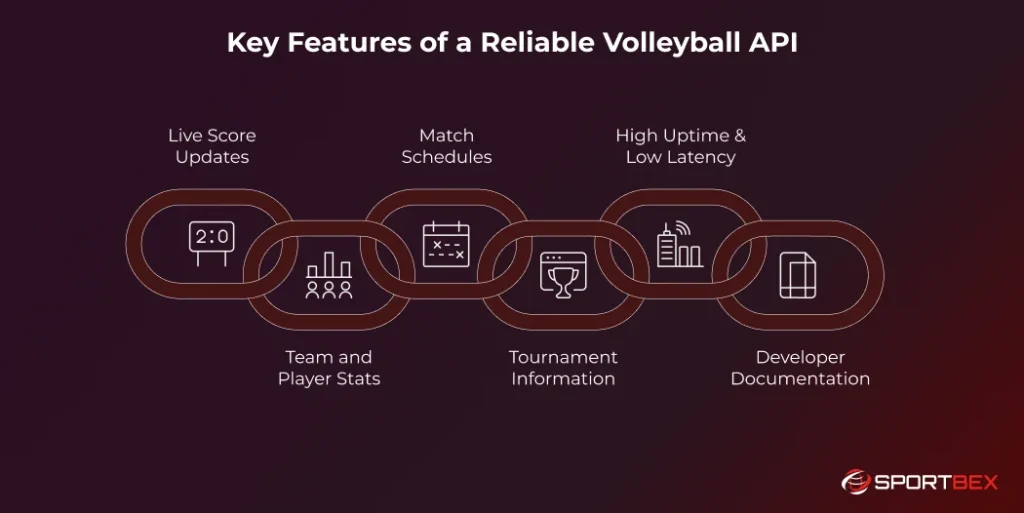
When evaluating different Volleyball APIs, it’s crucial to look beyond basic data provision. The quality, speed, and breadth of features will directly impact your platform’s performance and user satisfaction.
Live Score Updates
The most critical feature for any sports platform is the ability to deliver real-time information. Volleyball is a dynamic sport where momentum can shift in an instant, and fans want to follow the action as it happens. A top-tier Live Volleyball Data API provides point-by-point updates with minimal delay.
This allows you to offer live match tracking, push notifications for key moments (like a set point), and a truly immersive second-screen experience. Ensure the API you choose has a proven track record of delivering fast and accurate live data, as this is fundamental to user engagement during matches.
Team and Player Stats
Deep statistical data is what separates a casual fan platform from one built for serious enthusiasts. A comprehensive volleyball stats api should offer more than just wins and losses. Look for APIs that provide detailed statistics for both teams and individual players.
- Player Stats: This should include key performance indicators such as kills, attack percentage, aces, blocks, digs, assists, and service errors. Historical player data is also invaluable, allowing users to track a player’s performance over a season or their entire career.
- Team Stats: Look for aggregated team statistics per match and per season, including side-out percentage, point-scoring runs, and overall offensive and defensive efficiency.
Match Schedules and Historical Data
A robust API should provide extensive information about upcoming and past matches.
- Schedules: Users need easy access to future match schedules, including dates, times, venues, and participating teams. The API should provide data for various leagues and tournaments worldwide, allowing you to create a comprehensive calendar for your users.
- Historical Data: Access to historical match results is essential for providing context. Fans enjoy looking back at past encounters between teams, reviewing previous tournament outcomes, and analysing trends. An API with a deep archive of historical data adds immense value and content opportunities to your platform.
Tournament Information
Volleyball is a tournament-driven sport, with major events like the Olympics, World Championships, and various professional leagues capturing global attention. A quality API should offer structured data for entire tournaments, including:
- Brackets and Standings: Real-time updates to tournament brackets, group stage standings, and playoff scenarios.
- Tournament Schedules: A complete schedule for all matches within a tournament.
- Team and Player Rosters: Official rosters for each participating team.
This feature allows you to build dedicated tournament sections on your platform, creating a central hub for fans to follow their favourite events from start to finish.
High Uptime and Low Latency
The reliability of the API’s infrastructure is paramount. An API that frequently experiences downtime or suffers from high latency (delays in data delivery) will render your platform useless, especially during live matches.
Look for a Sports API Provider that guarantees high uptime (ideally 99.9% or higher) and has a globally distributed infrastructure to ensure low latency for your users, no matter where they are located. Check for service level agreements (SLAs) and review the provider’s status page and performance history.
Clear and Comprehensive Developer Documentation
Even the most powerful API is useless if developers can’t figure out how to use it. Excellent documentation is a hallmark of a professional API provider. The documentation should be clear, comprehensive, and easy to navigate. It should include:
- Getting Started Guides: Step-by-step instructions for obtaining an API key and making your first call.
- Endpoint References: Detailed explanations of each available endpoint, including request parameters and example responses.
- Code Samples: Ready-to-use code snippets in various programming languages (e.g., Python, JavaScript, Java).
- Support Channels: Access to a responsive developer support team to help troubleshoot any issues.
When you integrate Volleyball APIs, good documentation will significantly reduce development time and make the entire process smoother.
Benefits of Using a Volleyball API

Integrating a dedicated Volleyball API into your sports platform is a strategic move that yields a multitude of benefits, transforming your product from a simple information source into a dynamic and engaging hub for fans.
Enhanced User Experience
The ultimate goal of any digital platform is to provide an exceptional user experience, and this is where a Volleyball API truly shines. By delivering real-time, accurate, and in-depth data, you empower users with the information they crave.
- Rich Content: Beyond live scores, an API provides a wealth of content opportunities. You can create detailed player profiles, historical head-to-head matchup pages, data-driven articles, and interactive charts. This rich content encourages users to spend more time on your platform, exploring data and engaging with the sport on a deeper level.
- Real-Time Engagement: During a live match, fans want immediate updates. An API allows you to provide live scores, point-by-point commentary, and instant statistical updates, creating an immersive experience that keeps users glued to your platform. This is especially crucial for fantasy sports and betting platforms, where a delay of even a few seconds can make a significant difference.
Reduced Manual Work and Operational Costs
Building and maintaining a system for data collection is a massive undertaking that requires significant time, money, and expertise. A Volleyball API eliminates this burden, allowing you to focus your resources on what you do best: building a great product.
Cost Savings: The subscription cost of an API is a fraction of the expense required to build an in-house data infrastructure. You save on server costs, software development, and the salaries of a dedicated data team. This makes it feasible for businesses of all sizes to compete on a level playing field.
Automation: The API automates the entire data pipeline, from collection and verification to delivery. This frees your team from the tedious and error-prone task of manual data entry, allowing them to work on more strategic initiatives like feature development, user acquisition, and community management.
A Scalable and Future-Proof Solution
As your platform grows, so will its data requirements. A professional API provider builds its infrastructure to handle massive scale, ensuring that your service remains fast and reliable even as your user base expands.
Access to New Data: The world of sports data is constantly evolving. As new metrics and types of data become available, a good API provider will incorporate them into their offering. This means your platform will automatically gain access to new data points without you needing to re-engineer your data collection systems.
Handling Traffic Spikes: Major tournaments and championship matches can lead to huge surges in traffic. A robust API is designed to handle these peaks without breaking a sweat, ensuring a consistent experience for all users.
Covering Every Major Volleyball League
Get live scores and stats from the FIVB Nations League, SuperLega, and more.
Better Accuracy and Reliability
In the world of sports, accuracy is non-negotiable. A single incorrect score or statistic can damage your platform’s credibility and drive users away. Reputable API providers invest heavily in data verification, drawing from official and trusted sources to ensure the information they provide is accurate.
By using a reliable API, you are effectively outsourcing your data quality assurance to experts, giving you and your users peace of mind.
Competitive Advantage
Ultimately, all these benefits combine to give your platform a significant competitive advantage. While your competitors may be struggling with manual data entry, slow updates, and limited information, your platform will stand out with its speed, accuracy, and depth of content.
A superior user experience leads to higher user retention, positive word-of-mouth marketing, and a stronger brand reputation, all of which are crucial for long-term success. The right api volleyball can become the engine that powers your platform’s growth.
Use Cases of Volleyball APIs
The versatility of a Volleyball API allows it to power a wide array of applications and features, catering to different segments of the sports industry. Here are some of the most common and innovative use cases that demonstrate the API’s value.
- Live Score and Sports Media Websites: This is the most traditional Use Case Volleyball API. Media outlets, sports news websites, and fan blogs can use the API to create dedicated volleyball sections with live scores, match schedules, league tables, and player statistics. This provides their audience with a one-stop shop for all volleyball-related information, increasing site traffic and user engagement.
- Fantasy Sports Platforms: Fantasy volleyball is a growing market. A volleyball stats api is essential for these platforms, providing the real-time player performance data needed to calculate fantasy points. The API can deliver data on kills, blocks, aces, and other scoring metrics, enabling the platform to run leagues, manage rosters, and update fantasy matchups as the action unfolds.
- Sports Betting Applications: The sports betting industry relies on fast and accurate data. A volleyball odds api provides bookmakers with real-time odds from various sources, while a live data feed allows them to offer in-play betting markets. The API delivers the instant score and event updates necessary to manage bets and update odds dynamically during a match.
- Team and League Official Websites: Professional volleyball teams and leagues can use an API to power their official websites and mobile apps. This ensures that their fans always have access to official and accurate information, including player bios, match schedules, ticket information, and detailed post-game statistics.
- Mobile Applications: A Live Volleyball Data API is perfect for creating dedicated volleyball mobile apps. These apps can offer features like live match tracking, customizable push notifications for favourite teams or players, and interactive data visualisations.
- Broadcasting and Production: Television networks and live streaming services can use an API to enhance their broadcasts. Imagine a sports live stream that shows a player’s attack percentage in real time after a powerful spike; this is made possible by an API.
How to Choose the Right Volleyball API Provider
Selecting the right API provider is a critical decision that will have a long-term impact on your platform. With several Volleyball API Providers in the market, it’s important to conduct thorough due diligence. Here are the key factors to consider:
Data Coverage and Quality
The first step is to assess the breadth and depth of the provider’s data. Do they cover the leagues and tournaments that are most important to your target audience? How granular is their statistical data? Ask for a trial key to evaluate the data quality firsthand.
Performance and Reliability
As discussed, high uptime and low latency are non-negotiable. Investigate the provider’s infrastructure and ask for performance metrics and SLAs. Read reviews and case studies from other clients to gauge their reliability.
Documentation and Developer Support
Your development team will be working closely with the API. Evaluate the quality of the documentation and test the responsiveness of their support team. A provider that invests in a great developer experience is likely to be a good partner.
Pricing and Scalability
API pricing models vary, from flat-rate subscriptions to pay-as-you-go plans. Choose a model that aligns with your budget and expected usage. Ensure the plan is scalable, allowing you to upgrade as your platform grows without facing exorbitant costs.
Reputation and Trust
Look for a Sports API Provider with a strong reputation in the industry. How long have they been in business? Who are their other clients? A well-established provider is more likely to offer a stable and reliable service for years to come.
Conclusion
In the fast-evolving world of digital sports, data is the currency of engagement. For any platform focused on volleyball, having access to a constant stream of fast, accurate, and comprehensive data is not just an advantage; it is the very foundation upon which a successful product is built.
It automates your data pipeline, reduces operational overhead, and provides a scalable foundation that can support your platform’s growth for years to come. A Use Case Volleyball API demonstrates how partnering with a reliable Sports API Provider allows you to shift your focus from the back-end complexities of data management to the front-end innovations that will truly differentiate your brand.
Choosing the right API partner is a decision that will define your platform’s capabilities and potential. By carefully evaluating providers based on their data coverage, reliability, developer support, and scalability, you can secure a data solution that not only meets your current needs but also anticipates your future growth.
Build a Premier Platform for Volleyball Fans
Use our fast and reliable API to create an engaging and data-rich experience.
Frequently Asked Questions
A Volleyball API provides real-time data such as scores, schedules, player stats, and match events. It’s important because it automates data delivery, reduces manual work, and keeps your platform updated with accurate information.
Volleyball APIs enhance engagement by delivering instant updates, detailed statistics, and live match insights. Users stay informed and interact more with platforms that offer reliable, real-time data.
Key features include real-time scoring, player and team stats, historical data, global league coverage, high uptime, and easy integration options like RESTful endpoints or webhooks.
Yes. A reliable Volleyball API automates data collection and processing, eliminating the need for manual updates. This saves time, reduces errors, and allows your team to focus on user experience and product innovation.
Absolutely. Platforms using Volleyball APIs offer faster updates, richer data, and better reliability, key elements that modern users expect. This competitive edge helps attract and retain more users.
Recent Blog



How to build a low-latency live sports streaming app using APIs
September 9, 2026
 12 min

Cricket API Uptime & Availability: What Developers Should Know
August 27, 2026
13 min
Accurate and Reliable Volleyball Data Feeds and Odds
API Free Trial