
Data is no longer just supportive. It plays a key role in decision making, especially in horse racing where timing, accuracy, and detailed information are essential. Whether you are running a betting platform, building a sports app or analyzing race performance, the quality of your data directly affects the results.
For many years, the horse racing industry depended on manual horse racing data collection. This included gathering race results, odds and statistics using spreadsheets, written notes, and different reporting methods. While this worked in the past, it is no longer suitable for modern users who expect instant updates, real time insights and smooth digital experiences.
This is where the concept of Horse Racing API vs Manual Data becomes important. APIs (Application Programming Interfaces) have changed how data is collected and delivered. A modern Horse Racing Data API provides structured, real time information directly to applications, helping reduce delays and minimize human errors.
In this guide, we’ll explain the Horse Racing API vs Manual Data: Which is Better?. We’ll look at important factors like speed, accuracy, scalability and real-world uses. By the end, you’ll clearly understand why APIs are becoming the top choice in the horse racing industry.
Understanding Data in Horse Racing API vs Manual
Data in horse racing is vast and multi-dimensional. It includes race schedules, horse performance, jockey statistics, track conditions, betting odds and much more. The way this data is collected and delivered determines how useful and reliable it is.
What is a Horse Racing API?
A horse racing data API is a tool that helps your app get horse racing information automatically. Instead of searching and collecting data manually, the API delivers it directly to your platform in real time. It connects your app to a central data source and sends updates like race results, odds and statistics instantly.
You can think of it as a fast and reliable bridge between your app and live racing data, making everything easier, quicker and more accurate without extra effort or manual work.
With an API, you can access:
- Real-time race results and schedules
- Detailed horse and jockey statistics
- Historical performance data
- Live betting odds
- Track conditions and event details
This system removes the need for manual intervention and ensures that your application always displays the most current and accurate information. For platforms looking to scale efficiently, integrating a Horse Racing API is often the first step toward modernization.
What is Manual Horse Racing Data Collection?
Manual horse racing data collection is the traditional way of gathering information by hand. In this method, people collect, check and enter data from different sources. This can include reading race reports, adding results into spreadsheets, copying odds from bookmaker websites and managing records in internal systems.
While this approach may work for small projects, it becomes slow and difficult as the amount of data increases. It also requires more time, effort and accuracy, making it less reliable compared to modern automated solutions like APIs.
Key limitations include:
- Slow data processing
- High risk of human error
- Limited data coverage
- Difficulty maintaining consistency
- High operational costs
Using only manual methods can slow down your business and cause problems. It takes more time, increases the chances of mistakes, and makes it harder to keep up with fast updates. This can lead to poor user experience and allow competitors with better technology to move ahead.
Why Use a Horse Racing API Over Manual Data?
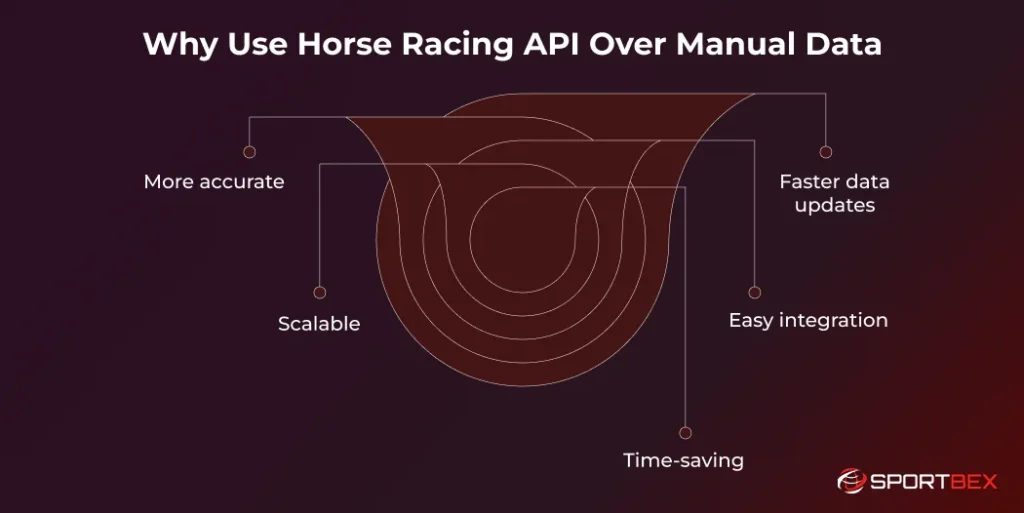
When comparing modern and traditional approaches, the advantages of APIs become immediately clear. Let’s explore the key reasons why businesses are shifting toward automation.
Faster Data Updates
Speed is very important in horse racing because odds change quickly and races finish in a short time. Users expect to see updates instantly. When data is collected manually, it takes time because someone has to find and enter the information.
Even a small delay can make the data outdated and affect user decisions. An api horse racing solution solves this problem by providing real-time updates automatically. As soon as any data changes, it is instantly updated on your platform, so users always get the latest and most accurate information.
More Accurate Data
Accuracy is very important when comparing the accuracy of horse racing API vs manual data. In manual systems, mistakes can happen easily, like typing errors, wrong numbers or missed updates. These small errors can create big problems.
APIs solve this issue by collecting data directly from trusted sources and delivering it in a proper format. This helps keep the data consistent, reduces errors and builds trust with users. For platforms like betting or analytics, having accurate data is essential and cannot be ignored.
Easy Integration
Setting up a manual data system takes a lot of time and effort. You need to build forms, manage data entry, check for errors, and store everything properly. This process can be complicated and slow.APIs make things much easier. With proper Horse Racing API Integration, developers can quickly connect their apps to a ready-to-use data source.
Most APIs come with simple guides and code examples, so setup is fast.This means your team doesn’t have to worry about managing data and can focus more on building better features and improving the user experience.
Scalable
Scalability is a big problem with manual systems. As your users increase, the amount of data also grows. Managing all this data by hand becomes very difficult, slow and sometimes impossible. You may need more staff, which increases cost and effort.
APIs solve this problem easily. They are designed to handle large amounts of data and many users at the same time. Whether your platform has a few users or millions, a Horse Racing Data API can manage everything smoothly without slowing down or affecting performance.
Time-Saving
Manual data collection takes a lot of time and effort. Teams have to spend hours finding, checking, and entering data. Which slows down work and reduces productivity. Instead of focusing on improving the business or building new features, they get stuck doing repetitive tasks.
APIs solve this problem by automating the entire process. With a Horse Racing API data is delivered instantly without manual effort. This helps reduce workload, improve efficiency, and use resources in a smarter way. In the long run, it saves both time and money while increasing overall productivity.
Everything You Need for Horse Racing
Access live results, racecards, betting odds, and historical data with one API.
Comparison: Horse Racing API vs Manual Data
A clear horse racing API comparison highlights the fundamental differences between the two approaches.
| Feature | Horse Racing API | Manual Data Collection |
|---|---|---|
| Speed | Real-time updates | Delayed processing |
| Accuracy | Highly accurate | Prone to errors |
| Cost | Subscription-based | High labor costs |
| Scalability | Easily scalable | Difficult to scale |
| Integration | Simple and fast | Complex and time-consuming |
| Reliability | Consistent | Depends on human effort |
| Coverage | Comprehensive | Limited |
| Maintenance | Managed by provider | Requires internal resources |
This comparison shows in a simple way why APIs are a better choice for modern digital platforms. They provide faster updates, more accurate data and are easier to manage. Compared to manual methods, APIs help businesses save time, reduce errors and deliver a smoother user experience.
Challenges of Manual Data Collection in Horse Racing
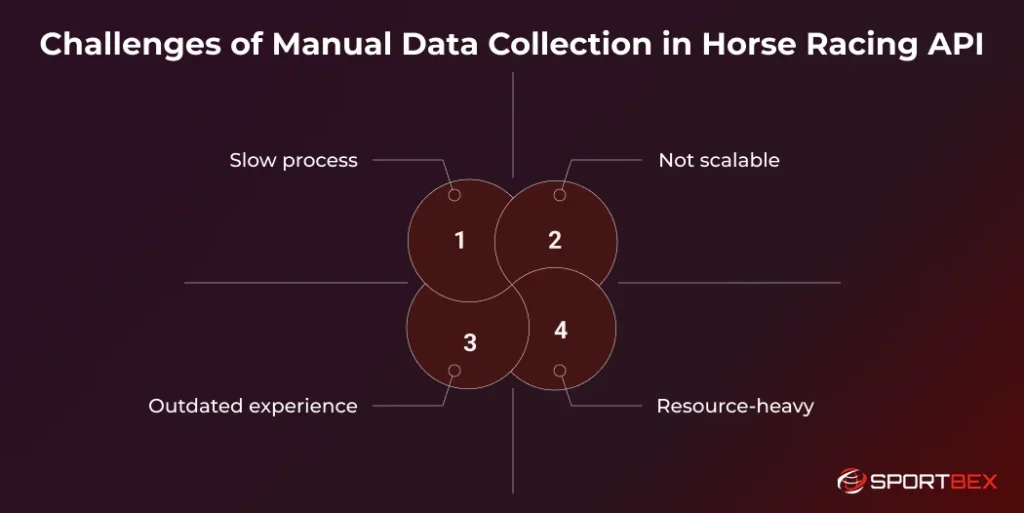
Manual data collection has been used for many years, but it has several problems that make it less effective.
Slow Process
Manual data collection takes a lot of time because it involves many steps. You need to find the data from different sources, then check if it is correct and finally enter it into your system. Each step requires effort and attention, which slows everything down.
In horse racing, where information changes quickly, this delay can be a big problem. If the data is not updated on time, users may see old or incorrect information. This can lead to missed opportunities, poor decisions and a bad experience for users who expect fast and accurate updates.
Not Scalable
Manual data collection is difficult to scale as your business grows. When you need more data, you have to hire more people to collect and manage it. This increases your costs and also makes the process more complicated. Managing a large team can take a lot of time and effort, which can slow down your overall progress.
It can also lead to more mistakes and delays. On the other hand, APIs can handle large amounts of data automatically. They work smoothly without needing extra staff, making them a much better and more efficient option.
Outdated User Experience
Users want fast, accurate and smooth experiences when using any platform. If your system depends on manual data, it may struggle to meet these expectations. Updates can be slow and mistakes in data can affect the overall experience. This can make your platform look outdated and less reliable compared to modern solutions.
Users may lose trust if they do not get correct information on time. Over time, this can harm your brand image and reduce user engagement. As a result, people may stop using your Horse Racing App and switch to better more efficient alternatives.
Resource-Heavy
Manual data collection requires a lot of resources to manage properly. You need to hire people, train them, and regularly monitor their work to ensure everything is accurate. This process not only takes time but also increases overall costs for the business.
As your data needs grow, you may need even more staff, which adds to the expense. On the other hand, using a Horse Racing Data API helps reduce these costs by automating repetitive tasks. It saves time, improves efficiency and allows your team to focus on more important work instead of manual data entry.
Real-World Applications of Horse Racing API

They are used in many practical ways to improve the horse racing industry. Let’s look at some simple real-life examples.
Sports Betting Platforms
Betting platforms need fast and accurate data to run smoothly. A Horse Racing API helps by providing live odds updates, instant race results and complete race details in real time. This is very important for platforms offering Horse Racing Bets because even a small delay can affect user trust and cause losses. Using an API ensures users always get the latest information quickly and reliably.
Mobile Apps for Fans
Modern apps give users a better experience by using real-time data. A good Horse Racing App can show race schedules, live updates, detailed stats, and alerts for upcoming races. This helps users stay informed easily. Some apps also include Horse Race Live Streaming, so users can watch races and check live data at the same time, making the experience more engaging and enjoyable.
Analytics and Tipster Tools
Data analytics helps people make better decisions in horse racing. APIs provide a large amount of data that is used in tools like a Horse Racing Odds Tracker. These tools study patterns such as how a horse performs over time, results on different tracks, and how well a jockey performs. By using this information, users can understand trends easily and make smarter, more informed decisions when analyzing races or placing bets.
Media and Journalism
Media companies use APIs to make their content better and more interesting. With real-time data, journalists can share live updates, stats, and useful insights during races. This helps them create more engaging stories for their audience. Coverage of Horse Racing Events becomes faster, clearer, and more exciting, which keeps viewers interested and helps them understand what is happening in the race more easily.
Conclusion
The debate between Horse Racing API vs Manual Data comes down to speed, accuracy, and growth. Manual methods worked in the past, but they are too slow and error-prone for a fast digital world.
APIs have changed how horse racing data is used. They provide real-time updates, better accuracy and easy integration helping businesses deliver faster and more reliable experiences to users.
For anyone building a modern platform, using Horse Racing API Integration is now essential. APIs save time, reduce errors and improve overall performance. Many providers also offer a free trial, making it easy to test the service before committing.
In simple terms, while manual data still has small uses, the future belongs to automation. A Horse Racing Data API helps platforms stay efficient, scalable and ready for growth.
Build Your Premier Racing Platform
Get the fast, reliable horse racing data you need to launch your platform.
Frequently Asked Questions
A Horse Racing API is a tool that delivers real-time horse racing data, including race results, betting odds, and statistics, directly to apps, websites, or platforms.
Manual horse racing data is collected through spreadsheets, reports, or by individuals entering information by hand. This method is slower, prone to errors, and harder to scale.
APIs provide faster updates, higher accuracy, easier integration, scalability, and save time compared to manual data collection.
Key differences include speed, accuracy, scalability, integration, reliability, and coverage. APIs are faster, more accurate, scalable, and easier to integrate.
Yes, manual data can still work for very small projects or local operations, but it is inefficient for real-time applications or large-scale platforms.
Recent Blog



How to build a low-latency live sports streaming app using APIs
September 9, 2026
 12 min

Cricket API Uptime & Availability: What Developers Should Know
August 27, 2026
13 min
Instant Horse Racing Updates and Stats. Get Your API Key Now
API Free Trial