How a Live Sports API Helps Apps Deliver Instant Match Updates

December 8, 2025

11 min read
Every sports fan knows the excitement of a last-minute goal or game-winning shot. For those who can’t watch live, sports apps must deliver instant updates. A few seconds of delay can ruin the experience if a friend texts the score first. That’s why a fast Live Sports API is crucial for sports app developers.
Modern sports fans demand more than just final scores. They expect comprehensive play-by-play details, live player stats, and rich data delivered instantly. Meeting these expectations requires a powerful tech backbone capable of handling huge amounts of data with minimal delay.
A live sports data API can help by providing a steady, high-speed stream of information to keep users engaged. It allows developers to avoid data management headaches and focus on creating great user experiences.
This guide will explain How a Live Sports API Helps Apps Deliver Instant Match Updates. We’ll break down the technology, key features for live score updates, and the benefits of using this service. Whether creating or improving a sports app, a sports data API is key to providing instant updates.
What Is a Live Sports API?
A Live Sports API is a digital tool that provides instant access to live match data. Instead of gathering match events, scores, and stats manually from various sources, the API delivers structured, real-time data directly to apps. Developers integrate it into their sports apps, allowing continuous updates as matches progress.
A standard sports API provides:
- Live scores for current matches
- Player stats like runs, goals, assists, fouls, and possession
- Match highlights such as goals, cards, penalties, and substitutions
- Team rankings, schedules, and league standings
- Past match data for review
- Live commentary and play-by-play updates
APIs make it easier and faster to build sports apps and ensure they never miss an update, even during big events like World Cups, Champions League matches, and playoffs.
Why Sports Apps Need Instant Match Updates
Sports apps need instant match updates because users want real-time sports updates and information without delays. Fans want to know every goal, wicket, foul, or important event as it happens. Many users follow matches while doing other things like using social media, commuting, or working, so slow updates can quickly frustrate them.
With many sports apps available, even a small delay can make users switch to another app. Instant updates keep fans engaged and make them spend more time in the app. For fantasy sports and betting platforms, accuracy is very important because every run, pass, or point can affect results and rankings. That is why apps use technologies like a live sports data api to make sure every update reaches users immediately and correctly.
How a Live Sports API Delivers Real-Time Match Data
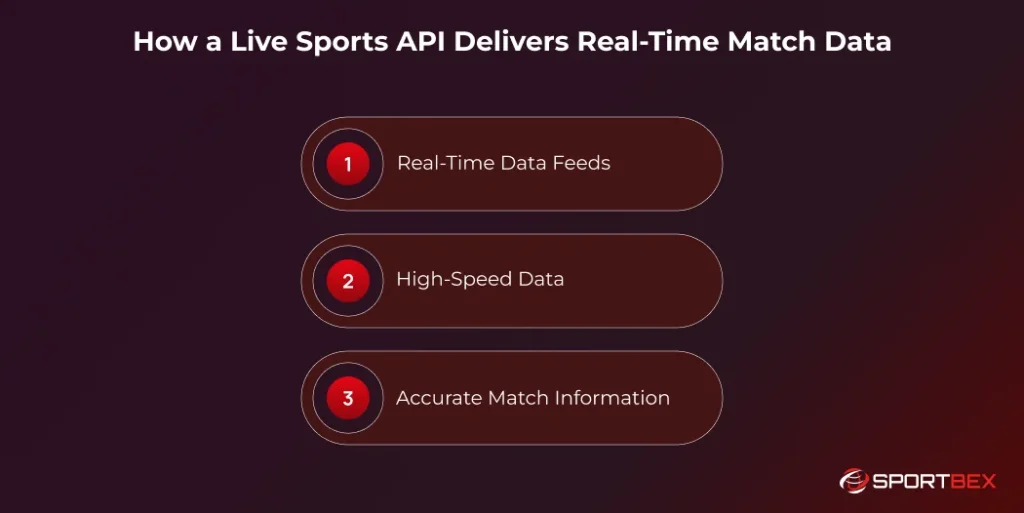
A modern sports API uses clever technology to deliver data quickly and smoothly. This process involves a few key systems working together behind the scenes.
Real-Time Data Feeds
Real-time data feeds are essential for providing instant match updates. They gather information from various sources, such as official league systems, stadium sensors, scorekeepers, and data analysts. This information is then channeled into a single stream.
APIs turn data into simple formats like JSON or XML. When an app asks for information, the API instantly sends back updates, like scores or events. Reliable Sports Data Feeds make sure you never miss a moment of the action.
High-Speed Data
Live updates need to be fast as well as accurate. The system behind a Sports API is built for very low delay, which is essential for services like Live Sports Streaming where every second matters. By using edge servers, caching layers, and quick content delivery networks, match details can be updated in milliseconds.
This speed means users get live score updates almost instantly. In some cases, the updates are even faster than live TV broadcasts, which can have small delays. This allows users to receive the latest information as soon as it happens.
Accurate Match Information
Accuracy is essential for sports apps, as incorrect information can damage credibility and user trust. To ensure reliability, sports APIs use multi-layer validation, cross-checking match events from various official and verified sources. Data is often gathered from stadium reporters, automated score systems, optical tracking, AI event recognition, and league-authorized partners. Combining these methods ensures that the app delivers the most accurate and up-to-date match information, giving users confidence in the data they see.
Key Features of a Live Sports API That Enable Instant Updates
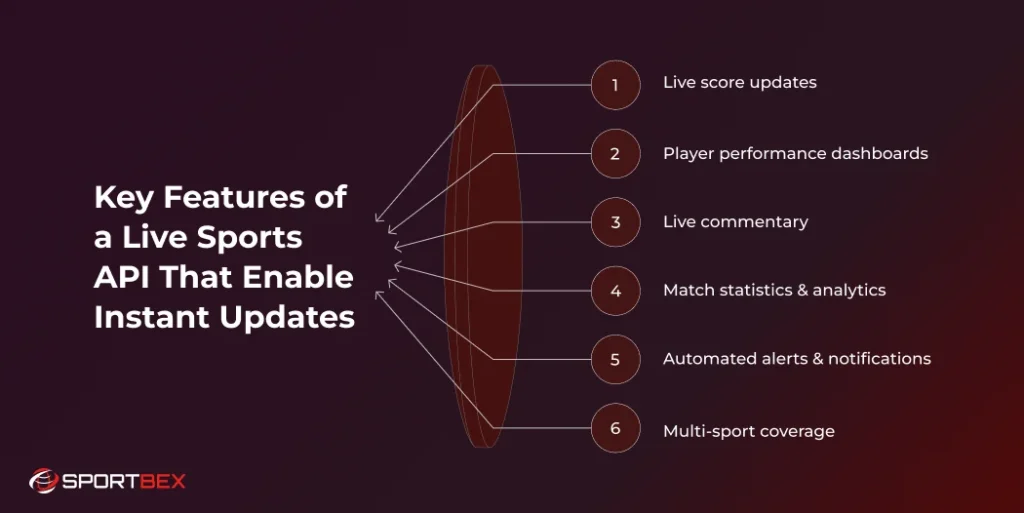
Modern sports APIs have many features that help deliver data in real time. Let’s look at the most important ones.
Live Score Updates
The foundational feature of any sports application is its capacity to display scores in real time. APIs are crucial for this, delivering instantaneous ball-by-ball, minute-by-minute, or point-by-point updates tailored to the specific dynamics of each sport.
These updates encompass a wide range of game events, such as goals in soccer, boundaries in cricket, penalties across various sports, strategic time-outs, and much more, ensuring users have a comprehensive view of the game as it unfolds.
Player Performance Dashboards
Modern fans are obsessed with statistics. A robust API delivers detailed, real-time performance data for every player on the field. This can include:
- Shots on goal
- Strikes and boundaries
- Pass accuracy
- Line-breaking runs
- Bowling
- Field goal percentage
- Heatmaps and player movement
Live Commentary
Many sports fans turn to live commentary when streaming the game isn’t an option, allowing them to stay connected and informed in real-time. APIs are a powerful tool that deliver text-based, event-driven commentary to enhance this experience, ensuring fans never miss a moment.
The commentary typically includes detailed highlights, updates on ball-by-ball actions, and key moments like penalties, fouls, or tactical shifts within the game. This dynamic approach not only keeps fans engaged but also provides deeper insights into the flow of the match, creating a richer experience even without live visuals.
Match Statistics & Analytics
A good API provides real-time, match-level statistics, offering users a clear, up-to-date view of the game. It includes key data like team possession, shots, corner kicks, fouls, and more, capturing every crucial moment. Advanced Sports Data APIs go further with predictive analytics, showing win probabilities based on the game’s current state.
For instance, dominating possession and creating more scoring chances could indicate a higher chance of victory. By combining raw data with predictive insights, these tools help fans, analysts, and developers understand the match flow and the deeper story behind the score line.
Automated Alerts & Notifications
One of the most effective ways to keep users engaged and coming back to your app is through the use of push notifications. These timely alerts ensure users stay informed and connected, even when they’re not actively using the app.
A Live Sports API should provide the necessary data triggers to power these notifications, enabling developers to set up alerts for key moments in a game or event. Examples include notifications for match start times, goals scored, red cards issued, half-time scores, and final results.
Multi-Sport Coverage
The best Sports Data API Providers give you data for many sports and leagues. Whether your app is focused on one sport or covers all kinds of sports, the API should give reliable and accurate information. This includes big events like the FIFA World Cup and NBA Finals, as well as smaller local leagues. With this wide range of data, your app can attract a variety of sports fans with different interests.
Benefits of Integrating a Live Sports API in Your App

Integrating a Sports API into your app does more than just display live scores. It’s a strategic move that can significantly enhance your app’s performance, boost user engagement, and drive better business outcomes.
Improved User Experience
The biggest benefit is a much better user experience. An API integration provides fast, accurate, and detailed updates in real time, which helps you meet what your users expect. When your app is responsive and reliable, it keeps fans in sync with the live action and builds trust. Features like live player stats, play-by-play commentary, and instant notifications create an immersive environment that makes your app the top choice for sports fans.
Higher Engagement & Session Time
Real-time data makes your app exciting and encourages people to use it more. When users know they can get instant updates, they’re more likely to keep the app open, check it often, and use features like live chats and polls. This leads to higher engagement, better retention, and a more active user base, all thanks to dynamic, up-to-date content powered by the API.
Faster App Development
Building a proprietary system to manage live sports data requires expertise, investment, and time. By integrating a Live Sports API, you can skip this process. The API provider manages the complex data infrastructure, allowing your team to focus on front-end design, features, and user interface. This shortens development time, helping you launch your app or features faster.
Monetization Opportunities
A real-time data feed unlocks many monetization opportunities, such as live betting, which requires instant, reliable data. You can also introduce premium subscriptions with advanced analytics or ad-free experiences.
Other profitable options include fantasy sports integrations and betting company partnerships. A Sports Results API provides the detailed data needed to build revenue-generating features that also enhance user value.
How to Integrate a Live Sports API
Integrating a Sports API is simple and developer-friendly. Here’s how it works.
Using API Keys:
Start by thoroughly researching and selecting a Sports Data API provider that aligns with your specific needs in terms of sports coverage, data quality, reliability, and pricing. Consider what types of sports or leagues you require data for and evaluate the provider’s reputation for accuracy and consistency.
Authentication
Your API key is a unique code that works like a password for your application. It proves that your requests to the API server are authorized. You must include this key with every request, usually in the header or as a parameter.
This helps the provider track your usage and ensures that only approved applications can access their data. Many platforms also offer a free trial, allowing you to test how the API key works before fully integrating it into your app.
Sample JSON Response:
With your API key, you can start making requests to the API’s endpoints. An endpoint is a specific URL that provides access to a particular set of data (e.g., /matches, /players, /leagues). The API’s documentation will detail all available endpoints and the parameters you can use to filter the data.
The API will return the data in a structured format, most commonly JSON. Your application’s backend will need to parse this JSON response to extract the relevant information.
Displaying Updates Inside the App
Once your backend parses the data, it’s sent to your front-end application (e.g., an iOS or Android app) to be displayed. To ensure the user interface updates in real-time, you’ll need a mechanism to push new data from your server to the client. As mentioned, WebSockets are ideal for this, enabling instant, bidirectional communication between the server and the client.
Setting Up Real-Time Notifications
To set up push notifications, your server watches the API for important events, like goals or red cards. When something happens, the server uses a service like Firebase Cloud Messaging (for Android) or Apple Push Notification Service (for iOS) to send an alert to the user’s device. This way, users stay updated even when they’re not using the app.
Conclusion
sports fans want fast, accurate, and reliable updates. Whether they are checking cricket scores, following a football match, or tracking fantasy league stats, even a small delay can make them stop using an app.
A Sports API makes instant updates possible. It delivers accurate scores, real-time commentary, player analytics, and push notifications without delay, turning a simple app into a powerful companion for fans. Advanced services ensure fast match insights and smooth performance even during global events.
As sports technology continues to evolve, apps using high-quality APIs stay ahead in fan engagement. Instant match updates are not just a feature; they are the foundation of every successful sports app, providing rich experiences, higher user engagement, and long-term success in a competitive market.
Get a Ready-Made Platform On Rent.
Get Started Today
Frequently Asked Questions
A Live Sports API is a service that provides real-time match data, including scores, events, player stats, and commentary, allowing apps to display live updates to users.
They connect directly with official data sources, sports leagues, and automated tracking systems to send accurate match information instantly through structured API responses.
It helps apps deliver instant match updates, improve user experience, support features like live commentary and analytics, and stay competitive in the fast-moving sports industry.
No. Most providers offer simple documentation, sample code, and endpoints. Developers only need an API key and basic understanding of JSON responses to integrate it.
Yes. Reputable providers use scalable servers and optimized data pipelines to manage millions of requests during peak global events without performance issues.
Recent Blog



Which Live Horse Racing Odds API Offers the Fastest Updates?
March 12, 2026
 6 min
6 min

How Soccer Live Score APIs Deliver Instant Match Updates
March 12, 2026
8 min
Integrate Live Scores, Player Stats, and Fixtures into Your App Instantly
API Free Trial