
The sports industry has changed a lot in recent years. Sports businesses now rely heavily on data instead of only television broadcasting and ticket sales. Sportsbooks, fantasy sports apps, media platforms, and analytics companies all use real-time sports information powered by a Sports Data API to improve user experience and engagement.
In 2026, sports data has become extremely valuable. Businesses use live scores, player statistics, betting odds, and historical records to provide better services to users. However, the cost of sports data depends on several factors, including the type of data, real-time speed, sports coverage, licensing rights and API usage.
Some startups can use free or low-cost APIs, while large sportsbooks may spend thousands of dollars every month on premium data feeds. Many providers now offer flexible pricing models, including monthly subscriptions, usage-based plans, and enterprise contracts.
This guide explains How Much Sports Data Costs in 2026, along with major providers, hidden costs, and how businesses can choose the right sports data solution.
What Is Sports Data?
Sports data is digital information collected from sports events, teams, players, and competitions. This information is shared through APIs, live feeds, databases, and analytics platforms that businesses can use in their apps or websites.
Sports data includes live scores, match schedules, team standings, player statistics, betting odds, and historical records. Many companies also use advanced data such as player tracking, event analysis, and predictive insights.
Sportsbooks, fantasy sports platforms, media companies, and analytics businesses depend on sports data to provide real-time updates and improve user experience. Accurate and fast sports data helps businesses deliver better services, make smarter decisions, and keep users engaged during live sporting events.
What Factors Affect Sports Data Pricing?
Sports data pricing in 2026 depends on multiple variables. Two companies may use similar APIs but pay completely different prices depending on their business model and technical requirements.
Real-Time Speed and Latency
Latency is one of the biggest factors that affects sports data pricing. Delayed data feeds are usually cheaper because they do not need advanced infrastructure. However, live betting platforms require very fast updates to avoid delays and incorrect odds, which is why many of them rely on a Sports Results API for instant match updates.
Low-latency sports data feeds need powerful servers, backup systems, real-time synchronization, and fast delivery networks. These technologies help provide accurate updates within seconds during live matches.
Because of these advanced technical requirements, real-time sports data is more expensive than delayed or basic sports feeds. Fast and reliable data is especially important for sportsbooks and live betting platforms.
Sports and League Coverage
Coverage scope also impacts pricing. Some sports data providers offer packages for only one sport, while others provide access to many sports leagues around the world.
Popular leagues such as the Premier League, UEFA Champions League, NBA, NFL, and IPL usually cost more because they require fast updates and have high global demand.
Smaller regional leagues and lower-division competitions are generally more affordable. Businesses that operate internationally often need data from multiple sports and global tournaments, which increases the overall subscription cost. Wider coverage usually means higher pricing and more advanced infrastructure requirements for providers.
Official Licensing Rights
Officially licensed data costs more because providers must secure partnerships with leagues, federations, and sports organizations. These agreements allow providers to deliver trusted and legally approved sports data.
Official data offers many benefits, including better accuracy, faster real-time updates, legal security, and commercial usage rights. This makes it a popular choice for sportsbooks, fantasy sports apps, and large media platforms.
Unofficial or scraped data is usually cheaper but it may have incorrect information, delayed updates and legal risks. Businesses that need reliable and high-quality sports data often prefer official licensed data, even though it comes at a higher price.
API Usage and Infrastructure
Pricing also depends on technical usage. Most sports data providers calculate pricing based on how much data a business uses. This may include API requests per month, concurrent connections, WebSocket access, data refresh speed, number of users, and cloud infrastructure needs.
Small platforms usually pay less, while large sportsbooks and media companies often require bigger plans and more advanced systems. Real-time sports applications also need strong servers and scalable infrastructure to handle live updates smoothly.
As traffic and usage increase, businesses typically need larger plans and higher-performance systems, which increases the overall cost of sports data services.
Sports Data Pricing Models in 2026
Sports data companies now offer multiple pricing models to support startups growing businesses and enterprise organizations.
Free APIs
Free APIs are mainly designed for developers, students, and small projects. They usually offer limited API requests, delayed updates, restricted sports coverage, and basic support. These plans are useful for testing ideas or building MVPs, but they are not ideal for large businesses or commercial sportsbooks with high traffic needs.
Monthly Subscription Plans
Monthly subscription plans are the most common pricing model in 2026. Providers offer different packages for startups, medium-sized businesses, and enterprise sportsbooks. Basic APIs may cost $50–$300 per month, while real-time sports feeds can cost $500–$5,000. Enterprise betting data plans may exceed $10,000 per month.
Usage-Based Pricing
Some sports data providers use a pay-as-you-go pricing model. Businesses pay based on API requests, match coverage, data usage, or user sessions. This model is useful for startups because they only pay for what they use. However, sudden traffic increases during major sports events can raise monthly costs quickly.
Enterprise Contracts
Large sportsbooks and media companies often choose custom enterprise contracts. These plans may include dedicated servers, white-label solutions, premium support, custom integrations, and low-latency infrastructure. Enterprise pricing is usually customized and can cost thousands or even millions of dollars per year because sportsbooks need fast, accurate, and highly reliable live sports data feeds.
Average Sports Data Costs in 2026
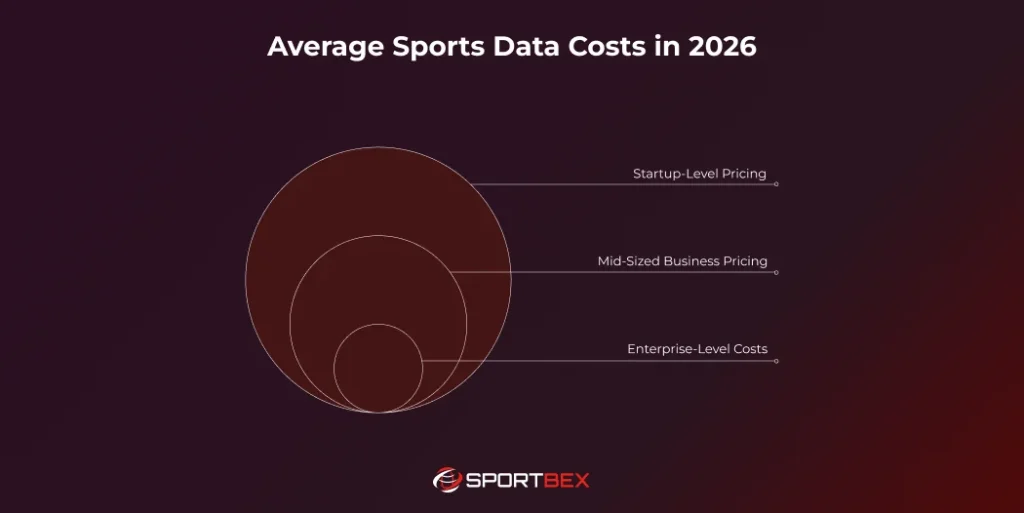
The average cost of sports data varies widely depending on company size and technical requirements.
Startup-Level Pricing
Startups and indie developers usually have small budgets, so they prefer affordable sports data solutions. In 2026, most beginner-friendly sports APIs cost between free and $200 per month for basic features like live scores, fixtures, and match statistics. Small real-time data packages may cost around $200 to $500 monthly.
These plans are ideal for MVP projects, fantasy sports apps, sports blogs, and score platforms. At this stage, businesses mainly focus on low costs, easy integration, and simple API management while growing their user base.
Mid-Sized Business Pricing
Mid-sized businesses usually need more reliable sports data services and wider coverage than small startups. Their monthly costs typically range from $500 to $5,000, depending on the number of sports, live updates, and API usage.
These businesses often include fantasy sports apps, sports news platforms, betting comparison websites, and analytics companies.
Most of them require real-time scores, historical statistics, multiple league coverage, and scalable systems. Many companies also use Fantasy Sports Data API solutions to deliver better player stats and improve overall user experience.
Enterprise-Level Costs
Enterprise-level companies have the biggest sports data needs. Large sportsbooks, broadcasters, and betting platforms can spend between $10,000 and $100,000+ per month on sports data services.
These businesses require official league data, real-time updates, global sports coverage, advanced betting markets, and 24/7 technical support.
They also need highly reliable systems with very low latency to handle live betting and millions of users. For enterprise companies, accuracy, speed, and reliability are more important than finding the cheapest option.
Major Sports Data Providers and Estimated Pricing
Several companies dominate the sports data market in 2026. Each provider targets different business needs and pricing levels.
Sportbex
Sportbex is a sports data provider that delivers real-time sports data and betting solutions for sportsbooks, fantasy platforms, and betting startups. It offers live scores, betting odds feeds, multi-sport coverage, and scalable API solutions.
Pricing depends on sports coverage, live data speed, API requests, and betting market depth requirements. It is also widely used for Sports Data for Bookmakers who need fast, accurate, and reliable data to run betting operations smoothly.
Key Features:
- Real-time sports data
- Live betting odds feeds
- Multi-sport coverage
- White-label sportsbook solutions
- Fast API integration
- Scalable infrastructure
Sportradar
Sportradar is a leading sports data company that provides real-time sports information and betting solutions for sportsbooks, media companies, and broadcasters worldwide. It is known for official partnerships with major sports leagues and reliable live data services.
Key Features:
- Real-time sports statistics
- Live betting data feeds
- Official league partnerships
- AI-powered sports analytics
- Integrity and fraud monitoring
Stats Perform
Stats Perform is a popular sports data company known for its Opta statistics services. It provides real-time sports data, AI-powered analytics, and detailed player insights for media companies, sports teams, and betting platforms. The company is trusted for accurate statistics, live match coverage, and advanced performance analysis across multiple sports worldwide.
Key Features:
- Opta sports statistics
- Real-time match data
- AI-powered analytics
- Player and team performance insights
- Coverage for multiple sports
- Reliable data for betting and media platforms
Genius Sports
Genius Sports is a sports technology company that provides real-time sports data and betting solutions for sportsbooks and betting platforms. It delivers fast and accurate live match data, betting odds and streaming services. The company also helps maintain data security and integrity for sports organizations. Genius Sports mainly works with large betting operators and offers customized enterprise pricing plans.
Key Features:
- Official sportsbook data feeds
- Live betting odds and updates
- Sports streaming solutions
- Data security and integrity services
- Real-time match statistics
SportsDataIO
SportsDataIO offers simple and developer-friendly sports APIs for startups and growing businesses. It provides real-time scores, player stats, betting data, and historical sports information for multiple leagues. The platform supports fantasy sports apps, live score websites, and betting platforms.
Key Features:
- Live scores and match updates
- Fantasy sports data
- Betting odds support
- Historical statistics
- Easy API integration
- Multiple sports coverage
Hidden Costs of Sports Data Integration
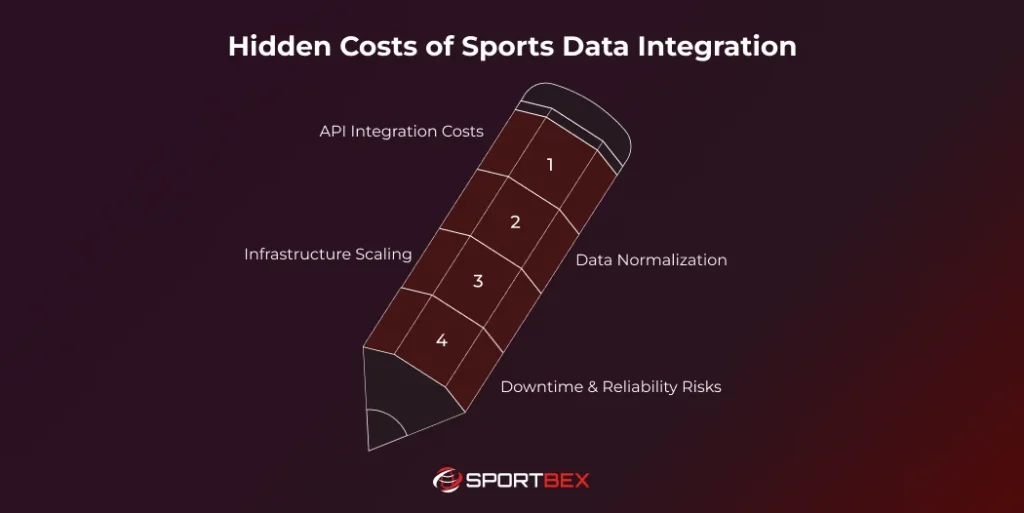
Many businesses focus only on subscription pricing and forget about hidden operational expenses. In reality, integration costs can become a major part of the overall investment.
API Integration Costs
Integrating sports data into a platform requires time, developers, and technical setup. Businesses need to connect APIs, manage databases, handle live updates, and improve server performance for smooth user experience. Some platforms also create dashboards and visual features for users.
Large betting platforms often need custom systems for live odds and risk management. Depending on the project size and complexity, integration can take several weeks or even months to complete successfully.
Data Normalization
Data normalization is the process of organizing sports data from different providers into one consistent format. Different APIs may use different team names, match IDs, statistics, and data structures, which can create confusion during integration.
To solve this, companies need backend development, database mapping, and regular maintenance. Proper data normalization improves accuracy, makes systems easier to manage, and helps platforms deliver smooth real-time sports information to users.
Infrastructure Scaling
Platforms with high traffic need strong systems to handle real-time updates smoothly. This usually includes high-performance databases, scalable cloud servers, CDN services, WebSocket connections, and caching systems.
During major sports events, traffic spikes can create extra pressure on servers. In many cases, infrastructure expenses become higher than the API subscription cost itself, so businesses must optimize performance carefully to avoid slowdowns or downtime.
Downtime and Reliability Risks
Downtime can be very costly for sports betting platforms and live sports apps. If live odds or match data stop working during important events, businesses may face revenue loss, user complaints, betting mistakes, and damage to their reputation.
That’s why many companies invest in reliable sports data services with SLA guarantees, backup systems, failover infrastructure, and premium technical support. In 2026, reliability and uptime are among the most important factors when choosing a sports data provider.
How to Choose the Right Sports Data Provider
Choosing the right sports data provider depends on your business goals, budget, and technical requirements.
Startups should focus on low-cost solutions with easy integration and basic features like live scores, fixtures, and essential statistics to quickly launch and test their product.
Sports betting platforms need highly reliable, real-time data with low latency, accurate live odds, and strong uptime guarantees to avoid financial risks and errors.
Fantasy sports apps require detailed player statistics, historical data, and regular updates across multiple leagues to keep users engaged and competitive. The right provider ensures scalability, accuracy, and smooth performance.
Conclusion
Sports data has become a key digital asset in the global sports industry powering betting platforms, fantasy sports apps, media websites, Online Sports Bookmakers and analytics tools in 2026. However pricing is not fixed and depends on factors like data type speed coverage licensing and infrastructure needs.
While startups may use low cost APIs for basic live scores, large sportsbooks often spend heavily on premium real time data feeds. Businesses must also consider hidden costs such as integration scaling maintenance and reliability.
As the industry grows with AI and real time personalization demand for faster and more accurate data is increasing. The best provider is the one that fits your goals budget and scalability needs for long term success.
Frequently Asked Questions
The Sports Data Cost in 2026 varies widely, from free APIs for startups to $10,000+ per month for enterprise sportsbooks depending on data type, speed, and coverage.
The cost of sports data feeds depends on real-time speed, sports coverage, licensing rights, API usage, and the level of infrastructure required for delivery.
Live sports data costs more because it requires low-latency systems, real-time updates, and high-performance servers to deliver accurate information instantly during matches.
A sports data provider cost usually includes API access, live scores, player stats, historical data, support services, and sometimes licensing for official sports leagues.
Sports betting platforms, fantasy sports apps, media websites, and analytics companies rely heavily on sports data APIs for real-time updates and user engagement.
Recent Blog



How to build a low-latency live sports streaming app using APIs
September 9, 2026
 12 min

Cricket API Uptime & Availability: What Developers Should Know
August 27, 2026
13 min
Access Complete Sports Data Fast and Keep Updates Ready!
API Free Trial