
The cycling industry has grown a lot in recent years. Professional races like the Tour de France attract huge global audiences, and more people are taking up cycling for fun. Big events like mountain stages and local races produce tons of data that fans and athletes closely follow. This growing demand makes accurate and reliable cycling data more important than ever.
For sports app developers, this presents both an incredible opportunity and a significant challenge. Users expect instant access to race results, rider statistics, team performance metrics, and live updates, but delivering this information requires sophisticated data infrastructure. This is where a Cycling API becomes essential.
Modern sports apps need to do more than show scores to stay relevant. Cycling fans want detailed data, like power output and weather conditions that impact races. They also expect smooth performance across all race types, from one-day events to multi-stage tours. Most importantly, the app must be fast and accurate to keep up with the pace of professional cycling. That’s exactly Why Your Sports App Needs Reliable Cycling APIs to deliver a complete and engaging experience.
What Is a Cycling API?
A Cycling API is a tool that connects your sports app to cycling data. It gives access to race results, rider stats, team details, and even past performance records. This makes it easier for developers to deliver accurate and engaging cycling content to users.
These tools provide cycling data in easy-to-use formats like JSON or XML, so developers can quickly add it to their apps. A good cycling API for sports apps includes details like race schedules, rider profiles, team info, stage results, and live race updates. This helps apps stay up to date and deliver a better user experience.
Modern Cycling APIs go far beyond basic race results. They provide detailed analytics, including rider power metrics, elevation profiles, weather conditions, and even predictive modeling data. This comprehensive approach allows sports apps to offer users deep insights into race dynamics and performance factors that casual observers might miss.
Why Do Sports Apps Need Cycling APIs?
Cycling fans are a valuable audience for sports apps. They are very active, enjoy following races on different platforms, and love detailed performance stats. They don’t just watch big tours but also enjoy one-day races, track cycling, mountain biking, and cyclocross events all year round.
Without reliable cycling APIs, sports apps face significant limitations in serving this audience. Manual data entry is both time-consuming and error-prone, especially during live events where information changes by the minute. Additionally, the global nature of professional cycling, with races occurring across multiple time zones and countries, makes manual tracking practically impossible.
Benefits of Reliable Cycling APIs
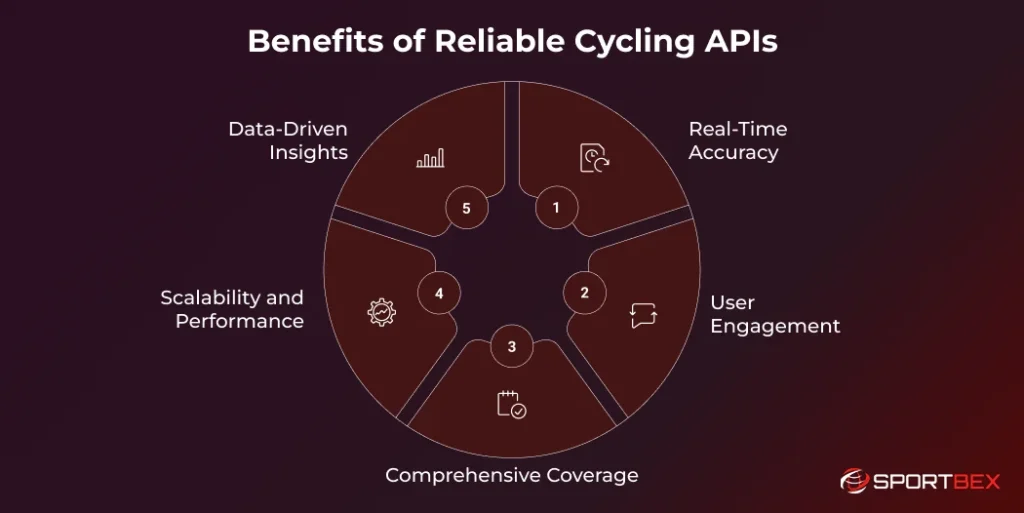
Real-Time Accuracy
Professional cycling events unfold rapidly, with race situations changing within seconds. A breakaway can be caught, a crash can reshape the peloton, or weather conditions can alter race strategy in moments. Reliable Cycling APIs provide real-time updates that keep your application synchronized with live events, ensuring users receive accurate information as situations develop.
As a type of Sports Data API, they make it easier for developers to deliver fast and reliable cycling coverage. The accuracy of real-time data becomes particularly crucial during major tours where multiple storylines develop simultaneously. Users might be following overall standings, stage winners, intermediate sprint competitions, and mountain classifications all at once.
User Engagement
Comprehensive sports app cycling data significantly increases user engagement by providing deeper insights into race dynamics. Users stay longer in applications that offer detailed information about power outputs, climbing speeds, and tactical decisions. This detailed data transforms casual viewers into engaged fans who return regularly for additional insights.
Interactive features powered by robust APIs create more compelling user experiences. Users can compare current performance against historical data, analyze team strategies, or explore how weather conditions affect race outcomes. These engaging features encourage users to spend more time within your application and return more frequently.
Comprehensive Coverage
Professional cycling includes dozens of race formats, from single-day classics to three-week grand tours. A comprehensive cycling team stats API covers multiple disciplines, including road racing, track cycling, mountain biking, cyclocross, and BMX events. This breadth ensures your application serves the complete cycling community rather than just road racing fans.
Global coverage becomes essential as cycling’s popularity spreads worldwide. Users want information about races in Europe, the Americas, Asia, and Australia. Reliable APIs provide consistent data quality across all regions and race levels, from WorldTour events to domestic championships.
Get Live Odds for Every Race
Integrate real-time cycling betting odds and stage matchups into your platform.
Scalability and Performance
As your sports application grows, data demands increase exponentially. More users generate more API requests, and popular events can create significant traffic spikes. Professional cycling API providers design their infrastructure to handle these scaling challenges, ensuring consistent performance during high-demand periods like Tour de France stages.
Efficient data caching and delivery systems built into quality APIs reduce load times and improve user experience. These systems can serve frequently requested data quickly while maintaining real-time accuracy for rapidly changing information. This technical optimization becomes crucial as your user base expands.
Data-Driven Insights
Advanced analytics capabilities powered by comprehensive cycling data enable applications to offer predictive features and performance insights. Users can access information about factors affecting race outcomes, such as weather impacts, course profiles, and team tactical decisions. These insights differentiate your application from basic results-focused competitors.
Machine learning applications become possible when historical and real-time data combine to create predictive models. Your application could offer features like stage winner predictions, overall classification forecasts, or optimal fantasy team selections based on data-driven analysis.
Use Cases for Cycling APIs in Sports Apps
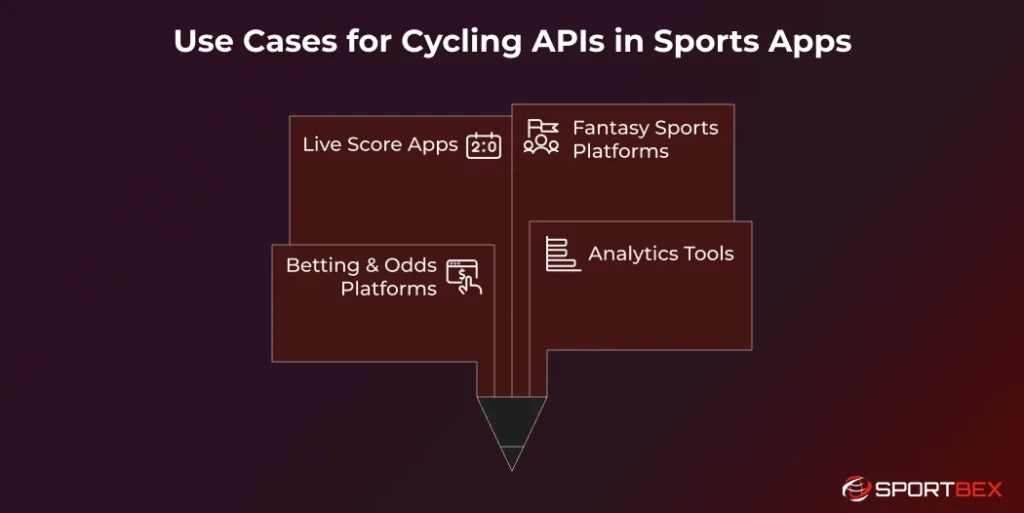
Live Score Apps
Live sports applications rely on instant data updates to maintain user engagement during races. Cycling APIs enable these apps to provide real-time stage positions, time gaps between riders, and intermediate sprint results. Users can follow race progression through detailed updates that include elevation profiles, weather conditions, and tactical developments.
Push notification systems powered by cycling data keep users informed of crucial race moments even when they’re not actively using the application. These notifications might include stage wins, yellow jersey changes, or significant crashes that affect overall standings.
Fantasy Sports Platforms
Fantasy cycling has grown significantly in popularity, requiring detailed player statistics and performance predictions. A Fantasy Sports App powered by comprehensive cycling APIs can offer users access to detailed rider statistics, team compositions, and historical performance data necessary for making informed selections.
Scoring systems in fantasy cycling depend on accurate, real-time data collection from multiple race categories. APIs provide the detailed information needed to calculate points for stage wins, overall classifications, intermediate sprints, and mountain prizes across different race formats.
Betting & Odds Platforms
Sports betting applications require extremely accurate and timely data to manage odds and settle bets. Cycling APIs provide the reliable information needed for pre-race betting markets and live betting options during events. This includes everything from stage winner predictions to overall tour outcomes.
Risk management becomes possible through access to comprehensive race data that helps betting platforms identify unusual patterns or potential issues. Sports Odds API integration combined with cycling data creates advanced monitoring systems that protect both operators and users.
Analytics Tools
Professional teams, media organizations, and serious cycling fans use analytics tools to gain deeper insights into race performance and strategic decisions. These applications often rely on a Cycling analytics API to access granular data, including power outputs, speed measurements, elevation profiles, and weather conditions.
Performance comparison tools help identify trends and patterns across different riders, teams, and race conditions. Users can analyze how specific factors affect race outcomes or compare current performances against historical achievements through detailed statistical analysis.
Choosing the Right Cycling API Provider
Selecting an appropriate cycling API provider requires careful evaluation of multiple factors that impact both immediate functionality and long-term success. Data coverage is perhaps the most crucial consideration. Your chosen provider should offer comprehensive information across all cycling disciplines and geographic regions relevant to your user base.
Reliability is very important during big cycling events when many users are online. Check providers based on their uptime, data accuracy, and performance in major races like the Grand Tours. Ask for details about speed, errors, and past reliability during busy times, and contact us if you need help finding the best Cycling API provider.
Cost structures vary significantly between providers, and understanding pricing models helps prevent unexpected expenses as your application scales. Some providers charge based on API calls, others use subscription models, and many offer hybrid approaches. Consider both current needs and projected growth when evaluating pricing options.
Conclusion
The cycling industry continues evolving rapidly, with new technologies, race formats, and fan engagement methods emerging regularly. Sports applications that invest in reliable cycling APIs position themselves to capitalize on this growth while providing users with increasingly sophisticated features and insights.
Success in the competitive sports app marketplace requires more than basic functionality. It demands comprehensive data coverage, real-time accuracy, and innovative features that engage users deeply. With the rise of modern sports technology trends, Cycling APIs provide the foundation for building these advanced capabilities while ensuring scalability and reliability as your application grows.
The decision to integrate professional cycling APIs represents an investment in your application’s future competitiveness. Users increasingly expect sophisticated features, comprehensive coverage, and real-time accuracy that only specialized data providers can deliver consistently.
Cycling Data You Can Depend On
Access detailed career stats, results, and rankings for every pro cyclist.
Frequently Asked Questions
A Cycling API is a tool that provides real-time cycling race data, rider stats, and results that developers can integrate into sports apps and websites.
Cycling APIs collect live race data from official sources and deliver it through endpoints, allowing apps to display instant scores, stats, and updates.
Key benefits include real-time accuracy, enhanced fan engagement, access to historical race data, scalability for big events, and easy developer integration.
Yes. Cycling APIs provide detailed rider statistics and results, which are essential for creating fair and engaging fantasy cycling experiences.
Absolutely. Reliable Cycling APIs deliver second-by-second updates, making them perfect for live score apps, news websites, and sports broadcasters.
Recent Blog



How Accurate Are Live Odds on Horse Racing Online Bookmakers?
March 2, 2026
 8 min
8 min

Live Football Odds vs. Pre-Match Odds: Key Differences You Must Know
March 2, 2026
7 min
Integrate Real-Time Cycling Results into Your App Easily
API Free Trial