
Volleyball has become one of the fastest-growing and most exciting sports worldwide, attracting millions of fans through international leagues, Olympic events, and beach tournaments. As interest grows, so does the demand for live volleyball betting and data-driven platforms. Users expect instant updates, accurate live scores, and constantly changing odds during every set.
This is where a Volleyball API plays a crucial role. It provides Real-time volleyball data, including live scores, odds updates, and match statistics directly to your platform. By using structured Real-Time Data feeds and reliable Volleyball data feeds, sportsbooks and apps can deliver fast, accurate information without delays.
In this guide, you’ll learn How to Use a Volleyball odds API for Real-Time Data feeds, how a Volleyball betting API works, why it’s important, and how to integrate it effectively to improve user engagement, accuracy, and overall platform performance.
What Is a Volleyball Odds API?
A Volleyball odds API is a tool that lets websites and apps receive live betting information automatically. Instead of manually tracking matches and updating odds, your platform connects to a data provider that sends real-time updates instantly.
It works like a bridge between sportsbooks, leagues, and your system. When odds change, a set ends, or a player is substituted, the API quickly updates the information on your platform.
These APIs provide more than just match winners. They include pre-match and live markets, set-by-set stats, player performance data, standings, injury reports, and historical odds. Many platforms also combine this with a Volleyball live scores API to sync scores with betting markets.
Why Use a Volleyball Odds API for Real-Time Data Feeds?
Volleyball matches can change in seconds and momentum can shift quickly with odds adjusting after every key point. A Volleyball odds API ensures your platform delivers instant updates and keeps users engaged with accurate real time markets. Without real time infrastructure outdated odds can frustrate bettors and reduce trust.
Speed also creates a competitive advantage. Users searching for the best volleyball betting odds compare platforms instantly and slower updates often mean lost customers. A Volleyball betting API allows you to offer live markets such as next point bets, set handicaps and player props which increases engagement and revenue.
Automation reduces human error and ensures reliable performance during high traffic tournaments. Partnering with a Reliable Volleyball API provider gives you scalable cost effective access to global coverage and consistent real time data delivery.
Key Features to Look for in a Volleyball Odds API
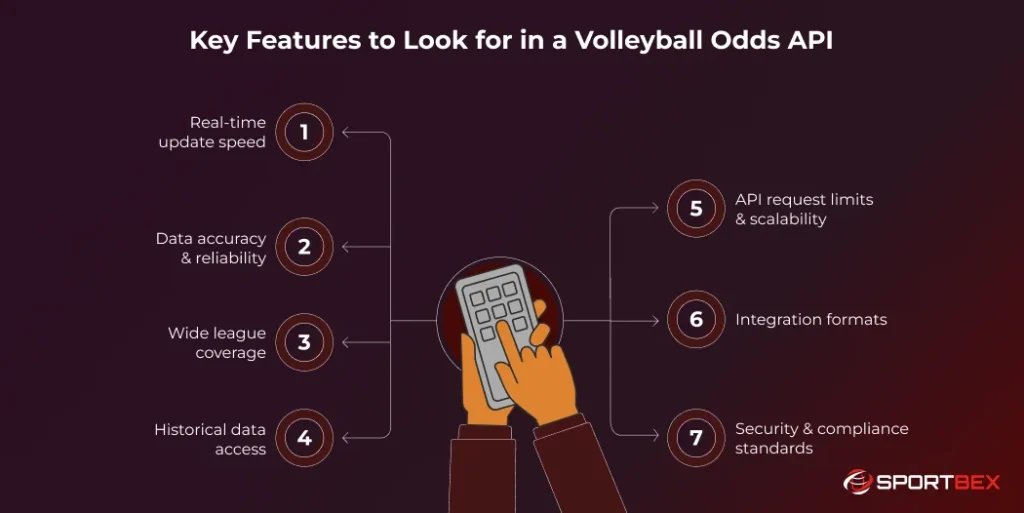
Volleyball Odds API will directly affect your platform’s speed, accuracy, and overall user experience. Below are the most important features you should consider before making a decision.
Real-Time Update Speed
Speed is very important in live betting. During a volleyball match, odds can change quickly, especially in close sets. A good API should update the data immediately after something happens in the game.
If updates are slow, users may see old odds, which can cause frustration and confusion. For in play betting platforms, fast response time is necessary to provide accurate information and maintain user trust.
Data Accuracy & Reliability
Accurate data is the foundation of any successful betting platform. If odds or scores are wrong, even for a short time, users may lose trust and move to another site. Small errors can lead to confusion, complaints, and financial losses.
Choose a provider that verifies information from multiple trusted sources to reduce mistakes. The system should also detect and fix errors automatically. Make sure the provider guarantees at least 99.9% uptime and uses backup servers to avoid interruptions. Reliable data keeps users confident and satisfied.
Wide League Coverage
Volleyball is played all over the world, from major international tournaments and Olympic events to national leagues, college competitions, and smaller regional matches.A good API should cover professional international leagues, national competitions, college tournaments, and emerging volleyball markets.
The wider the coverage, the more betting options you can offer your users, which increases engagement and platform activity. Some providers offer Api Volleyball solutions that support both local and global markets, helping your platform grow smoothly over time.
Historical Data Access
Historical data is extremely valuable for any serious sports platform. When you have access to past match results, previous odds movements, and detailed performance records of the greatest volleyball players, you can do much more than just show live updates. With this information, you can build predictive models that estimate possible match outcomes.
You can develop AI-based insights to identify trends and patterns. You can also create performance comparison tools and advanced analytics dashboards that help users make smarter decisions.Historical data allows your platform to offer deeper analysis and more intelligent features beyond basic live betting options.
API Request Limits & Scalability
Every API has usage limits that control how many requests you can send within a specific time period. Before choosing a provider, you should carefully review these limits and make sure they match your expected traffic.
It’s especially important to confirm that the system can handle heavy traffic during major tournaments when user activity increases significantly. If you plan to grow your platform in the future, select a provider that allows you to Integrate Volleyball APIs into scalable systems.
Integration Formats
Most Volleyball APIs support common integration formats that make it easier for developers to connect their platforms. The most widely used option is REST API, which works through regular data requests and is suitable for scheduled updates.
Another popular option is WebSocket streams, which deliver instant live updates as soon as changes happen in a match. APIs usually send responses in JSON or XML format, which are easy to read and process.
Security & Compliance Standards
Security is extremely important in sports betting platforms because sensitive user and financial data is involved. When choosing a provider, make sure they use encrypted HTTPS connections so all data transferred between your platform and the API stays protected.
The provider should also offer secure API key storage and proper key management to prevent unauthorized access. In addition, compliance with sports betting regulations is essential to avoid legal risks.
Real-World Use Cases of Volleyball Odds API

It helps to see how different platforms use it in real situations. From betting websites to analytics tools, this Volleyball API guide shows how this technology plays a key role in delivering accurate and fast information.
Live Betting Sites
Live betting platforms need very fast updates. In a close volleyball match, odds can change many times in one set. When a team starts playing better or loses important points, the betting markets must update right away.
A volleyball odds API does this automatically, showing new odds instantly. This helps users see accurate prices and makes live betting smooth, fair, and trustworthy for everyone.
Covering Every Major Volleyball League
Get live scores and stats from the FIVB Nations League, SuperLega, and more.
Mobile Sportsbooks
Mobile users want fast and simple access to betting information. They expect live scores, quick odds updates, and instant notifications in one app. By using real-time data feeds, mobile sportsbooks can alert users about odds boosts, momentum changes, favorite team updates, and key match moments.
Many apps connect betting markets with Volleyball live odds, allowing users to follow the match and place bets at the same time. This smooth experience keeps users active and engaged.
Odds Comparison
Odds comparison websites help users quickly find the best betting prices from different sportsbooks. To do this properly, they need accurate and well-organized data. A volleyball odds API provides structured information from multiple sources in real time.
When combined with bookmaker data feeds, these platforms can instantly compare odds and show the highest value option, making betting on volleyball easier, faster, and more transparent for users.
Fantasy Apps
Fantasy volleyball apps depend on accurate and up-to-date player data. They track stats like points, assists, blocks, and overall performance during live matches. With real-time updates, users can see their fantasy scores change instantly, which keeps contests exciting and engaging.
Historical data also helps provide performance trends, player comparisons, smart lineup suggestions, and simple predictions making the overall fantasy experience more enjoyable and competitive.
Sports Analytics
Sports analytics platforms use live and past match data to understand team performance and betting trends. By analyzing this information, they can spot patterns, predict outcomes, and improve decision-making.
Professional operators use these tools to improve odds accuracy, find profitable markets, manage risk, and track long-term performance. Accurate and reliable API data is essential because strong analysis depends completely on precise and timely information.
Step-by-Step Guide: How to Use a Volleyball Odds API
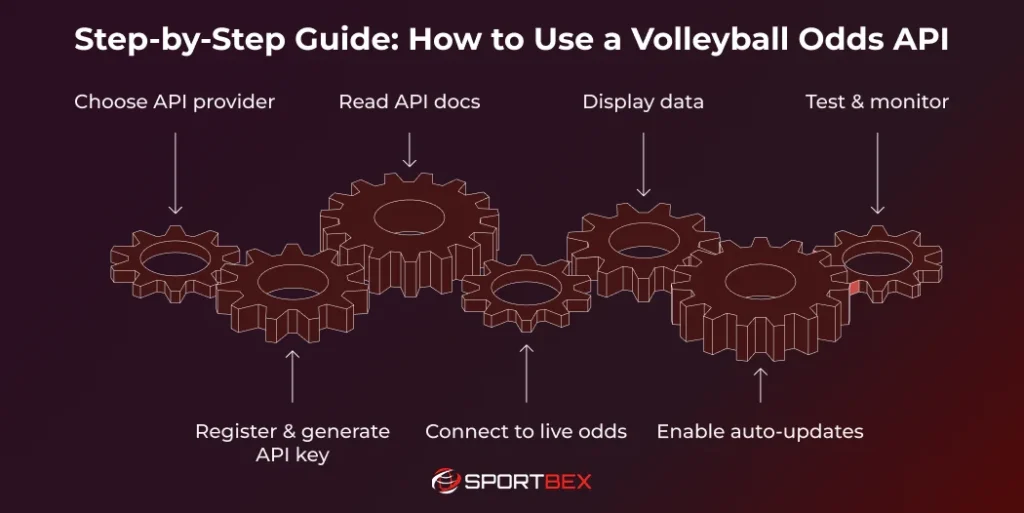
Implementing a volleyball odds API involves a systematic process that ensures reliable, efficient integration tailored to your specific application requirements.
Step 1: Choose an API Provider
Start by identifying your needs, consider which leagues or tournaments you want to cover, how fast you need the data to update, the number of betting markets you plan to offer, and your budget.
It’s important to test different providers during actual live matches to see how accurate their data is, how quickly odds update, and how reliable their service is before finalizing your choice.
Step 2: Register and Generate an API Key
After selecting your volleyball odds API provider, sign up for a developer account to get your API key. This key acts like a secure password that lets your platform access live data safely. Make sure to keep it private and protected.
Most providers allow creating separate keys for testing and live use, so you can experiment without affecting real data or exceeding your live limits, keeping your system secure and organized.
Step 3: Review the API Documentation
Go through the API documentation carefully to understand how it works. Learn about the available endpoints, required parameters, response formats, and any usage limits. Knowing these details beforehand helps avoid mistakes during integration.
Clear documentation also shows how to handle errors and ensures your platform receives accurate, reliable data. Spending time on this step makes connecting your system to the volleyball odds API much easier and smoother.
Step 4: Connect to Live Odds Feeds
Connect your platform and Integrate Volleyball APIs using either REST or WebSocket. REST is suitable for regular, scheduled updates, while WebSockets are ideal for real-time live betting because they send instant updates as events happen.
Start with basic endpoints, test the connection, and ensure the feed works smoothly before adding full live odds to your platform.
Step 5: Display the Data Clearly
Show the volleyball odds and betting markets in a simple, easy-to-read layout. Make sure the design works well on computers, tablets, and phones. Highlight live updates and changing odds so users can quickly see important information.
A clear and responsive interface helps users follow matches and make informed betting decisions without confusion.
Step 6: Automate Updates Efficiently
Set intelligent refresh intervals or use WebSocket connections for live updates with a Volleyball data API. This ensures your platform shows real-time volleyball data without slowing down or overloading servers.
Automated updates save time, maintain accuracy, and provide a smooth experience for users following matches and live betting markets.
Step 7: Test and Monitor Performance
After setting up your volleyball odds API, it’s important to regularly check how your system performs. Keep an eye on response speed, error messages, and server stability to make sure everything runs smoothly.
Testing under heavy traffic helps prevent crashes and ensures users get accurate, real-time updates even during popular matches or tournaments.
Conclusion
Volleyball betting is growing fast, and fans now expect quick updates and interactive features. To stay competitive, platforms need real-time data.Using a Volleyball odds API turns your platform into a dynamic, data-driven system.
With real-time volleyball data, you can provide instant updates, earn user trust, and offer live betting options that increase engagement and revenue. Real-Time Data feeds are essential for smooth growth.
Whether you run a sportsbook, fantasy app, analytics tool, or odds comparison site, integrating volleyball data ensures accuracy, better performance, and a more enjoyable experience for your users.
Build a Premier Platform for Volleyball Fans
Use our fast and reliable API to create an engaging and data-rich experience.
Frequently Asked Questions
A Volleyball Odds API is a tool that delivers live betting odds and match data directly to websites, apps, or betting platforms in real time.
Reliable providers like Sportbex offer highly accurate and real-time data with minimal latency, ensuring bettors get the latest odds instantly.
Yes, most APIs are mobile-friendly and can be integrated into both Android and iOS apps for live betting features.
Coverage depends on the provider, but top APIs usually include major leagues, international tournaments, and domestic matches.
With proper documentation and support, integration is straightforward and can be done by most developers within a short time.
Recent Blog


Why You Need a Cricket API for IPL 2026 for Developers and Businesses?
March 27, 2026
 10 min

Which API Horse Racing Offers Global Race Coverage?
March 24, 2026
7 min
Accurate and Reliable Volleyball Data Feeds and Odds
API Free Trial