Football has always been about passion and teamwork, but the game is changing fast. Today, it’s not only about what happens on the field but also about what happens behind the scenes with football analysis and statistics driven by data. Every pass, shot, and movement now creates information that tells coaches and analysts something important. This is where Football Analytics comes in.
Football Analytics is all about using data to understand the game better. It helps teams find what works best, improve player performance, and make smarter decisions. With the help of big data in football and big data football systems, clubs can plan better tactics, manage player fitness, and even reduce injuries before they happen.
In the past, coaches relied mostly on instinct and experience. Now, they use data to support those instincts. They can study how players move, how long they can perform at their best, and which strategies bring the best results. This makes football smarter, faster, and more precise than ever before.
From predicting match results to finding new talent, football data analytics has become a big part of the modern game. In this blog, we’ll explore how big data is changing football, why it’s so important, and how it’s shaping the future of football analytics for teams, players, and fans around the world.
What Is Big Data in Football?
Big data in football, often referred to as big data soccer, is all about using information to understand the game better. It may sound technical, but the idea is simple. Every moment on the pitch creates data that can be studied through Football Analytics to improve how teams play and perform.
This data comes from many different sources like match stats, player tracking systems, GPS devices, fitness monitors, and even fan interactions online. Each pass, tackle, sprint, or goal adds another piece to the bigger picture of how the game unfolds.
For example:
- GPS trackers record how far and how fast players move during matches.
- Cameras capture team formations and positioning.
- Sensors track things like heart rate, temperature, and fatigue levels.
When all this information is brought together, Football Analytics helps coaches and analysts see what’s really happening on and off the field. They can identify what’s working, what needs to change, and how to get the best out of each player.
In short, big data turns simple game moments into powerful insights. It helps teams plan smarter tactics, prevent injuries, and make better decisions both during matches and in training.
Benefits of Big Data in Football Analytics
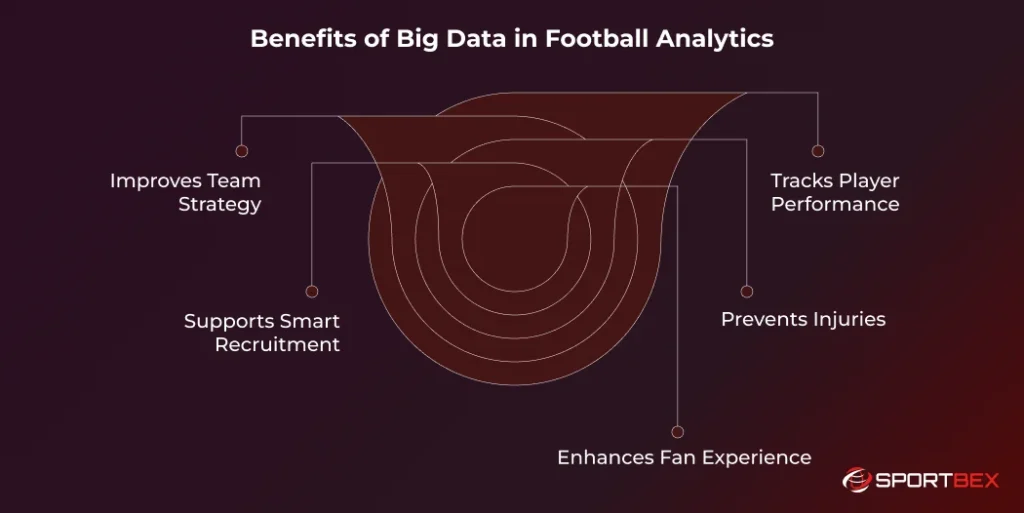
Tracks Player Performance
One of the most visible benefits of football data analytics is the ability to track how players perform during training and matches. Coaches no longer rely only on observation, they use Football Analytics to evaluate effort, accuracy, and consistency.
Wearable technology and video tracking tools measure metrics like top speed, distance covered, and pass completion rate. This information helps identify strengths and weaknesses in each player. Over time, it guides personalized training programs that improve performance and prevent burnout.
For example, a manager can see when a midfielder’s performance drops in the last 15 minutes of a match and adjust tactics accordingly.
Improves Team Strategy
Tactical preparation has evolved through big data in football. Teams can now study every aspect of their opponent’s play, from pressing patterns to set-piece strategies.
With access to real-time match data, coaches can adjust formations or substitute players based on live performance analytics. Football Analytics also supports pre-match analysis by simulating potential outcomes and identifying the most effective game plans.
This data-driven approach ensures every player understands their role, helping clubs maintain structure and control even in high-pressure situations.
Prevents Injuries
Injuries can derail a team’s season, but football big data has made it easier to predict and prevent them. By continuously monitoring players’ physical conditions, such as heart rate, muscle strain, and fatigue, teams can detect early warning signs.
Sports scientists use this data to schedule rest periods and adjust workloads. If a player shows signs of overtraining, the system alerts the coaching staff before an injury occurs.
This proactive use of data analytics in football keeps players healthy and available throughout the season, ultimately improving team stability and long-term success.
Supports Smart Recruitment
Gone are the days when scouts relied solely on instinct or reputation. With football analytics, clubs now evaluate potential signings based on measurable performance indicators.
Scouting software uses massive datasets to identify players who match a club’s tactical style. For example, a data model might find a midfielder who maintains high passing accuracy under pressure or a striker who performs consistently across different leagues.
This smart recruitment strategy reduces transfer risks and helps clubs uncover hidden gems that might otherwise go unnoticed.
Enhances Fan Experience
Big data isn’t just for clubs, it’s also changing how fans interact with the game. With access to Live Scores & Team Data, supporters can view real-time updates, detailed stats, and heatmaps that bring them closer to the action.
Platforms powered by Football Analytics and Football Match Results data help fans follow their favorite teams more deeply than ever before. From fantasy leagues to mobile dashboards, Football Analytics creates a more engaging, personalized viewing experience.
The Power of Big Data in Changing Football Analytics
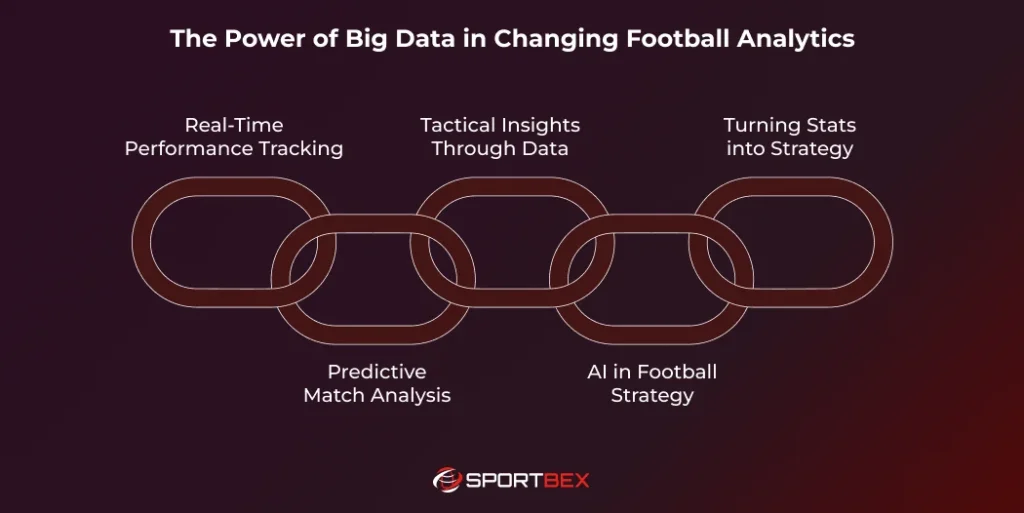
Real-Time Performance Tracking
Modern clubs operate in real time. Data from training sessions and live matches is instantly available to analysts, using fast analytics to process and share insights with coaches during games.
This real-time performance tracking allows immediate tactical changes. If a winger’s sprint output drops, coaches can bring in a fresh substitute before it affects the match outcome.
This kind of live analysis, once impossible, has become a game-changer thanks to football big data systems.
Predictive Match Analysis
Big data has made it possible to forecast how a match might unfold. By analyzing historical data, team form, and player performance, predictive models can estimate probabilities for goals, outcomes, or key moments.
These insights power tools like the Football Prediction App, which delivers analytical forecasts for both teams and fans. Coaches use similar models internally to test different formations or strategies before the actual game begins.
This predictive edge helps clubs plan more effectively and adapt faster during critical situations.
Get Your Soccer Data Here
Live scores, player stats, and team data from one simple API.
Tactical Insights Through Data
Football data analytics provides tactical clarity that was once unimaginable. Using advanced software, coaches visualize formations, pressing intensity, and passing networks.
These insights reveal where a team is strongest and where they’re vulnerable. For instance, if data shows that most chances come from the right wing, the coach may strengthen that area defensively.
This constant tactical optimization, guided by data analytics in football, ensures teams can evolve match by match.
AI in Football Strategy
Artificial intelligence may sound complex, but in football, it’s simply a smarter way of analyzing data faster. AI systems process massive datasets to spot patterns humans might miss, such as recurring mistakes or predictable opponent behaviors.
This allows coaches to receive deeper insights in less time. AI-driven analysis tools recommend tactical adjustments, monitor player workloads, and even forecast match tempo.
By combining AI insights with human expertise, clubs are reshaping how they prepare and compete.
Turning Stats into Strategy
At its core, Football analytics isn’t about collecting numbers, it’s about using them effectively. Teams now turn raw data into actionable strategies that deliver results.
For instance, analyzing shot location data helps identify which zones on the pitch yield the best scoring chances. Coaches can design training sessions that focus on improving accuracy in those key areas.
In this way, big data in football becomes the bridge between performance analysis and real-world improvement.
The Future of Football Analytics
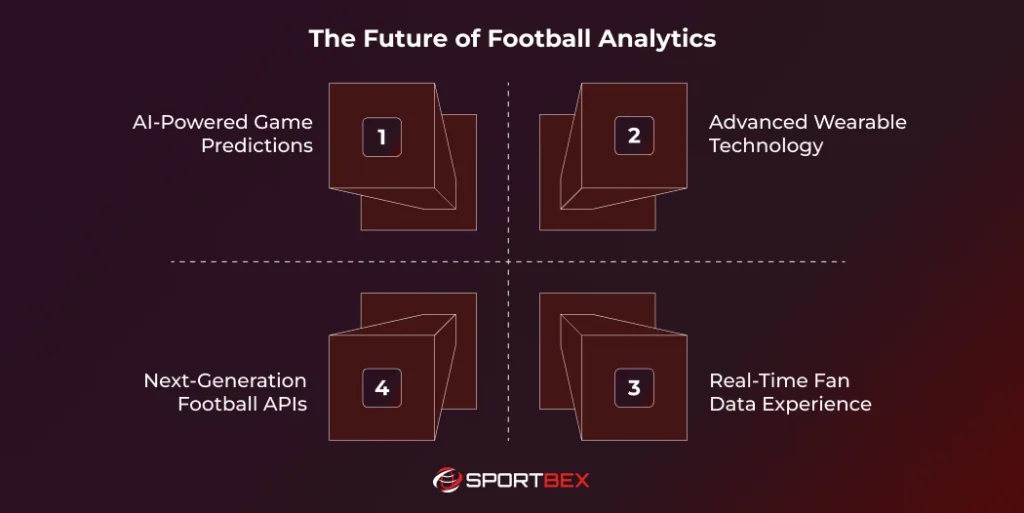
AI-Powered Game Predictions
The next generation of football data analytics will focus heavily on predictive intelligence. Advanced algorithms will not just analyze past matches, they’ll predict future events in real time.
AI-powered models will help coaches make better substitutions, adjust formations mid-game, and prepare for opponents more precisely. Fans will also enjoy more accurate insights through prediction tools, transforming how they experience every match.
This predictive layer represents the true future of sports, smarter, faster, and more connected.
Advanced Wearable Technology
Wearable devices are evolving rapidly, and they’ll soon become standard for every professional footballer. These tools will track everything, heart rate, hydration levels, sleep quality, and even stress patterns.
The collected data will feed directly into football big data systems, offering clubs a complete health and performance profile for each player.
Such precision will make training safer, reduce overtraining, and ensure peak performance in every match.
Real-Time Fan Data Experience
Fans are becoming active participants in football analytics. Through apps and dashboards, supporters can access Real-Time Match Data during games, from shot accuracy to player running distance.
Clubs are using this data to create more immersive fan experiences. Interactive visuals, AR features, and personalized notifications make fans feel part of the action, not just spectators.
This shift from passive viewing to data-driven engagement is redefining how people connect with the sport they love.
Next-Generation Football APIs
Behind the scenes, Next-Generation Football APIs are powering everything from live stats to predictive tools. These APIs act as digital bridges, delivering accurate data to media, developers, and clubs in real time.
They ensure smooth integration of statistics into apps, platforms, and broadcast systems. From Football Match Results updates to tactical visualizations, APIs have become the backbone of modern football analysis.
As technology advances, these systems will only become faster, more flexible, and more reliable, driving innovation in how the game is studied and shared.
Conclusion
Football is no longer just about instinct, it’s about information. Thanks to big data, teams now understand the game better than ever. Coaches use football analytics to plan smarter strategies, players use it to improve their performance, and fans enjoy a deeper connection through real-time match data.
This shift shows how football big data is changing the way the sport works. From analyzing player movements to predicting match results, data helps everyone involved make better decisions.
As technology keeps moving forward, data analytics in football will continue to grow. The teams that embrace it today will shape the future of football, making the game more exciting, intelligent, and connected for players and fans alike.
All Your Soccer Data in One Place
Build your platform on reliable data with our 99.9% uptime guarantee
Frequently Asked Questions
Football Analytics is the use of data and technology to analyze every aspect of the game. It helps teams improve player performance, plan tactical strategies, prevent injuries, and make smarter decisions on and off the field.
Football Analytics uses big data from sources like match stats, GPS trackers, wearable devices, and video analysis to generate insights on player performance, team strategies, and match outcomes.
By tracking metrics such as distance covered, pass accuracy, sprint speed, and fatigue levels, Football Analytics helps coaches design personalized training programs and optimize player performance.
Yes. Football Analytics monitors players’ physical conditions, such as heart rate, muscle strain, and fatigue, to detect early warning signs and reduce the risk of injuries through proactive interventions.
Football Analytics provides detailed insights into opponent strategies, player positioning, and match patterns. Coaches use this information to adjust formations, make substitutions, and optimize game plans in real time.
Recent Blog



How to build a low-latency live sports streaming app using APIs
September 9, 2026
 12 min

Cricket API Uptime & Availability: What Developers Should Know
August 27, 2026
13 min
Track Matches, Goals, and Stats Instantly with Our Live Soccer API
API Free Trial