How Fantasy Sports Data API Provide Real-Time data & Odds

December 15, 2025

9 min read

The fantasy sports industry has become a competitive, data-driven space where platform success depends on accuracy, speed, and reliability. With users demanding real-time updates, platforms must deliver instant, precise information that mirrors live events. From player stats to changing odds, every detail is crucial for keeping users engaged.
A Fantasy Sports Data API is essential, providing real-time data integration to ensure platforms stay responsive, accurate, and deliver the immersive experience users expect.
In this blog, we’ll explore how Fantasy Sports Data API Provide Real-Time data & Odds, power live scoring systems, and provide dynamic odds. We’ll break down the technology behind real-time data feeds and the benefits these APIs bring to fantasy platforms, such as instant lineup updates and live leaderboards.
We’ll also discuss the challenges providers face in maintaining the speed, accuracy, and scalability required for peak performance.
What Is a Fantasy Sports Data API?
A Fantasy Sports Data API is a tool that helps fantasy sports platforms get live and historical sports data quickly and easily. Instead of manually collecting information from games or leagues, the API automatically provides real-time updates like scores, stats, and player performance.
This saves time, ensures accuracy, and allows platforms to focus on creating a better experience for users. With an API, the data stays reliable and up-to-date without extra effort.
A typical fantasy sports data feed includes:
- Live match scores
- Player statistics and performance metrics
- Team data and lineups
- Injury reports and substitutions
- Pre-match and in-play odds
When a fantasy sports platform uses a Fantasy Sports API, it can automatically calculate scores, update rankings in real time, and keep users engaged without any delays. These APIs are built to handle lots of users at once, so the platform runs smoothly even during popular live games.
Why Real-Time Data Is Critical for Fantasy Sports
In fantasy sports, real-time data is essential for keeping users engaged and trusting the platform. Delays of even a few seconds can make users lose confidence in the game.
Accuracy in Live Scoring
Fantasy contests depend on quick updates for player actions like goals, assists, or touchdowns. Real-time sports data makes sure fantasy points are updated instantly, keeping the contests fair for everyone.
User Trust and Transparency
Users expect fantasy platforms to accurately reflect live game events in real time. Delays or data inaccuracies, like a missed goal or incorrect assist, can quickly erode trust. This leads to disputes, refund demands, and ultimately, users leaving for more reliable competitors.
Competitive Advantage
Platforms that deliver faster updates tend to keep users engaged and retain them for longer periods. Features like live notifications, real-time changes to leaderboards, and instant updates to odds ensure that users remain actively involved and invested in the experience.
Key Features of a Fantasy Sports Data API
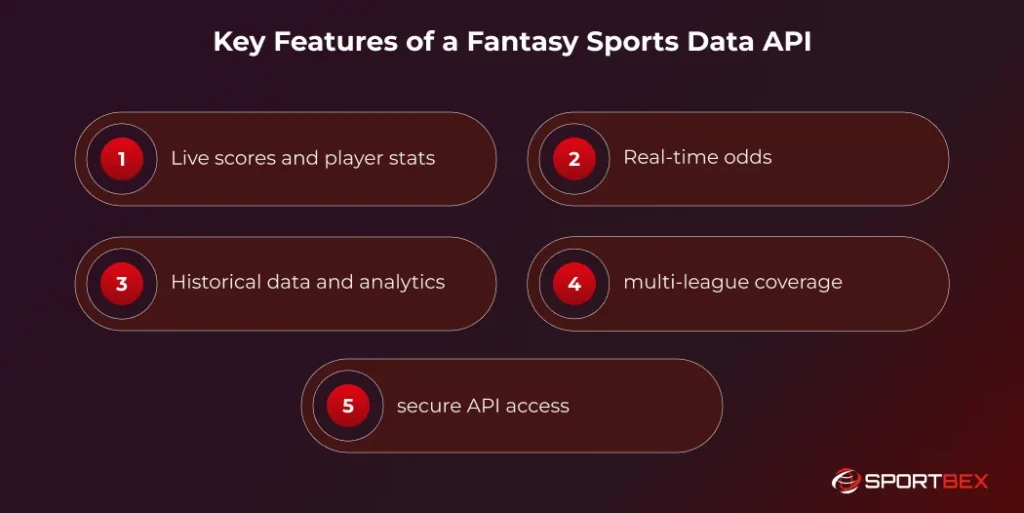
When evaluating a data provider, it’s essential to look under the hood, as not all APIs are created equal. The best ones offer a suite of features designed to handle the complexity of modern sports.
Live scores and player stats
Real-time player tracking is a must-have for any fantasy sports platform. A good API captures every key event on the field and quickly turns it into clear, usable data. This means fantasy platforms can update instantly, giving users a fast and engaging experience. This live data includes:
- Player actions like runs and goals
- Lineup changes and substitutions
- Team performance metrics
Real-Time Odds
Live odds dynamically reflect how real-world events influence probability as they happen. A Fantasy Sports Odds API lets platforms show these odds in real time, based on factors like in-game events, player performance, and match momentum. For example, a sudden goal or player substitution can instantly alter the odds.
Real-time odds:
- Increases user engagement
- Enables predictive features
- Drives revenue with premium contests
Historical Data and Analytics
APIs provide access to live data, historical match information, player performance trends, and season statistics. This data helps analyze past games, track player patterns, and monitor team progress over a season. Whether exploring long-term trends or specific match details, it supports in-depth analysis and decision-making.
- Predictive modeling
- Informed user decisions
- AI-powered recommendations
Multi-League Coverage
Modern fantasy platforms are built to connect with people from all over the world, making them easy to use and enjoyable for everyone. They use a strong API, which is like the platform’s engine, to add important features and make sure everything works smoothly for users.
- Multiple sports (football, cricket, basketball, baseball, etc.)
- International leagues and tournaments
- Regional competitions
Secure API Access
Security is critical when managing real-time data, as small vulnerabilities can lead to significant risks. To safeguard this data, APIs implement various measures to ensure secure transmission and prevent unauthorized access.
- Token-based authentication
- Encrypted data transmission
- Rate limiting and access control
Benefits of Using a Fantasy Sports Data API

Using a Fantasy Sports Data API may require some investment, but the benefits make it worthwhile. A reliable API helps fantasy sports platforms run smoothly, keep users happy, and create new opportunities to grow and improve their services.
Faster data updates
Real-time APIs deliver information with minimal latency, ensuring updates reach users almost instantly. This speed is crucial for live contests, where participants need immediate scores, and high-engagement games, where delays can disrupt flow and competitiveness. Sports Data API Providers focus on fast synchronization and seamless updates to create an immersive, fair, and engaging user experience.
Improved User Engagement
Live notifications, instant updates, and responsive interfaces keep users actively engaged throughout the match. Instead of being passive viewers, users become active participants. Real-time sports data makes the experience more interactive and immersive, encouraging users to spend more time on the platform.
Reliable Scoring and Leaderboards
Automated data feeds help keep data accurate by eliminating human errors. They allow scoring systems to update quickly and reliably in real time. This means leaderboards always show the true performance of teams and players as it happens. By ensuring accuracy, users can trust the information and enjoy a fair gaming experience.
Better Monetization Opportunities
With accurate and up-to-date data, fantasy sports platforms can make more money. They can run special premium contests, give real-time predictions, and show ads or sponsorships. Live data also keeps users interested for longer, which helps the platform earn more.
Easy Platform Integration
Most Fantasy Sports Data APIs are developer-friendly, with clear instructions and flexible options. They are easy to connect with existing systems, allowing platforms to launch quickly. This simplicity also makes it easier to scale as the platform grows. A good API ensures smooth operation, faster deployment, and reliable performance for fantasy sports platforms.
How Fantasy Sports Data APIs Deliver Real-Time Data
The journey of a statistic from the field to your smartphone showcases modern technology at its best. Sports data APIs capture every action, from goals to runs, process it, and deliver updates to users instantly. Here’s how it works.
Live Data Collection from Sports Sources
Fantasy sports APIs collect data from trusted sources. This includes official league feeds for match events and player stats, stadium partners that provide live updates from the field, and tracking systems that record player movements and ball positions. This data is captured instantly and forms the foundation for real-time updates in fantasy sports platforms.
Data Processing & Validation
Once collected, the data is carefully processed to ensure accuracy and reliability. The process includes detecting and correcting errors, standardizing data formats for smooth integration, and cross-checking information against multiple sources. These steps ensure that only accurate and verified information reaches the fantasy platforms.
Real-Time Data Streaming Technology
Fantasy sports APIs use smart streaming technology to send updates instantly. Only important changes are shared as they happen, so users always get the latest information. Cloud systems make sure the platform can handle lots of users at the same time, keeping updates fast and reliable.
How Fantasy Sports Data API Deliver Live Odds
The process of getting live odds from the game to your device is impressive and very fast. Here’s how it works:
Odds Aggregation from Multiple Sources
Live odds are collected from multiple partners and combined into a single format. This helps fantasy sports platforms show accurate and competitive odds in real time. To keep everything up-to-date, many platforms also use Sports Data Feeds to match live events with changing odds. This ensures that users always see the most current information, making contests fair and helping players make better decisions during the game.
Real-Time Odds Updates
odds can change instantly based on player injuries, goals, points, or the overall momentum of the game. Real-time updates ensure that users always see the most accurate and current odds. This keeps the fantasy experience fair and engaging, allowing players to make informed decisions as the game unfolds.
Match Momentum
Odds change quickly as the game progresses, depending on goals, points, or player performance. Advanced algorithms recalculate probabilities continuously to keep the information up to date. Many platforms also use a Sports API to ensure that betting and fantasy data stay accurate and consistent for all users.
Challenges in Real-Time Fantasy Sports Data
Even with advanced technology, delivering real-time fantasy sports data is not always easy. Platforms can face delays during peak traffic, especially when many users are active at the same time. Data can also become inconsistent when information comes from multiple sources.
During major tournaments, systems must handle very high traffic, which creates scalability challenges. In addition, platforms must follow strict compliance and licensing rules.
To manage these issues, reliable Sports Data API Providers invest in strong infrastructure, backup systems, and continuous monitoring to ensure smooth and accurate data delivery.
Conclusion
Real time data and live odds are very important for fantasy sports platforms today. A good fantasy sports data feed helps show instant scores, correct leaderboards, and smooth updates that match what is happening in the live game.
Using a reliable Fantasy Sports API helps platforms grow, gain user trust, and create more ways to earn money. A strong API system keeps data accurate, secure, and fast, even when many users are online.
As fantasy sports continue to grow, real time sports data will remain the key to better user experience and long term success. Choosing the right technology partner with a trusted Live Sports Data API helps platforms stay competitive.
Get a Ready-Made Platform On Rent.
Get Started Today
Frequently Asked Questions
Real-time data is updated almost instantly, often within seconds of an on-field action. This helps keep scoring and leaderboards accurate during live matches.
Yes, many fantasy sports APIs provide live odds that change during the match based on player performance and game events.
Most APIs support popular sports like football, cricket, basketball, baseball, and more, along with multiple leagues and tournaments.
Yes, fantasy sports data APIs usually include past match data and player statistics. This helps platforms offer analytics, insights, and predictions.
A reliable provider ensures fast updates, accurate data, and stable performance during high-traffic events, which helps improve user trust and overall platform experience.
Recent Blog



How to build a low-latency live sports streaming app using APIs
September 9, 2026
 12 min

Cricket API Uptime & Availability: What Developers Should Know
August 27, 2026
13 min
Access Complete Sports Data Fast and Keep Updates Ready!
API Free Trial