
Fantasy sports platforms have become extremely popular in recent years. Millions of users join fantasy leagues to create teams, track player performance and compete with others. To make this experience smooth and engaging platforms depend heavily on a Fantasy Sports Data API.
A Fantasy Sports Data API helps applications access live match data, player statistics and performance updates in real time. Instead of collecting data manually from multiple sources, developers can integrate APIs that deliver structured and accurate information directly to their platforms.
Many modern sports data providers build powerful data systems that supply real-time sports information to fantasy platforms. This technology allows fantasy applications to provide fast updates and a dynamic user experience during live matches.
The importance of these data systems becomes clear when platforms need to deliver instant player statistics and real-time odds during live games. Understanding How Fantasy Sports Data API Provide Real-Time Stats & Odds helps businesses and developers build reliable fantasy sports platforms that offer accurate data and engaging gameplay.
What is a Fantasy Sports Data API?
A Fantasy Sports Data API is a technology that allows applications to access sports data through structured endpoints. These APIs provide information such as match schedules, player statistics, team details and game results.
Developers use APIs to connect their applications with live sports databases. Once integrated, the platform can automatically fetch match updates and player performance metrics in real time.
These APIs help applications manage important features like team creation, leaderboard updates, scoring systems and player performance tracking. By using structured data feeds platforms can ensure that information is delivered quickly and accurately.
Because of these capabilities a reliable Fantasy Sports Data API plays a critical role in delivering structured sports information and supporting the core functionality of modern sports platforms.
Why Real-Time Data is Important in Fantasy Sports Platforms
Real-time data plays a very important role in fantasy sports platforms. Users want to see live updates during matches, such as score changes, player performance and team rankings. These instant updates make the platform more exciting and keep users engaged throughout the game.
A Fantasy Sports Data API helps platforms receive match updates immediately as events happen on the field. This allows users to track their team performance and see how their selected players are performing in real time.
Real-time updates also help platforms refresh leaderboards and points quickly. A strong Live sports data API ensures that users always get fast and accurate match information without delays.
How Fantasy Sports Data API Deliver Real-Time Stats
A Fantasy Sports Data API gathers sports information from multiple sources such as official leagues, tracking systems and sports statistics databases. This data is collected and organized before being delivered to applications through API endpoints.
During live matches the Fantasy Sports Data API keeps updating important details like goals, assists, passes, runs, wickets and other performance statistics. These updates happen continuously so that applications always receive the latest information.
Platforms connect with a real-time sports data API to receive these updates automatically. This allows applications to show live player statistics, match progress and team performance without any manual work.
How Fantasy Sports APIs Provide Real-Time Odds
Fantasy platforms and sports applications use data systems to deliver match predictions and dynamic odds during live games. These odds are calculated using statistical models that analyze team performance, past match results, and current game events.
A Fantasy Sports Data API connects platforms with live data feeds that process this information in real time. As the match progresses, the system evaluates different factors such as player performance, score changes, and game momentum to update match probabilities.
By integrating a Sports Data API, platforms can display odds that change throughout the match. These live updates help users understand possible outcomes and make better decisions while participating in fantasy competitions.
Key Features of a Reliable Fantasy Sports API Provider
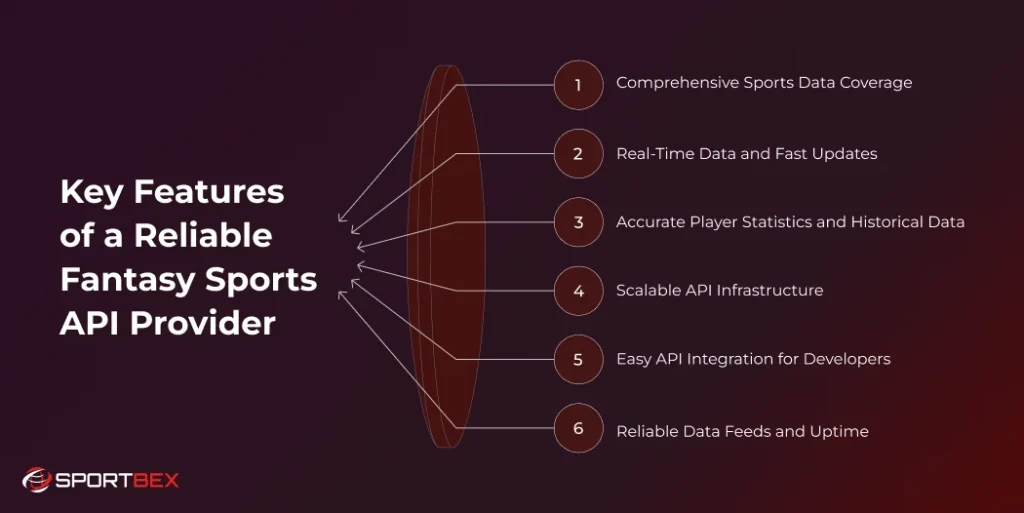
Choosing the right API provider is important for building a reliable fantasy sports platform. A good Fantasy Sports Data API should provide accurate data, fast performance, and easy integration. It should also support real-time updates and secure data delivery.
1. Comprehensive Sports Data Coverage
A strong sports data service should provide coverage for multiple sports such as football, cricket, basketball and baseball. This helps fantasy platforms attract a larger audience and offer more engaging experiences to users.
A reliable fantasy sports API provider also delivers data for different leagues, tournaments and international competitions. This broad coverage allows platforms to support various fantasy sports formats and expand their services easily.
2. Real-Time Data and Fast Updates
Speed is one of the most important features for any fantasy sports platform. Users expect instant match updates so they can track their teams and player performances during live games.
A strong data system ensures that player statistics, scores, and match events are updated within seconds. Fast updates keep users engaged and improve the overall gameplay experience.
3. Accurate Player Statistics and Historical Data
Accurate player statistics are essential for fantasy scoring systems. Detailed metrics such as goals, assists, tackles, runs, wickets, and other performance indicators help platforms calculate scores and provide reliable insights for users.
Historical data also plays an important role by allowing users to analyze player performance trends over time. These insights highlight the Real-Time Sports Data Impact helping platforms create advanced analytics tools and improve fantasy gaming experiences.
4. Scalable API Infrastructure
Fantasy sports platforms often experience heavy traffic during major tournaments and popular matches. A reliable Fantasy Sports Data API should be built with scalable infrastructure to handle thousands or even millions of requests smoothly.
Scalability ensures that the platform continues to perform well even during peak match hours. This helps maintain stable performance and provides users with a seamless gaming experience.
5. Easy API Integration for Developers
Developers prefer APIs that are simple to integrate and supported by clear documentation. Good documentation with examples and sample requests helps development teams understand how the system works and connect it to their platforms more quickly.
Many sports data providers also offer SDKs, testing environments and developer support tools. These resources simplify the development process and help teams build and launch features faster.
6. Reliable Data Feeds and Uptime
A fantasy platform must operate smoothly during live matches, as any interruption in data can affect the gameplay experience for users. Continuous updates are necessary for tracking scores, player performance and match events in real time.
Reliable systems provide stable data feeds and high uptime to ensure uninterrupted updates during matches. This consistency helps maintain platform performance and builds trust among users.
Benefits of Using Fantasy Sports Data API for Platforms
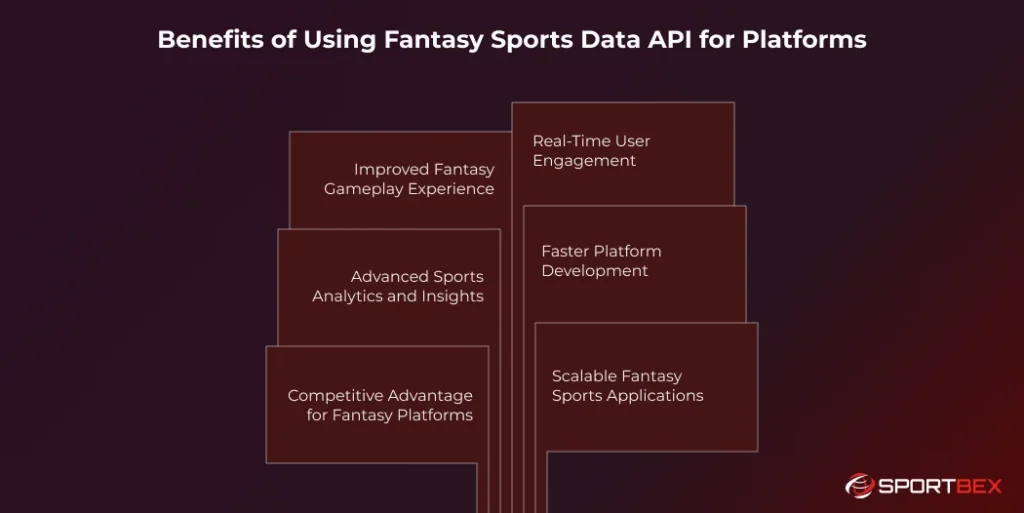
Integrating a Fantasy Sports Data API helps fantasy platforms access real-time sports data, player statistics, and match updates. Platforms can deliver smoother gameplay and more engaging experiences for users. Developers can also build advanced features and improve overall platform performance.
1. Real-Time User Engagement
Live updates help users stay connected to the platform while matches are in progress. Access to Live Sports Data allows users to see scores, player performances and ranking changes instantly, which makes the experience more exciting and interactive.
When users get updates as the action happens, they feel more involved in the game. This keeps them engaged for a longer time and makes the platform more enjoyable to use.
2. Improved Fantasy Gameplay Experience
A reliable system helps make fantasy gameplay more accurate and enjoyable for users. When player statistics and scoring are updated correctly users can trust the platform and focus on creating strong and competitive teams.
Many platforms also use a fantasy football API to build dedicated fantasy leagues for football fans. This allows users to follow matches closely, track player performance and enjoy a more realistic and engaging fantasy football experience.
3. Faster Platform Development
Building a complete sports data system from the beginning can take a lot of time and resources. By using ready-to-use data solutions developers can quickly integrate match details, player statistics and other important information into their platforms.
This helps reduce development time and effort significantly. As a result companies can launch their fantasy sports platforms faster and focus more on improving features and user experience.
4. Advanced Sports Analytics and Insights
Sports analytics has become an important feature for modern fantasy platforms. Structured sports data from Sports Data APIs allows platforms to analyze player performance, team strategies, and match outcomes more effectively.
This data can also be combined with machine learning tools to generate advanced insights and predictions for users. These analytics features improve decision-making for players and help fantasy platforms stay competitive in the growing.
5. Scalable Fantasy Sports Applications
As fantasy platforms grow, they must handle a large number of users and continuous data updates. A scalable system helps ensure that the platform runs smoothly even when many users are active at the same time.
Modern data solutions are built to manage high traffic and large volumes of sports information efficiently. This allows fantasy platforms to expand their services, support more users and maintain a stable and reliable experience as the platform continues to grow.
6. Competitive Advantage for Fantasy Platforms
Fantasy platforms need strong technology to provide a smooth and reliable experience for users. Using a Fantasy Sports Data API helps platforms deliver faster updates, better analytics, and more stable gameplay.
These improvements help platforms stand out in a competitive market where user expectations are constantly increasing. Accurate and real-time sports data also plays an important role in attracting new users and keeping existing players engaged.
Conclusion
Fantasy sports platforms need fast and accurate sports information to keep users engaged. A Fantasy Sports Data API provides real-time match updates, player statistics, and performance insights during live games. A Live Sports Data Provider helps ensure quick and accurate data delivery.
With reliable sports data, platforms can improve user engagement and provide a smoother gaming experience. Accurate information allows users to track player performance, follow match progress, and make better decisions while building their fantasy teams.
As the fantasy sports industry continues to expand, advanced data technologies will play an important role in shaping future platforms. Businesses that adopt strong data solutions can build scalable systems, support more users, and stay competitive in the growing digital sports industry.
Get a Ready-Made Platform On Rent.
Get Started Today
Frequently Asked Questions
A Fantasy Sports Data API delivers structured sports data, including live match updates, player stats, and performance metrics for fantasy platforms.
Fantasy Sports APIs fetch live match data from leagues and databases, updating player stats, scores, and team performance automatically for users.
Real-time data keeps users engaged by showing live scores, player performance, and ranking updates instantly during matches on fantasy platforms.
APIs improve user engagement, provide accurate stats, enable faster platform development, and support scalable, interactive fantasy sports experiences.
APIs use statistical models and live match events to calculate dynamic odds, helping fantasy users make informed decisions during games.
Recent Blog



How to build a low-latency live sports streaming app using APIs
September 9, 2026
 12 min

Cricket API Uptime & Availability: What Developers Should Know
August 27, 2026
13 min
Access Complete Sports Data Fast and Keep Updates Ready!
API Free Trial