
Tennis stadium designers need to find the right balance between capacity and visibility. A stadium should be large enough to hold a big crowd, but every spectator must still have a clear view of the court. Many fans enjoy the energy of a packed stadium during an exciting match, but sitting too far away can reduce that experience.
Tennis does not suit extremely large venues. For example, massive stadiums like Rungrado 1st of May Stadium can hold over 100,000 people, but such size would not work well for tennis. The court is relatively small, so spectators sitting far away would struggle to follow the action.
Tennis stadiums are designed to balance capacity and visibility, ensuring fans enjoy clear views of the match. Modern technology like a Tennis API enhances the sport by providing real-time match data, player stats, and analytics, making the overall tennis experience more efficient, interactive, and data-driven for organizers and fans.
What Makes a Tennis Stadium the Largest?
A tennis stadium is considered the largest based on how many people it can seat and how well it hosts big events. Seating capacity, design, comfort, and safety rules all play an important role in determining its overall size. Major venues are especially important during Biggest Tennis Tournaments, where large crowds gather to watch top-level matches.
- 1. Seating Capacity: This means how many people can sit in the stadium. The more seats a stadium has, the larger it is. VIP seats, boxes, and normal seats all count in the total.
- 2. Design & Structure: Modern stadiums are designed smartly with multiple levels (floors) so more people can watch the match comfortably. They also make sure everyone gets a clear view of the court.
- 3. Tournament Importance: Big tournaments like Grand Slams need bigger stadiums because a lot of fans want to watch them live. That’s why these stadiums are usually very large.
- 4. Multi-Purpose Usage: Some stadiums are not only for tennis they are used for concerts or other sports too. But during tennis events, they are converted into tennis stadiums, which affects their size ranking.
Largest Tennis Stadiums By Capacity
Here’s a detailed comparison of the largest tennis stadiums in the world based on seating capacity, location, and major tournaments:
| NO | Stadium | Location | Capacity | Major Tournament |
|---|---|---|---|---|
| 1 | Arthur Ashe Stadium | New York, USA | 23,771 | US Open |
| 2 | O2 Arena | London, UK | 20,000 | ATP Finals |
| 3 | Indian Wells Tennis Garden | California, USA | 16,100 | BNP Paribas Open |
| 4 | Ahoy Rotterdam | Rotterdam, Netherlands | 16,426 | Rotterdam Open |
| 5 | Accor Arena | Paris, France | 20,300 | Paris Masters |
| 6 | Qizhong Forest Sports City Arena | Shanghai, China | 15,000 | Shanghai Masters |
| 7 | National Tennis Stadium | Beijing, China | 15,000 | China Open |
| 8 | Rod Laver Arena | Melbourne, Australia | 14,820 | Australian Open |
| 9 | Centre Court | London, UK | 14,979 | Wimbledon |
| 10 | Perth Arena | Perth, Australia | 15,500 | United Cup |
Top 10 Largest Tennis Stadiums In The World
1. Arthur Ashe Stadium (New York)
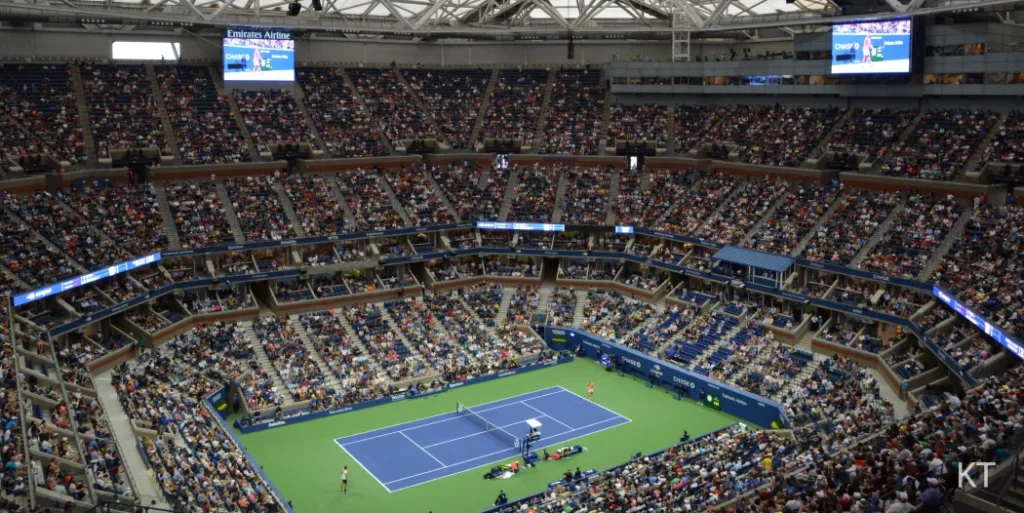
Arthur Ashe Stadium is the largest tennis stadium in the world with a seating capacity of 23,771. Located in Flushing Meadows, it serves as the main venue for the US Open. The stadium opened in 1997 and is named after Arthur Ashe, who won the first US Open in 1968.
It replaced the old Louis Armstrong Stadium as the central court. Known for its electric atmosphere, especially during night matches, it offers a unique fan experience. A retractable roof was added in 2016, allowing matches to continue during rain and making the stadium even more modern and reliable.
2. O2 Arena
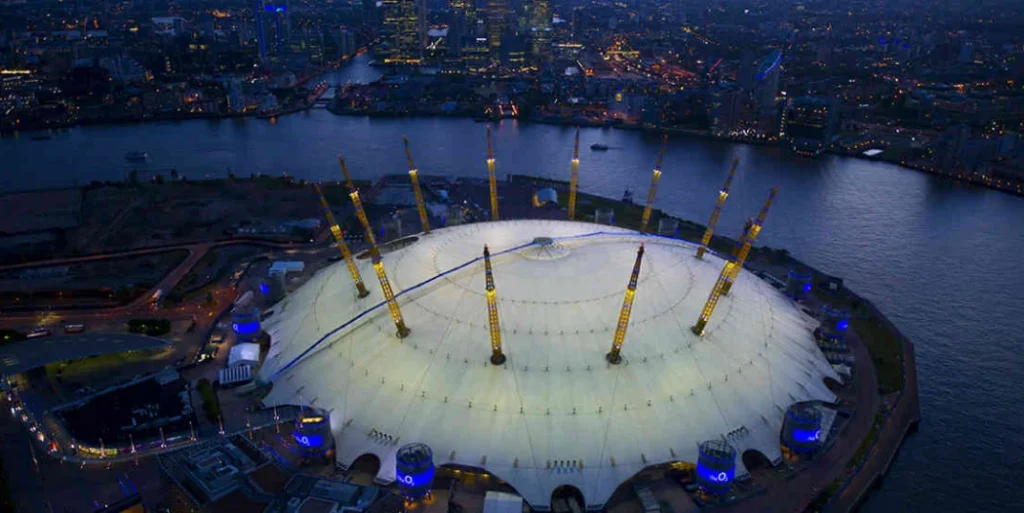
The O2 Arena in London is one of the most famous indoor venues used for tennis events. Although it is a multi-purpose arena, it gained global recognition for hosting the ATP Finals for many years. With a seating capacity of around 20,000 for tennis, it ranks among the biggest tennis stadiums in the world. O
Opened in 2007, the arena offers a modern indoor setting with excellent lighting and acoustics, creating an intense match atmosphere. Its flexible design allows it to transform easily for tennis competitions, making it a key venue for major international tournaments and a favorite among fans and players.
3. Indian Wells Tennis Garden
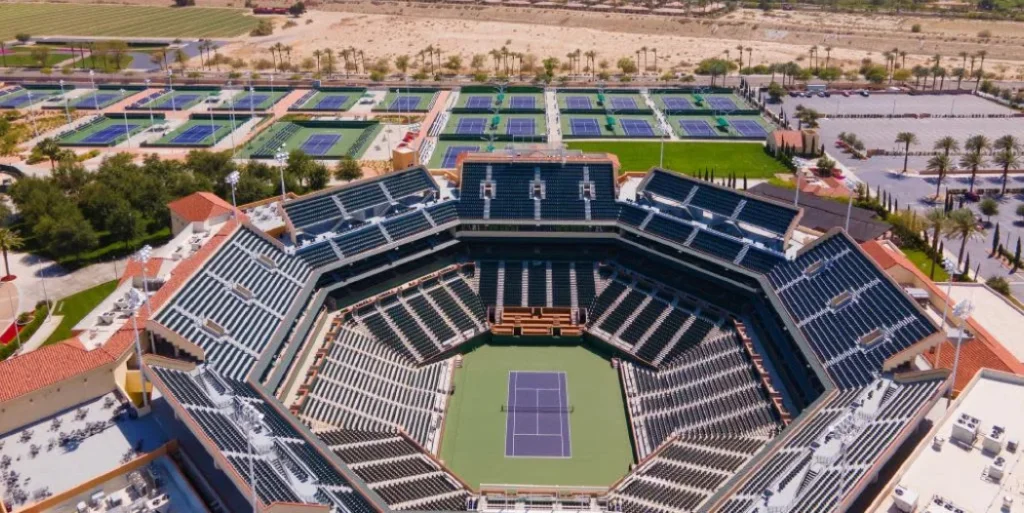
Indian Wells Tennis Garden is one of the largest tennis venues in the world, with Stadium 1 having a seating capacity of 16,100. Located in the Coachella Valley, California, it hosts the BNP Paribas Open, a major ATP and WTA event often called the fifth Grand Slam.
Opened in 2000, the venue is known for its unique desert setting and modern facilities. Owned by Larry Ellison, the complex has seen continuous upgrades, including additional courts and fan amenities. Its relaxed atmosphere, scenic mountain views, and world-class experience make it a favorite among players and spectators alike.
4. Ahoy Rotterdam
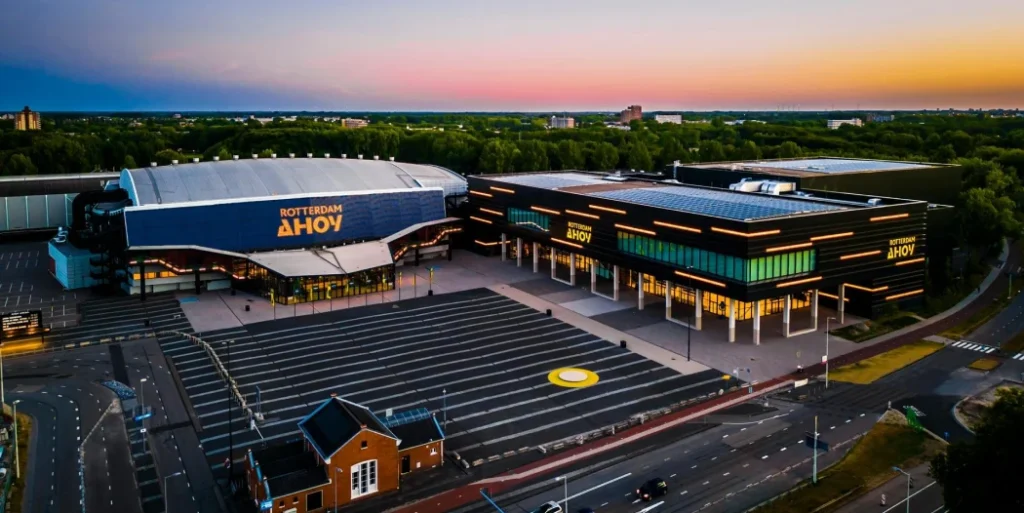
Ahoy Rotterdam is a versatile indoor arena in the Netherlands, widely used for sports, concerts, and major events. It hosts the ABN AMRO Open, one of the top indoor tennis tournaments. The venue covers a large area and can seat around 16,426 spectators for tennis matches.
Originally built in 1950 after World War II, it has undergone several upgrades to remain modern and competitive. Ahoy is also known for its eco-friendly approach, using wind and solar energy. Its sustainable design includes solar panels and a green roof system that helps manage rainwater efficiently while supporting environmental conservation efforts.
5. Accor Arena

Accor Arena is a well-known indoor stadium located in the heart of Paris. It is famous for hosting the Paris Masters and is one of the most important tennis venues in Europe. Opened in 1984, the arena quickly became a key location for major events and started hosting the tournament in 1986.
The stadium has a seating capacity of over 20,300 for tennis matches. Its unique pyramid-like design, covered with grass slopes, gives it a distinctive and modern appearance. A major renovation between 2014 and 2015 upgraded its facilities, making it more comfortable and suitable for world-class tennis events.
6. Qizhong Forest Sports City Arena
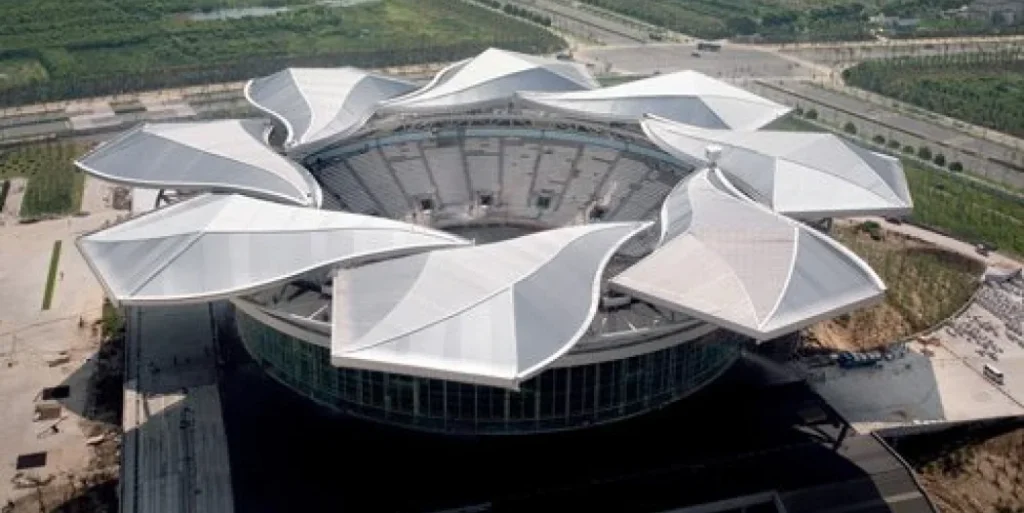
Qizhong Forest Sports City Arena is one of the most unique tennis stadiums in the world. Located in Shanghai, China, it hosts the Shanghai Masters, one of the major ATP tournaments. The stadium has a seating capacity of around 15,000 spectators.
It is famous for its magnolia flower inspired retractable roof design, which opens and closes in a spiral shape, making it visually iconic. Built with modern architecture and advanced facilities, it provides a world-class experience for both players and fans. The arena plays an important role in promoting tennis in Asia and is considered a landmark venue in international tennis events.
7. National Tennis Stadium
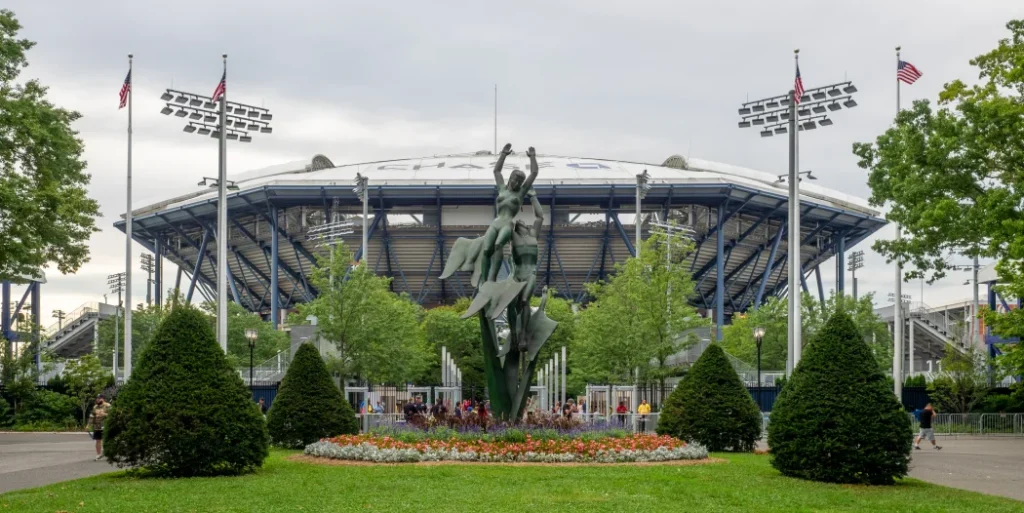
The National Tennis Stadium is part of the National Tennis Center in Beijing, China, and is one of the key venues for the China Open. It is designed with a modern structure and large seating capacity to host international-level tennis events. The stadium is known for its advanced facilities, comfortable seating arrangement, and excellent viewing angles for spectators.
It plays an important role in promoting tennis in Asia and regularly hosts top-ranked players from around the world. With its world-class infrastructure and large-scale design, it stands among the notable tennis stadiums used for major ATP and WTA tournaments. It was opened in October 2007 and has been the home of the China Open since 2009.
8. Rod Laver Arena
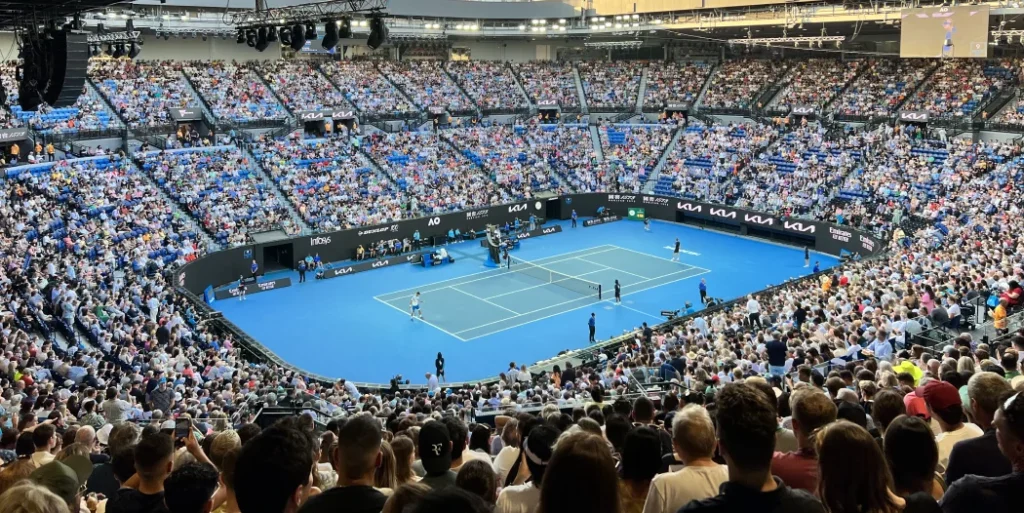
Rod Laver Arena is the main stadium at Melbourne Park and the crown jewel of the Australian Open. Named after Australian tennis legend Rod Laver, it opened in 1988 and has a seating capacity of 14,820 for tennis matches. The arena is also used for concerts and other sports making it a multipurpose venue.
It was the first tennis stadium in the world to feature a retractable roof, allowing play during rain or extreme heat. The stadium is known for its modern design and electric atmosphere. Fans also get a special experience because Rod Laver himself often attends matches there.
9. Wimbledon Centre Court
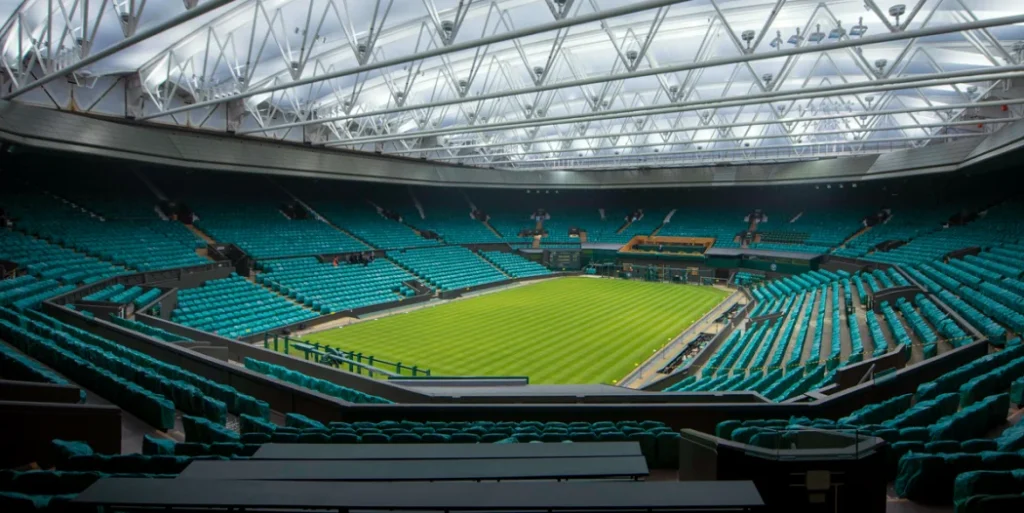
Centre Court at Wimbledon is one of the most iconic tennis stadiums in the world. It opened in 1922 as part of the All England Lawn Tennis and Croquet Club and serves as the main court for the Wimbledon Championships. The stadium is famous for its traditions, including the Royal Box, which hosts members of the British Royal Family and special guests.
A retractable roof was added in 2009 to reduce rain delays. Despite its historic charm, it now offers modern features while maintaining strict traditions like strawberries and cream, making it a unique experience for tennis fans worldwide.
10. Perth Arena
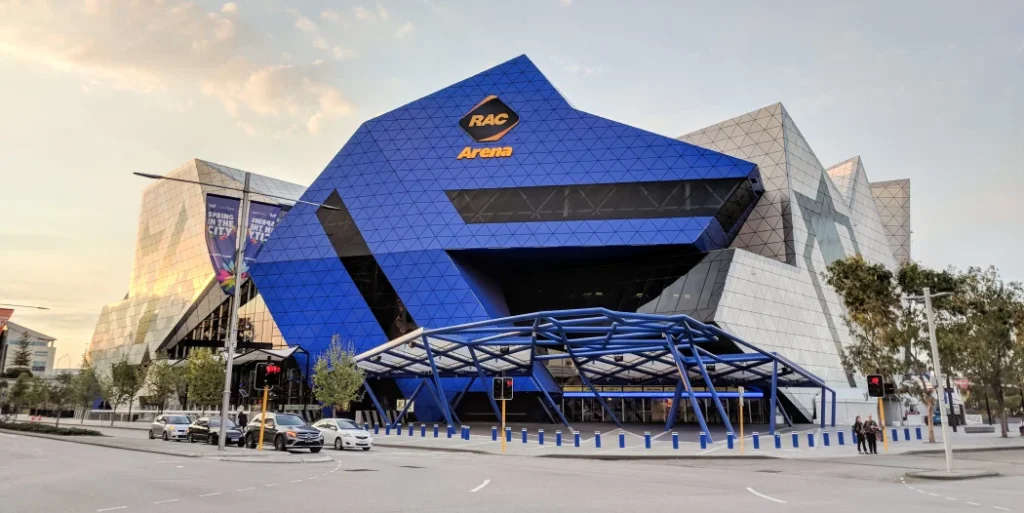
Perth Arena is a modern indoor stadium in Perth, Australia, also known as RAC Arena for sponsorship reasons. It hosts major tennis events like the United Cup, previously the ATP Cup, along with basketball and concerts. The arena is designed based on the Eternity Puzzle concept and features a retractable roof, making it suitable for tennis in all weather conditions.
It also includes underground parking and multiple event spaces for special functions. Although it was initially estimated to cost $150 million, the final construction cost rose significantly to around $550 million, making it one of Australia’s most expensive sports venues.
Conclusion
Tennis stadiums around the world are a perfect example of how design and functionality must work together. Other sports venues that can rely on massive scale alone, tennis stadiums require a careful balance between seating capacity and clear visibility of the court.
From the iconic Arthur Ashe Stadium in New York to the historic Centre Court at Wimbledon, each stadium is built to enhance the spectator experience while maintaining the intimacy of the game.
Famous Tennis Players like Roger Federer, Rafael Nadal, and Novak Djokovic have also made these venues legendary through their unforgettable performances. Modern stadiums focus on features like retractable roofs, multi-purpose use, and improved fan comfort, ensuring matches continue smoothly in all conditions. While capacity is important, the viewing experience remains the true priority in tennis.
Frequently Asked Questions
A tennis stadium is largest based on seating capacity, modern design, comfort, safety, and ability to host major international events with large global audiences.
Seating capacity decides how many fans can watch live matches. Higher capacity creates better atmosphere and increases revenue for big tournaments.
Tennis courts are small, so very large stadiums reduce visibility. Fans far away cannot clearly see fast ball movement and action.
Multi-level seating, clear views, retractable roofs, lighting, and modern facilities improve comfort and match viewing experience.
Yes, many stadiums host concerts, sports, and events besides tennis, making them useful all year round.
Recent Blog



How to build a low-latency live sports streaming app using APIs
September 9, 2026
 12 min

Cricket API Uptime & Availability: What Developers Should Know
August 27, 2026
13 min
Deliver Live Tennis Scores and Stats Ready for Your Users Fast!
API Free Trial