What Is Extra Time in Football? Rules, Duration and Full Explanation

April 28, 2026

7 min read
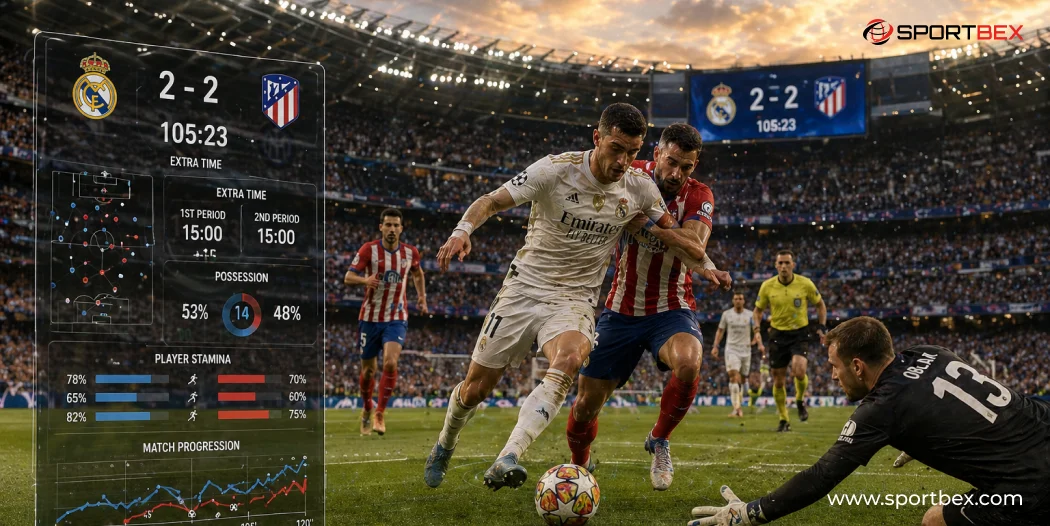
Football often delivers moments of intense drama, especially when a knockout match remains tied after the standard 90 minutes.
At this stage, the pressure rises significantly as players push their physical limits, coaches adjust their tactics and fans anticipate a decisive outcome.
For many viewers, particularly those new to the sport, this situation raises an important question: how long is a soccer game when a winner is required. Understanding these moments is also important for platforms that rely on a Soccer Odds API, where match outcomes and probabilities shift rapidly during extended play.
Football follows a well-defined structure for handling tied matches in knockout competitions, ensuring results are decided fairly while maintaining the game’s competitive balance.
In this guide, we will answer the key question: What is Extra Time in Football? Rules, Duration and Full Explanation. You will gain a clear understanding of how extra time in football works, when it is used and why it plays such a crucial role in modern football.
What Is Extra Time in Football?
Extra time in football is a 30-minute additional period played when a match ends in a draw after 90 minutes in knockout competitions, often referred to as extra time in soccer in different regions.
It consists of two halves, each lasting 15 minutes, and is used to determine a winner.
Unlike regular time, this phase is not always used. It only applies when a result must be decided on the same day, making extra time in football a key part of tournament structure.
This format is widely seen across major tournaments and professional Soccer Leagues, where progression depends on a clear outcome.
This period is simply an extension of the match. Teams carry forward their score, discipline records and substitutions into this stage, making it a continuation rather than a restart.
When Is Extra Time Used in Football Matches?
Extra time in football is used in knockout matches where a winner must be decided. In regular league games, matches can end in a draw after 90 minutes.
In major tournaments like the FIFA World Cup or the UEFA Women’s Champions League, matches go into extra time if the score is level, highlighting the importance of extra time in football in competitive formats.
Extra time applies when:
- A knockout match needs a winner
- Teams cannot share points
- Tournament rules require immediate results
Understanding these football extra time rules is also important for platforms using Soccer APIs for live Match Data, as match duration and stats extend beyond regular time.
How Long Is Extra Time in Football?
The length of extra time in football is fixed at 30 minutes. It is divided into two halves of 15 minutes each.
So, if you are wondering again how long a soccer game is, the answer can increase from 90 minutes to 120 minutes, excluding stoppage time when extra time is played.
This extended duration significantly affects player performance and match outcomes, especially during extra time in football.
From a data perspective, platforms using live football data API must account for this additional period to ensure accurate real-time updates and match tracking.
Extra Time Rules in Football (Complete Breakdown)
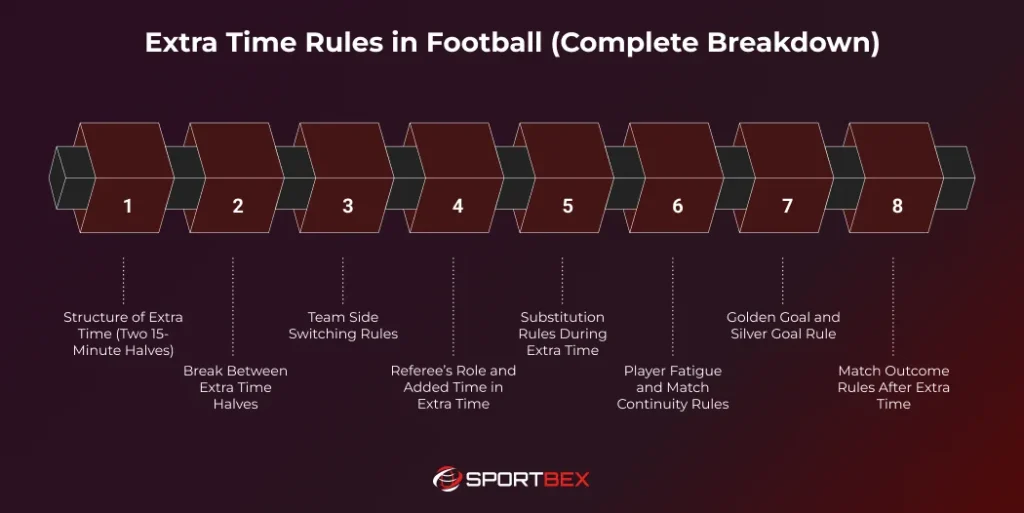
Understanding soccer extra time rules helps you appreciate how structured and fair this phase is. These rules ensure that both teams get equal opportunity while maintaining the competitive balance of the game.
For developers and analysts working with soccer API guides, these rules are essential because they define how match events are recorded and processed during extra time in football.
Structure of Extra Time (Two 15-Minute Halves)
Extra time is divided into two equal halves of 15 minutes each. This ensures consistency and fairness across all professional competitions.
Both teams get equal time to attack and defend under the same conditions. This balanced format is essential for maintaining competitive integrity.
Break Between Extra Time Halves
There is only a short break between the two halves of extra time. Players get minimal time to recover before play resumes quickly.
This limited rest increases physical pressure on players. It also keeps the intensity of the match high until the end of extra time in football.
Team Side Switching Rules
Teams switch sides after the first 15-minute half of extra time. This ensures fairness by balancing external playing conditions.
Factors like wind or pitch direction can influence gameplay. Switching sides helps reduce any advantage for either team.
Referee’s Role and Added Time in Extra Time
Referees can add stoppage time at the end of each half if there are delays. This ensures actual playing time is maintained.
Tracking these moments accurately is crucial for systems using Track Using a Football Odds API, as odds can shift rapidly during added time.
Substitution Rules During Extra Time
Teams are usually allowed one extra substitution during this phase. This rule helps manage player fatigue and reduce injury risks.
Fresh players can impact the match in crucial moments. It also gives coaches more tactical flexibility.
Player Fatigue and Match Continuity Rules
Players often face extreme fatigue during extra time. This affects their speed, focus and overall performance.
Despite fatigue, the match continues without major interruptions. The referee manages stoppages and ensures smooth gameplay.
Golden Goal and Silver Goal Rule
The golden goal rule allowed a match to end immediately if a team scored during extra time. The first goal automatically decided the winner without completing the full period.
The silver goal rule meant the match ended if a team was leading at the end of the first half of extra time. If the score was still level, the second half was played as usual.
Match Outcome Rules After Extra Time
If the score remains tied after extra time, the match goes to penalties. Each team takes turns to decide the winner through spot kicks.
This phase is highly intense and unpredictable for both teams. It ultimately ensures that a clear winner is determined.
Key Differences: Extra Time vs Injury Time in Football
- Injury time (stoppage time) is added at the end of each half to cover delays like fouls, substitutions and injuries during the regular 90 minutes.
- It is part of the original match duration and does not extend the game beyond regulation time.
- Extra time in football is a separate 30-minute period played only in knockout matches when the score is level after 90 minutes.
- If you want to predict football results using odds, understanding this difference is important because extra time changes match dynamics and outcomes significantly.
Why Extra Time Is Important in Football
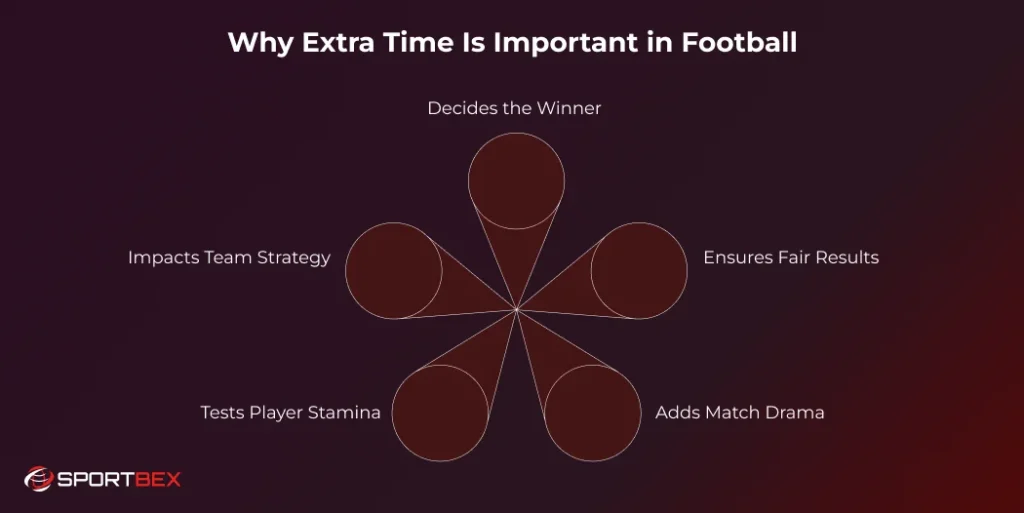
Understanding Soccer Extra Time Rules reveals why this period is so crucial to the sport’s identity. It goes far beyond simply adding minutes to the clock.
Decides the Winner
Extra time in football ensures that a match produces a clear winner when a draw is not acceptable. It provides teams with an additional opportunity to settle the result through gameplay rather than going straight to penalties.
Get Your Soccer Data Here
Live scores, player stats, and team data from one simple API.
Ensures Fair Results
By extending the match, teams get more time to prove their performance and tactical strength. This makes the outcome more balanced and reduces the role of chance in deciding the winner.
Adds Match Drama
Extra time creates intense and memorable moments as players compete under pressure and fatigue. Many iconic performances by the greatest soccer players have come during this crucial phase.
Tests Player Stamina
Playing beyond 90 minutes pushes players to their physical and mental limits. Endurance, focus and fitness become key factors in maintaining performance during extra time.
Impacts Team Strategy
Coaches often adjust tactics based on player fatigue and match situations during extra time. This strategic shift is also important for systems like Build a Soccer Prediction App, where match behavior changes significantly.
Conclusion
Understanding extra time in football gives you a deeper appreciation of the game. It is not just an extension of time but a true test of endurance, strategy and mental strength.
From its fixed 30-minute structure to its impact on tactics and player performance, this phase plays a vital role in deciding outcomes in knockout football. The football extra time rules ensure fairness while keeping the excitement alive for fans around the world.
The next time you watch a match that goes beyond 90 minutes, you will know exactly what is happening and why it matters. Whether you are a fan, analyst or developer working with football data, mastering these rules adds real value to your understanding of the sport.
All Your Soccer Data in One Place
Build your platform on reliable data with our 99.9% uptime guarantee
Frequently Asked Questions
A standard soccer game lasts 90 minutes, divided into two halves of 45 minutes each. However, the total duration can extend with stoppage time and, in knockout matches, extra time and penalties if needed.
A match can last around 120 minutes including extra time, plus stoppage time and penalties. In total, it may take close to three hours from start to finish.
No, substitutions are not allowed after extra time ends. An exception is made only if a goalkeeper is injured and a substitution is still available.
Injury time is added to cover delays during regular play. Extra time is an additional 30-minute period used only in knockout matches to decide a winner.
No, some competitions skip extra time and go directly to penalties. The rules depend on the specific tournament format.
Recent Blog



How to build a low-latency live sports streaming app using APIs
September 9, 2026
 12 min

Cricket API Uptime & Availability: What Developers Should Know
August 27, 2026
13 min
Track Matches, Goals, and Stats Instantly with Our Live Soccer API
API Free Trial