
The digital sports world runs on data, powering fan engagement, fantasy apps, betting platforms and live broadcasts. Cycling generates a large amount of information during every race, including rider speed, stage results, rankings and historical records.
So, What Is a Cycling API? Complete Guide for Beginners. It is a system that allows apps and websites to automatically access structured cycling data in real time. Instead of manually collecting results, platforms use a Sports API for cycling to receive live updates, rider statistics, tournament schedules and past race data instantly and accurately.
These APIs work by connecting applications to reliable data sources through secure endpoints. They provide both static data, like rider profiles, and live data, such as ongoing race results.
Businesses use a Cycling API to power fantasy platforms, live tracking apps, analytics dashboards, and betting systems efficiently. Choosing a reliable provider like SportBex ensures accuracy, speed, scalability, and strong technical support for long-term growth in the sports technology industry.
What Is a Cycling API?
A Cycling API (Application Programming Interface) is a software tool that allows apps, websites, and digital platforms to automatically access cycling-related data in a secure and organized way. Instead of manually collecting information from race organizers or different websites, developers connect directly to a data provider through API endpoints.
These endpoints deliver structured data in formats like JSON or XML, making integration simple and efficient. A professional cycling API provides live race timings, rider profiles, stage results, rankings, event schedules, team information and historical race records.
A Cycling stats API focuses more on performance data, comparisons and detailed rider statistics across seasons. A dedicated API ensures accurate data, real-time updates, high scalability, secure access and consistent formatting.
How Does a Cycling API Work?
A Cycling API works by collecting data from official race organizers, GPS tracking systems, timing tools, team analytics platforms, and sports data partners. This includes important cycling tournament data like stage results, rider rankings, penalties and overall standings.
Once collected, the raw data is cleaned, validated, standardized, and structured to ensure accuracy and consistency. The processed data is then made available through specific API endpoints such as events, live results, riders and standings allowing platforms to request only the data they need.
A professional API also separates static data and live data, including rider profiles and historical results for static data and real-time timings and leaderboard changes for live updates. Through Cycling API integration, this data is seamlessly displayed in apps, fantasy platforms, dashboards and betting systems.
Key Features of a Modern Cycling API
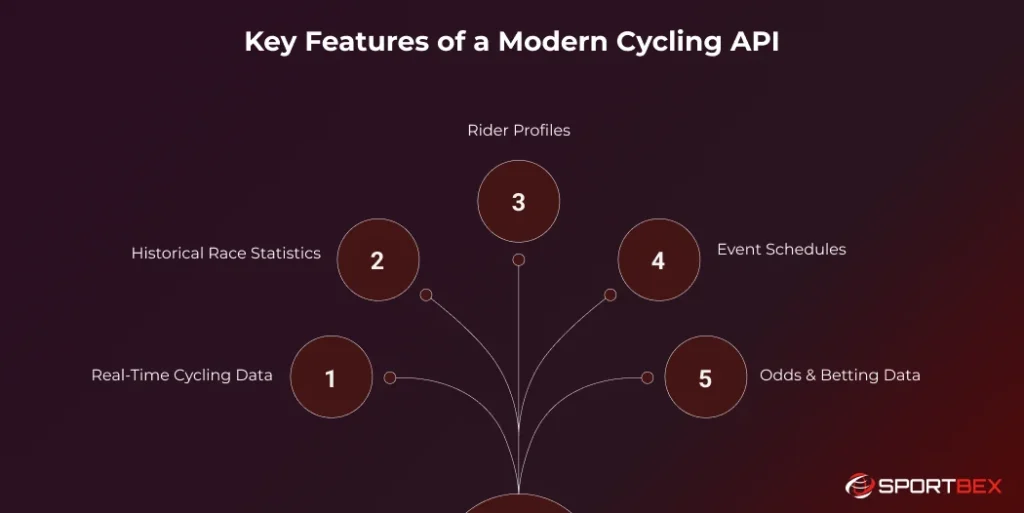
Modern cycling APIs offer real-time race updates, detailed rider statistics, historical data, event schedules and betting odds. They are scalable, reliable and designed to support analytics, fantasy platforms and live sports applications.
Real-Time Cycling Data
A Live cycling data feed gives instant updates during a race so users can follow the action without delay. It shows important details like stage progress, rider time splits, leaderboard changes, key event milestones and live incidents that happen on the course.
This information is delivered automatically through an API ensuring accuracy and speed. During major global tournaments where millions of fans watch simultaneously, fast and reliable data updates are essential for a smooth and engaging user experience.
Historical Race Statistics
Historical race statistics are essential for advanced cycling platforms because they provide long-term performance insights. A professional pro cycling stats api delivers multi-season records, allowing users to analyze how riders and teams have performed over the years.
It includes rider comparisons, team history, win-loss ratios and detailed stage breakdowns. This structured historical data helps platforms create predictive models, identify performance trends, and improve fantasy projections, giving users deeper insights beyond just live race updates.
Rider Profiles
Comprehensive rider data includes important details that help fans and platforms understand each cyclist better. This information covers nationality, current team affiliation, age, and overall career statistics such as total wins, podium finishes and rankings.
It also includes key performance metrics like average speed, endurance levels, and recent race results. Such structured data supports analytics dashboards, improves comparisons between athletes and enhances fan engagement by providing deeper insights into performance trends and competitive form.
Event Schedules
Access to race calendars through a cycling API allows platforms to stay updated with upcoming tours, stages and major competitions. Apps and websites can display future races clearly, enable users to set reminders and send timely push notifications before events begin.
If there are schedule changes, such as time updates or cancellations, the system updates automatically. This ensures accuracy, saves manual effort and helps fans stay informed so they never miss important cycling events.
Odds & Betting Data
For betting operators, Cycling APIs for sports apps provide essential odds and market information in one place. This includes pre-race odds released before the event starts, live in-play odds that change during the race, outright winner markets for overall champions, and stage winner markets for individual race stages.
By integrating this data into their platforms, betting companies can automatically update odds, manage risks more efficiently and settle bets quickly and accurately once results are confirmed.
Benefits of Using a Cycling API
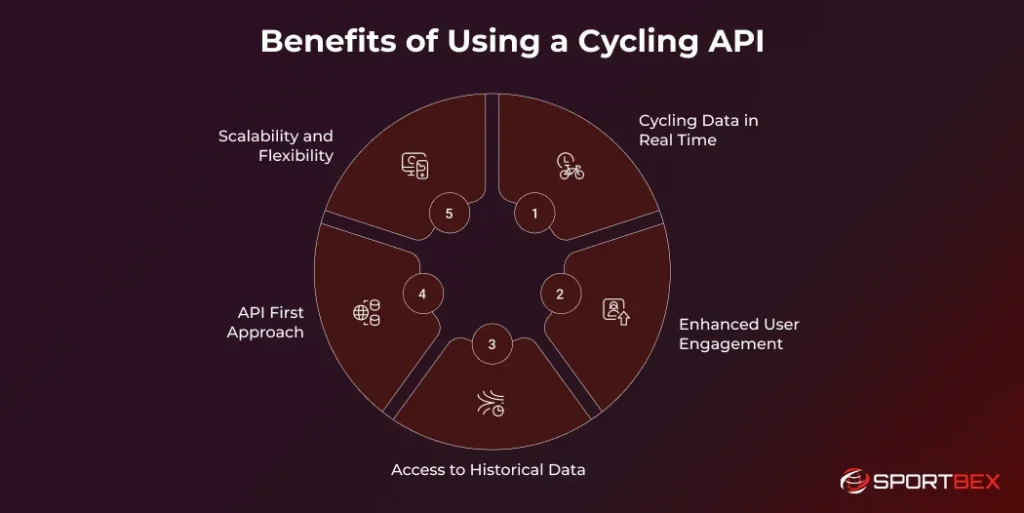
Using a Cycling API helps developers deliver real-time race data, improve user engagement, access historical stats, and scale platforms efficiently and securely. Let’s break down the key benefits:
Cycling Data in Real Time
A professional Cycling Data API delivers race results, rankings, and timing updates instantly as the event happens. This means users can see live positions, time gaps, and leaderboard changes without delay. In the fast-moving digital world, fans expect real-time updates, especially during major races.
If data is slow or inaccurate, users may lose trust and switch to another platform. Real-time updates keep audiences engaged, improve user experience and help platforms stay competitive in the sports industry.
Enhanced User Engagement
Platforms that use cycling analytics tools can create a more engaging and interactive experience for users. Features like rider comparisons, performance charts, head-to-head analysis, and live leaderboards help fans better understand race dynamics and follow their favorite athletes more closely.
These insights keep users interested and encourage them to spend more time on the platform. A well-structured Sports Data API ensures all these features load quickly, update accurately, and run smoothly without slowing down the app or website.
Get Live Odds for Every Race
Integrate real-time cycling betting odds and stage matchups into your platform.
Access to Historical Data
Access to historical data allows platforms to show past race results and rider performances and team records in one organized system. This helps users compare statistics and track progress over time and understand performance trends. For fantasy contests historical data supports smarter team selection and better predictions.
For sports journalists and analysts it provides context for storytelling and deeper insights. By offering detailed archives platforms can create more engaging content and give users a richer and more informed cycling experience.
API First Approach
An API-first approach means building your platform around APIs from the beginning. This makes development faster because teams can work on different features at the same time. It also creates a cleaner and more organized system architecture. APIs allow your platform to work smoothly across web, mobile, and other devices.
Adding new features becomes easier without rebuilding the entire system. Overall, this approach keeps your platform flexible, scalable and ready for future technological changes.
Scalability and Flexibility
A robust API infrastructure can handle sudden traffic spikes during major cycling tours, support millions of users simultaneously, and manage increasing data requests as your platform grows. This ensures smooth performance even during high-demand global events.
With such a system, platforms can add new features easily and serve users reliably worldwide without interruptions, maintaining a seamless experience for fans, fantasy players, and broadcasters alike.
Popular Use Cases of Cycling API
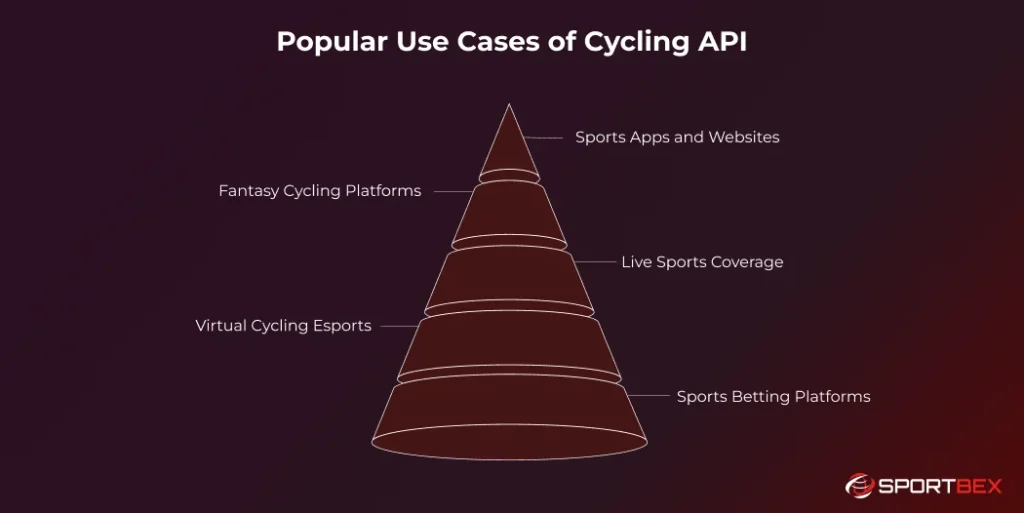
Cycling APIs are not limited to one application. They serve a wide variety of industries and digital products. Below are some of the most common use cases.
Sports Apps and Websites
Modern sports apps and websites use cycling APIs to provide fans with up-to-date race information. They display live standings, race summaries and rider rankings, keeping users informed throughout each event. Push notifications alert fans about important updates, results, or stage progress.
By combining static data like rider profiles and historical stats with dynamic live event tracking, these platforms create an interactive and engaging experience. This integration ensures users can follow races in real time, access detailed insights and stay connected with their favorite riders and teams seamlessly.
Fantasy Cycling Platforms
A competitive Fantasy Sports App relies on accurate, real-time data to keep games fair and engaging. A Cycling API automates key processes like calculating rider points, updating team rankings, and refreshing leaderboards instantly.
This ensures players see live results and score changes without delays or errors. By providing reliable updates, the API maintains transparency and fairness for all participants, keeping users engaged throughout the tournament. Developers can focus on enhancing app features instead of manually managing scores and data.
Live Sports Coverage
Broadcasters use cycling APIs to make their broadcasts more dynamic and informative. APIs feed data directly to on-screen graphics, allowing viewers to see live race positions, timings and rider stats. Commentators get real-time dashboards to provide accurate insights during the event.
Live analytical overlays help highlight key moments, performance trends, and comparisons between riders. By integrating this data in real time, broadcasters can deliver engaging, accurate and interactive coverage that keeps audiences informed and invested throughout the race.
Virtual Cycling Esports
APIs help connect real-world performance data to gaming platforms. Riders’ speed, distance, heart rate and power output are tracked in real time and reflected in the virtual environment, making the races realistic and interactive.
Fans and players can see live updates, compare performance and compete in virtual leaderboards that mirror actual events. This integration brings the excitement of real cycling into esports api, enhances user engagement, and opens new opportunities for tournaments, fan interaction and digital sponsorships in the cycling world.
Sports Betting Platforms
Sports betting platforms depend on accurate and secure sports data feeds to operate smoothly. These feeds help update odds in real time, confirm race results instantly and settle markets correctly. They also allow operators to manage risks effectively by monitoring live events and adjusting betting options as needed.
Without reliable and timely data betting platforms cannot provide fair, transparent and efficient services which can lead to errors, user dissatisfaction and potential financial losses. A dependable Cycling API ensures all betting processes run seamlessly and accurately.
How to Choose the Right Cycling API Provider
Selecting the right provider requires strategic evaluation.
- Data Accuracy: Verifying sources and validation methods prevents errors, maintains credibility and builds trust with users on your platform or application.
- Update Frequency: High-frequency updates ensure that live race information, rider positions, and results are delivered instantly to apps and platforms, keeping users informed in real time and maintaining accuracy during fast-paced cycling events.
- Coverage: Coverage should include international tours, regional races, youth events, and esports competitions. Broad and complete coverage ensures platforms provide accurate, up-to-date information, enhancing user experience and expanding business opportunities.
- API Documentation: Clear API documentation makes it easy for developers to understand how to use the API, integrate it quickly into their apps, fix issues faster, and save time and development costs while ensuring smooth implementation.
- Support: Reliable support helps platforms run smoothly by quickly resolving technical issues, assisting developers and ensuring users get accurate, uninterrupted data, keeping apps and services stable and efficient during both regular use and high-demand events.
Why Choose Sportbex as Your Cycling API Provider?
Sportbex as your Cycling API provider ensures your platform gets accurate, real-time cycling data with reliable performance. Sportbex offers comprehensive coverage of global and regional tournaments, including rider stats, stage results, and historical data.
Their APIs are designed to be developer-friendly, making integration simple and flexible for websites, apps, fantasy platforms, and esports solutions. With high-speed updates, customizable endpoints and scalable infrastructure, Sportbex ensures your platform can handle large user volumes without delays.
Trusted by leading sports apps and broadcasters, Sportbex combines accuracy, reliability, and support, allowing you to focus on building engaging experiences while they provide the data backbone needed for growth and innovation.
Conclusion
In the modern sports ecosystem, data drives every interaction. From live race tracking and fantasy scoring to predictive analytics and betting markets, cycling platforms depend on structured and automated information systems.
Understanding What is a Cycling API is more than a technical question, it’s a strategic business insight. APIs, including solutions like Rapidapi, transform raw competition metrics into scalable, real-time digital experiences.
As user expectations continue to rise, platforms must deliver instant updates, accurate statistics, and engaging analytics. A professional cycling API makes this possible by connecting official race data directly to applications in a secure and scalable way.
Cycling Data You Can Depend On
Access detailed career stats, results, and rankings for every pro cyclist.
Frequently Asked Questions
A Cycling API is a tool that provides real-time and historical cycling data for apps, websites, and platforms. It helps developers deliver accurate stats, race updates, and performance insights to users.
Cycling APIs fetch live data from official sources and events through API endpoints, allowing apps to show instant race results, rider stats, and leaderboards.
Yes, most Cycling API providers offer beginner-friendly documentation and sample code, making it easy for developers with basic knowledge to integrate.
Key benefits include real-time cycling data, enhanced user engagement, access to historical race data, scalability for apps, and flexibility to customize data feeds.
Cycling APIs are widely used in sports apps and websites, fantasy cycling platforms, fitness and training apps, live sports coverage, and virtual cycling esports.
Recent Blog



How to build a low-latency live sports streaming app using APIs
September 9, 2026
 12 min

Cricket API Uptime & Availability: What Developers Should Know
August 27, 2026
13 min
Integrate Real-Time Cycling Results into Your App Easily
API Free Trial