
The esports industry is expanding rapidly and has become a multi billion dollar market. Millions of viewers follow competitive gaming tournaments across streaming platforms and mobile apps. This growth is increasing the demand for reliable Real-Time Esports Data across digital platforms.
Many businesses are building fantasy esports platforms, analytics dashboards, streaming tools, and betting services. These platforms rely on structured information such as match statistics, player performance data, tournament brackets, and team rankings. A reliable Esports Data API allows developers to access this data easily and build engaging user experiences.
This guide explains How to Integrate an Esports Data API for Real Time Gaming Platforms. It explores how APIs work and why they are important for modern esports platforms. Developers can also learn how an Esports Game Data API helps build scalable and competitive digital products.
Modern API solutions simplify development for esports businesses. They help platforms process large datasets and deliver relevant insights to users through apps and websites. As esports continues to expand globally, structured data integration is becoming essential for digital esports platforms.
What Is an Esports Data API?
An Esports Data API connects applications with large esports databases. It delivers structured information about tournaments, teams, players, and match results through standardized endpoints. In this Esports data API guide developers can understand how platforms access reliable esports information and display it across apps and digital services.
Developers can request data through simple API calls. The API then returns structured responses that platforms can display in dashboards, mobile apps, and live score systems. This process helps developers build esports platforms without collecting and managing raw data manually.
Traditional sports platforms, esports platforms manage a more complex ecosystem. Multiple game titles run tournaments across different regions and time zones. An Esports Game Data API organizes these large datasets so developers can access them in a clear and structured format.
These APIs gather data from several sources such as publishers, tournament organizers, streaming platforms, and esports databases. The information is processed and standardized before delivery. Many systems also provide Real-Time Esports Data through WebSocket connections for instant match updates.
Benefits of Using an Esports Data API
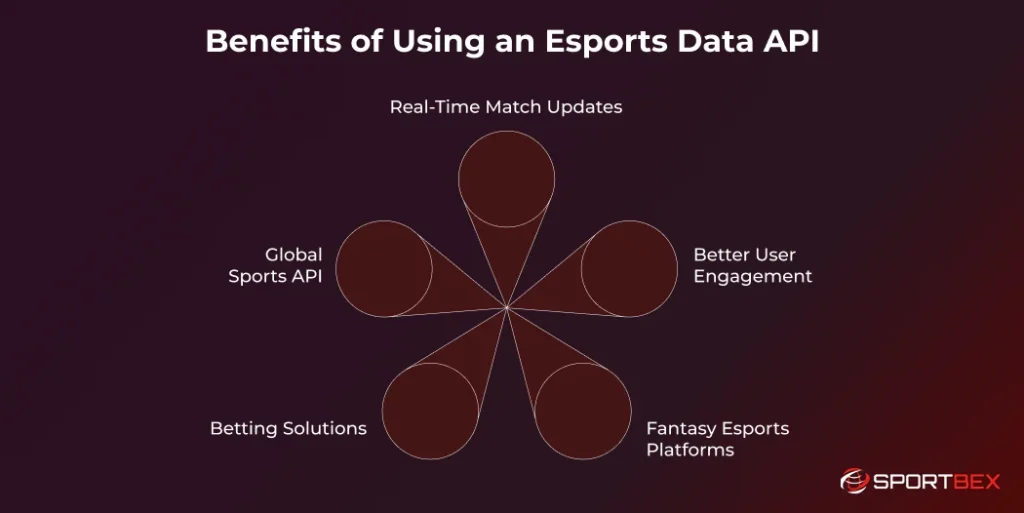
Real-Time Match Updates
Live esports matches change very quickly. A single round or team fight can completely shift the result of a game. Because of this speed, platforms must deliver instant match updates. A reliable Live Esports Feed API helps platforms display scores, player actions, and match progress without delay.
Most platforms deliver Real-Time Esports Data using technologies like WebSocket connections or Server Sent Events. These systems send updates directly when in game events occur. This reduces server load and improves performance. Tournament platforms also use live esports API for tournaments to track match progress and brackets.
Better User Engagement
Detailed esports data helps platforms create stronger engagement features. Fans want more than match results. They want to understand strategies, team performance, and player history. With structured data, platforms can provide deeper insights that keep users interested in the game.
Player statistics allow users to analyze performance trends and compare players across tournaments. Historical records also support charts and performance reports. These tools highlight the growing impact of analytics in esports. Interactive features such as predictions and match analysis become more valuable with strong data integration.
Fantasy Esports Platforms
Fantasy esports platforms depend heavily on structured statistics. Users create teams using professional players and earn points based on their real match performance. To support this system, platforms need detailed player statistics and reliable match data.
A powerful Esports Game Data API helps fantasy platforms process large datasets quickly. Developers can access information such as kills, assists, damage output, and objective control. Many fantasy apps also combine historical insights with Real-Time Esports Data to help users select stronger lineups.
Betting Solutions
Esports betting continues to grow as competitive gaming gains global popularity. Betting platforms depend on fast and accurate data feeds to manage betting markets. A reliable e-sports betting api helps sportsbooks track match progress and generate betting opportunities.
Many platforms also use an esports odds api to calculate and update betting odds in real time. Because match conditions change quickly, platforms rely on a stable Live Esports Feed API for live betting markets. Developers often combine this with a Sports Betting API and analyze data from top esports betting sites.
Use Cases of Esports Data API
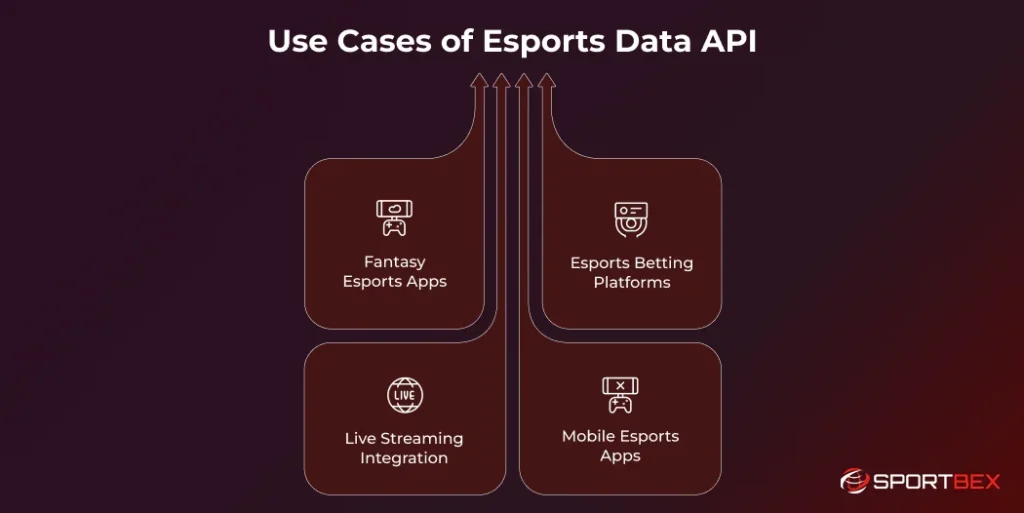
Fantasy Esports Apps
Fantasy esports apps rely heavily on structured statistics and match information. These platforms track player performance across multiple tournaments and game titles. A reliable Esports Data API helps developers organize complex datasets and update scores instantly using Real-Time Esports Data during live competitions.
- Track player statistics such as kills, assists, and objective control
- Analyze historical performance and opponent matchups
- Update fantasy scores instantly during live matches
- Help users build stronger lineups using data insights
Get Live Odds for Top Esports Titles
Use our reliable and fast API to create an engaging fan experience.
Esports Betting Platforms
Esports betting platforms require accurate and fast data systems to manage betting markets effectively. Using a reliable esports api allows platforms to monitor match progress and process real time updates. Many platforms also use an esports odds api or e-sports betting api to manage dynamic betting markets during live matches.
- Offer pre match and live betting markets
- Update betting odds using real time match data
- Support micro betting on rounds or in game objectives
- Compare data from esports API providers for reliable feeds
Live Streaming Integration
Streaming platforms are integrating esports data to improve the viewing experience for fans. By combining broadcast streams with a Live Esports Feed API, platforms can show real time statistics and player insights alongside the match. This creates a more interactive and informative environment for viewers.
- Display live match statistics during broadcasts
- Show player performance data and match history
- Provide real time score updates through data overlays
- Support second screen experiences through companion apps
Mobile Esports Apps
Mobile esports apps must deliver fast updates while managing data efficiently. A reliable Esports Data API helps developers send notifications, display match results, and update statistics in real time. These apps rely on Real-Time Esports Data to keep users informed about tournaments and team performance.
- Send alerts for match start times and final results
- Provide live score updates during tournaments
- Deliver personalized notifications for favorite teams
- Optimize performance for mobile devices with limited screens
Step-by-Step Guide to Integrating Esports Data API
This guide explains how developers can Integrate Esports API systems into their applications while maintaining performance and reliability.
Step 1: Choose the Right API Provider
Selecting the right provider is the first step when integrating an Esports Data API. Developers should review game titles and tournament coverage and compare top esports API providers to ensure the platform receives reliable and accurate data. Reliable providers also deliver consistent Real-Time Esports Data updates.
- Check supported game titles and tournament coverage
- Confirm access to Real-Time Esports Data
- Compare reliability and update frequency
- Review documentation and developer support
- Analyze pricing plans and request limits
Step 2: Obtain API Credentials
After selecting a provider, developers must register for API access and generate authentication credentials. These credentials allow applications to send requests and securely receive esports data from the API system.
- Create a developer account with the API provider
- Generate API keys or authentication tokens
- Review usage limits and rate restrictions
- Configure authentication within your application
- Secure API credentials to prevent unauthorized access
Step 3: Set Up Your Development Environment
Preparing the development environment ensures the platform can process esports data efficiently. Developers should configure databases, backend services, and caching systems to maintain stable performance. This setup helps applications deliver relevant esports insights and statistics to users efficiently.
- Set up databases for match and player data
- Implement caching systems to reduce API requests
- Configure monitoring tools for performance tracking
- Prepare backend services for data processing
- Ensure scalability for future data growth
Step 4: Implement API Integration
This step connects the application to the API endpoints to retrieve esports information. Developers typically start with endpoints for matches, teams, and player statistics while preparing systems to handle live updates through a Live Esports Feed API.
- Connect to core API endpoints for matches and teams
- Implement request handling and response parsing
- Add error handling for rate limits and network issues
- Integrate Live Esports Feed API for real time updates
- Optimize request frequency for performance
Step 5: Test and Deploy
Before launching the platform, developers must thoroughly test the API integration. This ensures stable performance and accurate Real-Time Esports Data, especially for platforms similar to top esports betting sites that depend on fast and reliable live match updates.
- Test all API endpoints and responses
- Simulate high traffic scenarios during live events
- Verify Real-Time Esports Data updates correctly
- Monitor system performance and fix errors
- Deploy the integration and track live performance
Conclusion
The esports industry continues to expand as competitive gaming attracts global audiences across streaming platforms and digital communities. Major tournaments generate millions of viewers and strong engagement worldwide. This growth is encouraging businesses to build advanced platforms for esports content and analytics.
Digital platforms are evolving quickly to meet modern fan expectations. Users want live scores, detailed statistics, and instant match insights while following tournaments. To learn how reliable data solutions support these platforms, contact us for more information.
Reliable data integration is now essential for esports platforms. Businesses that integrate Esports API systems can deliver accurate updates, advanced statistics, and engaging user experiences. As the industry grows, data driven platforms will continue shaping the future of esports.
Your All-in-One Esports Data Feed
Deliver real-time scores, stats, and in-game events for top esports titles.
Frequently Asked Questions
An Esports Data API provides real-time data on esports games, including match schedules, live scores, player stats, and team rankings. It helps developers integrate accurate esports data into apps, betting platforms, and fantasy sports solutions.
By delivering instant updates, live scores, and interactive stats, an Esports Data API keeps users engaged with real-time information, enhancing their experience and retention rates.
Yes! Esports Data APIs are perfect for fantasy platforms. They provide detailed stats like player performance and match history, enabling accurate scoring and live draft experiences.
Real-time data ensures accurate odds, live score tracking, and fast bet settlements, which are crucial for building trust and maintaining a seamless betting experience.
Look for coverage across multiple esports titles, low latency, easy integration, detailed documentation, and scalable pricing plans to fit your platform’s needs.
Recent Blog



How to build a low-latency live sports streaming app using APIs
September 9, 2026
 12 min

Cricket API Uptime & Availability: What Developers Should Know
August 27, 2026
13 min
Boost your Esports platform with live stats and performance data
API Free Trial