How to Access Live Horse Racing Results via Horse Racing API

September 26, 2025

10 min read

Horse racing remains one of the most data-driven sports in the global betting ecosystem. Every race generates thousands of micro-events from starting gate movements to finishing times and modern betting platforms rely heavily on live horse racing results to process this data instantly.
For sportsbook operators, betting platform owners, and sports analytics companies, access to real-time race results is not simply a feature; it is a core infrastructure requirement. When bettors place wagers, they expect immediate race updates, fast bet settlement, and accurate race outcomes. Delays in race results can negatively affect user experience, operational efficiency, and platform credibility.
This is where a live horse racing API becomes essential. APIs allow sportsbooks and racing applications to retrieve structured race data automatically, eliminating the need for manual updates. Instead of waiting for official race reports, platforms can stream horse racing live results in real time, enabling automated bet settlement, live dashboards, and racing analytics tools.
In this guide, we will explain how to access live horse racing results via API, how sportsbooks integrate racing data feeds, and how real-time race data improves betting platforms, racing apps, and analytics systems.
What Are Live Horse Racing Results?
Live horse racing results refer to race outcomes and race progress data that are delivered in real time while a race is ongoing or immediately after it finishes. Unlike traditional racing reports that publish results minutes later, live results are updated continuously through automated data feeds.
These results provide essential race information that sportsbooks and racing platforms use to operate betting markets and update race dashboards.
This experience becomes even more engaging when paired with horse race live streaming, allowing users to watch races while tracking live data.
Typical horse racing live results data includes:
- Race ID and race status
- Racecourse or track location
- Horse names and positions
- Jockey and trainer details
- Race timing and margins
- Winning horse and finishing order
- Betting odds at race completion
- Track conditions and race distance
Real-time racing results are especially important for bet settlement systems. When a race concludes, sportsbooks automatically determine winning bets based on the official finishing order. For racing apps and analytics platforms, these results also provide the foundation for performance analysis, betting insights, and race statistics.
Why Access Live Horse Racing Results via API
Modern betting platforms process massive volumes of racing data every day. Manual data collection is inefficient and prone to errors. APIs solve this problem by delivering structured race data automatically. A horse racing API allows platforms to request race results directly from data providers using secure endpoints.
There are several key reasons why sportsbooks and betting platforms rely on APIs for race results.
1. Real-Time Data Delivery
The most important advantage of APIs is speed. Race results can be delivered within seconds of race completion. This enables platforms to update dashboards, settle bets, and display results instantly.
2. Automated Betting Operations
Betting platforms depend on automation to process wagers efficiently. When race results arrive via API, systems can automatically:
- settle bets
- update betting markets
- trigger user notifications
- update leaderboards
Automation reduces operational overhead and improves user trust.
3. Seamless Platform Integration
APIs integrate easily with various betting infrastructures, including:
- sportsbook platforms
- racing analytics dashboards
- betting mobile apps
- odds comparison tools
Through proper Horse Racing API Integration, developers can embed race results directly into applications.
4. Scalability for Large Betting Platforms
Major racing events can generate huge traffic spikes. APIs allow platforms to scale efficiently by distributing race data through cloud infrastructure. This ensures consistent performance even during major events such as Royal Ascot or the Melbourne Cup.
What Is a Horse Racing API?
A Horse Racing API is a software interface that allows applications to retrieve horse racing data from a centralized data provider. Instead of collecting race results manually from racing websites or feeds, applications send requests to the API and receive structured data responses.
Most horse racing APIs operate using REST architecture, which allows developers to retrieve race data using simple HTTP requests. The API returns information in structured formats such as JSON, making it easy for applications to process the data.
Typical racing APIs provide multiple endpoints for retrieving different types of racing data.
Examples include:
- live race results
- race schedules
- horse statistics
- jockey performance data
- race track information
- betting odds feeds
Professional Horse Racing API Providers maintain dedicated infrastructure that collects race data directly from racecourses and official racing bodies. This infrastructure processes raw race information and distributes it to client applications in real time.
Step-by-Step: How to Access Live Horse Racing Results via API
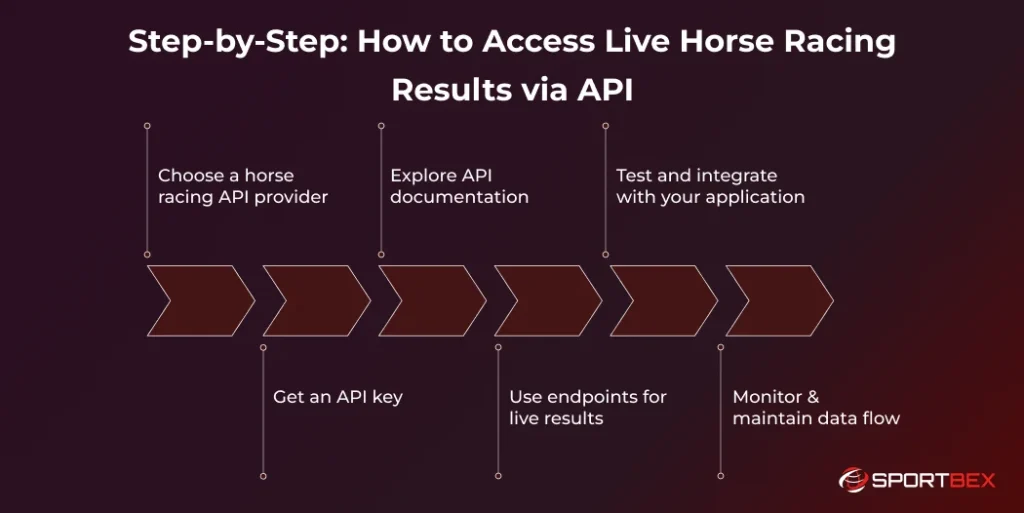
Integrating live racing results into a sportsbook or racing application typically follows a structured process. Below is a simplified workflow used by most betting platforms.
Step 1: Choose a Horse Racing API Provider
The first step is selecting a reliable racing data provider. The quality of your race data depends entirely on the API provider you choose. Professional Horse Racing API Providers collect racing data from multiple global racing organizations and distribute it through developer-friendly APIs.
When evaluating providers, consider the following factors:
- Race coverage across countries
- data latency and update speed
- API uptime and reliability
- historical racing data availability
- developer documentation quality
A reliable provider ensures your platform receives accurate horse racing live results without delays.
Step 2: Get an API Key
Once you select a provider, you will receive API credentials that allow your platform to access the racing data feed.
These credentials typically include:
- API key
- authentication token
- endpoint documentation
- developer access portal
The API key acts as a secure authentication mechanism that allows your application to request race data.
Step 3: Explore the API Documentation
Before integrating the API into your platform, developers should review the provider’s documentation carefully.
The documentation usually explains the available endpoint URLs, request parameters, response structure, authentication methods, and API rate limits.
Understanding these details helps developers integrate the API correctly and retrieve live horse racing results reliably without errors.
Step 4: Use Endpoints for Live Results
Once the integration begins, the platform can request race data through specific API endpoints.
A typical request for live results may look like this:
GET /horse-racing/live-results
The API returns structured data containing race outcomes, horse positions, and race details.This information can then be displayed within a Horse Racing App or sportsbook interface.
Step 5: Test and Integrate with Your Application
Before deploying the API to production, developers typically run integration tests to ensure the system works correctly.
This testing process verifies that race results appear accurately on the platform, data updates are received in real time, and bet settlement processes function properly. Testing environments allow developers to simulate racing events and confirm that the application behaves as expected before going live.
Step 6: Monitor and Maintain the Data Flow
Once the API is integrated, platforms must continuously monitor the data pipeline to ensure stable performance. Monitoring helps identify issues such as delayed data feeds, API downtime, authentication errors, or data inconsistencies that could affect platform operations.
Large sportsbooks typically use monitoring dashboards and alert systems to ensure that racing data flows smoothly and that live horse racing results are delivered reliably.
Everything You Need for Horse Racing
Access live results, racecards, betting odds, and historical data with one API.
Key Features to Look for in a Horse Racing API
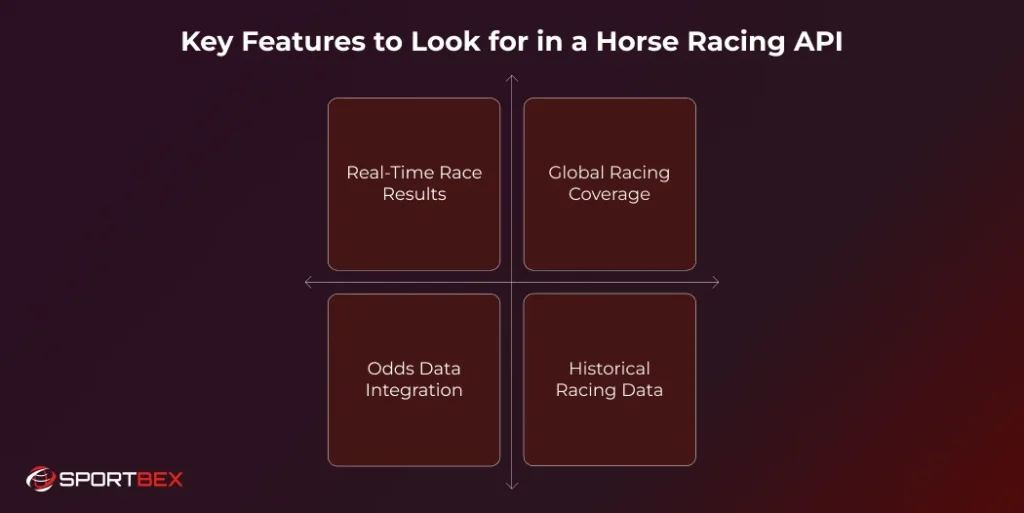
Real-Time Race Results
A reliable API should provide real-time race results with minimal latency. Fast updates allow sportsbooks and racing platforms to display live horse racing results, settle bets quickly, and keep users informed as soon as a race finishes.
Global Racing Coverage
A strong API should offer coverage across major international racing markets. Access to races from regions such as the United Kingdom, United States, Australia, and other global racing hubs enables platforms to support a wider range of betting markets and racing events.
Odds Data Integration
Many advanced APIs also provide integrated odds feeds. This allows platforms to track betting market changes and power tools such as a Horse Racing Odds Tracker, helping users monitor odds movements alongside race results.
Historical Racing Data
Access to historical race data is valuable for analytics and insights. Platforms can analyze past race results, horse performance trends, and jockey statistics to build predictive models and improve betting strategies.
Common Use Cases of a Live Horse Racing Results API
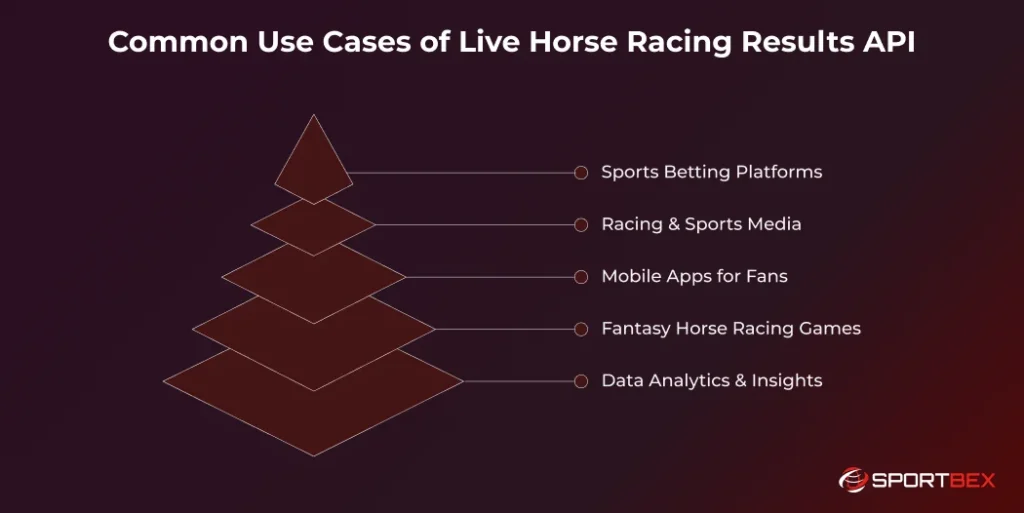
A Live Horse Racing Results API is widely used across different sectors of the racing and betting ecosystem. By delivering real-time race outcomes and structured racing data, these APIs help platforms automate operations, enhance user experience, and build data-driven products.
Sports Betting Platforms
Sportsbooks rely heavily on live race data to manage betting markets and settle wagers automatically. When race results are delivered through an API, betting systems can instantly process outcomes, update betting dashboards, and display accurate horse racing live results to users.
Racing and Sports Media Platforms
Sports media websites and racing portals use APIs to publish race results, race summaries, and leaderboard updates in real time. Access to live racing data allows media platforms to provide timely coverage and keep audiences informed about ongoing races and final results.
Mobile Apps for Fans
Many racing-focused mobile applications integrate APIs to deliver real-time race updates directly to users. A modern Horse Racing App can display live race progress, horse statistics, and instant race results, creating a more engaging experience for racing fans.
Fantasy Horse Racing Games
Fantasy sports platforms also use racing APIs to power competitions based on horse performance. Real-time results allow fantasy games to update player scores immediately after races, making the experience more interactive and dynamic.
Data Analytics and Insights
Analytics platforms collect racing data to generate performance insights, betting trends, and predictive models. By accessing live horse racing results, analysts and investors can study horse performance patterns, track betting market movements, and develop advanced racing analytics tools.
Challenges in Horse Racing API Integration
While a Horse Racing API simplifies access to racing data, integrating it into a betting platform or racing application can present several technical challenges. One of the most common issues is data latency, where delays in receiving race updates can affect the accuracy of live dashboards and bet settlement processes.
Betting platforms must ensure that race results and finishing orders are correct because incorrect data can lead to payout errors or disputes among bettors. This makes it important to work with trusted Horse Racing API Providers that maintain strict data validation processes.
Platforms must also consider traffic spikes during major racing events. Popular races can attract a large number of users simultaneously, increasing the volume of API requests significantly. Without scalable infrastructure, platforms may experience slow responses or temporary outages.
Additionally, developers must manage API rate limits and system monitoring to ensure consistent performance. Proper monitoring tools and error handling mechanisms help platforms detect issues early and maintain a stable flow of real-time racing data.
Conclusion
Accessing live horse racing results via API has become essential for modern sportsbooks, betting apps, and sports analytics platforms. By integrating a reliable live horse racing API, sports betting software providers can automate race result updates, settle bets instantly and deliver a seamless betting experience to users.
For betting operators, the real opportunity lies not just in displaying results but in leveraging real-time racing data to power analytics, notifications, and AI-driven betting insights.
As horse racing continues to evolve in the digital betting ecosystem, APIs will remain the backbone of real-time racing data infrastructure.
Build Your Premier Racing Platform
Get the fast, reliable horse racing data you need to launch your platform.
Frequently Asked Questions
Live Horse Racing Results are real-time updates that show the outcome of a race, including finishing positions, times, and margins. Instead of waiting for TV coverage or next-day reports, fans and bettors can now get this information instantly through websites, apps, and betting platforms powered by APIs.
To access live horse racing results via API, you first need to choose a reliable provider and sign up for an account. After you get your API key, you can use the provider’s documentation to connect your platform to the live results endpoint. This setup lets your app, website, or betting platform display race outcomes in real time.
Manual updates are often slow and can lead to mistakes, which frustrates users who expect fast and accurate data. A live horse racing API pulls verified race information directly from official sources and delivers it instantly. This helps betting sites, media outlets, and apps keep their audiences engaged and confident in the results they see.
Yes, many Horse Racing API providers include odds data in addition to race results. A Horse Racing Odds API can show how odds change before a race and even during the event. For sportsbooks and betting platforms, this adds value by giving users both the results and live betting information in one place.
Most APIs include not only live results but also historical racing data. This can cover past performances of horses, jockeys, and trainers, along with previous race outcomes. Combining historical data with live feeds allows developers to build prediction tools, analytics dashboards, and Horse Racing Odds Trackers for fans and bettors.
Recent Blog



How to build a low-latency live sports streaming app using APIs
September 9, 2026
 12 min

Cricket API Uptime & Availability: What Developers Should Know
August 27, 2026
13 min
Instant Horse Racing Updates and Stats. Get Your API Key Now
API Free Trial