What Data Is Used for Accurate Cricket Player Performance Prediction

November 14, 2025

9 min read
Cricket has grown far beyond a simple game of bat and ball. With the integration of technology and advanced analytics, understanding player performance has reached unparalleled levels of precision. Cricket Player Performance Prediction has become an essential tool, not only for coaches and analysts but also for fans and fantasy cricket players seeking an edge.
By analyzing historical performance data, current player form, match conditions like pitch behavior and weather, and leveraging advanced statistical models, enthusiasts can gain deeper insights. Whether it’s accurately predicting the outcome of a crucial game, drafting the perfect fantasy team or evaluating the efficiency and consistency of individual players.
This article explores What data is used for accurate cricket player performance predictions and why cricket performance analytics matters. We explain how predictions are created using both traditional statistics and modern AI models, and how analysts and technology use this information to improve the accuracy of cricket match outcome predictions.
Understanding Cricket Player Performance Prediction
Cricket Player Performance Prediction is the process of forecasting a player’s performance in upcoming matches. It’s a science that relies on historical data, comprehensive statistics, and sophisticated analytical tools. In today’s digital era, cricket has moved beyond relying solely on intuition or reputation. Teams, coaches, and analysts now depend heavily on detailed cricket performance analytics to uncover trends, identify strengths, and pinpoint weaknesses.
Prediction models analyze factors like batting and bowling records, player fitness, opposition performance, pitch conditions, weather, and even psychology. This helps stakeholders make informed decisions, from selecting players and planning strategies to building fantasy cricket teams.
The integration of AI and machine learning has truly revolutionized player performance prediction! It’s a game-changer, allowing analysts to quickly and accurately process massive datasets, from batting averages to detailed bowling analyses. These smart systems uncover complex patterns that humans might miss, which significantly improves the reliability of their predictions.
Types of Data Used in Performance Prediction
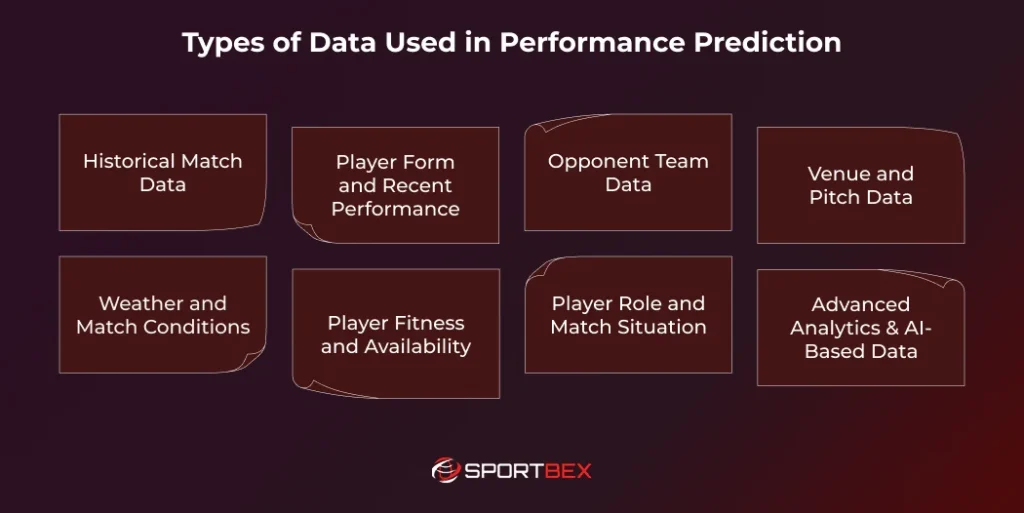
Accurate Cricket Player Performance Prediction, analysts and tech platforms use several types of data. Each one plays a unique role in building the overall prediction model.
1. Historical Match Data
Historical records are the essential foundation for any performance prediction. They provide critical insights into past trends and behaviors, helping establish patterns for more accurate forecasting.
- Runs, wickets, strike rates, and bowling economy
- Player averages against specific opponents
- Past match conditions and results
Analyzing cricket player statistics over seasons helps identify performance patterns, such as a bowler’s success in home conditions or a batsman’s struggles against spin. Cricket API providers aggregate this data, making it easily accessible for developers, analysts, and fans.
2. Player Form and Recent Performance
A player’s current form is a critical indicator of future performance. Player performance prediction models incorporate statistics from the last few matches to gauge momentum. For instance:
- A batsman scoring heavily recently likely continues to perform well.
- A bowler consistently taking wickets is more reliable than one with fluctuating performance.
Recent form is also an essential factor for fantasy cricket and making accurate Cricket Live Streaming predictions, as it ultimately helps users make smarter and more informed selections for their teams. By understanding a player’s current momentum, you can build a more reliable and successful fantasy lineup.
3. Opponent Team Data
A player’s performance often depends on the opponent. By analyzing head-to-head records and past encounters, analysts can see how players perform against specific teams. This analysis helps highlight patterns, like whether a player struggles against a strong defensive team or excels against a particular. For example:
- Some batsmen find certain fast bowlers tough to face.
- Some bowlers excel against specific batting lineups.
Including detailed opponent data significantly enhances the prediction of cricket match outcomes. It reveals potential strengths, weaknesses, or challenges players might face by analyzing individual performance, team strategies, and past interactions. This offers deeper insights into competitive advantages or obstacles.
4. Venue and Pitch Data
Different stadiums and pitch types significantly influence how a match unfolds, often favoring particular styles of play and specific types of players. Understanding these nuances is crucial for accurate predictions. Key data points we look at include:
- Pitch behavior: batting, spin, or pace-friendly surfaces.
- Ground dimensions and historical scoring patterns
- Stadium-specific statistics like average first-innings scores
Platforms offering Cricket Prediction API provide detailed venue statistics essential for accurate predictions. These include pitch conditions, historical match outcomes, and team performance trends at specific locations.
Get Live Cricket Data Now
Integrate Sportbex Cricket API for real‑time scores, stats & odds.
5. Weather and Match Conditions
Weather plays a key role in cricket, affecting the pitch and player performance. Cloudy skies can benefit swing bowlers, while dry, sunny conditions favor spinners. Teams and analysts consider these factors when planning strategies or predicting outcomes.
- Rain or wet conditions, which can shorten overs and impact ball movement
- Humidity and temperature, which influence swing and seam
- Day vs. night matches, as dew can favor either batting or bowling
Incorporating accurate weather data is absolutely essential! It dramatically improves cricket performance analytics models, giving us a clearer picture of how environmental factors significantly impact a player’s game.
6. Player Fitness and Availability
Injuries, fatigue, and overall workload significantly impact a player’s performance. Physical condition is a critical factor in their success, so fitness data is crucial. This typically includes:
- Injury history and recovery status
- Number of matches played recently
- Physical conditioning and stamina
Predicting player performance without considering fitness leads to unreliable forecasts. An injured or fatigued player, for instance, won’t perform at their usual standard. So, accurate player performance prediction models must integrate detailed fitness and availability data for a realistic view of potential output.
7. Player Role and Match Situation
A player’s role and the specific match scenario significantly impact their performance. For instance, a striker’s approach will change depending on whether their team is playing offensively or defensively. Similarly, the pressure of a high-stakes game or an unexpected strategy shift can affect how players perform.
- Batting position: opener, middle-order, or finisher
- Bowling quota: main bowler vs. part-time bowler
- Match situation: chasing a target vs. setting a score
This detailed data enhances Cricket Performance Analysis, going beyond basic stats to provide deeper insights into player behavior in different situations. By factoring in context, analysts can better predict how pressure, responsibility, or specific game scenarios impact player performance.
8. Advanced Analytics & AI-Based Data
Modern cricket performance analytics uses machine learning, AI, and advanced statistical modeling to provide more accurate predictions. These models process vast amounts of data to find patterns and trends that traditional methods might miss, helping players and teams make smarter decisions.
- Player efficiency under different conditions
- Probability scores for runs, wickets, and catches
- Predictive trends based on combined data sources
AI in analysis minimizes human bias and errors, leading to more accurate and dependable player performance prediction than traditional methods. By focusing on data-driven insights, AI ensures predictions are objective and consistent, making them super reliable for evaluating player potential and trends!
Benefits of Using Accurate Data for Prediction
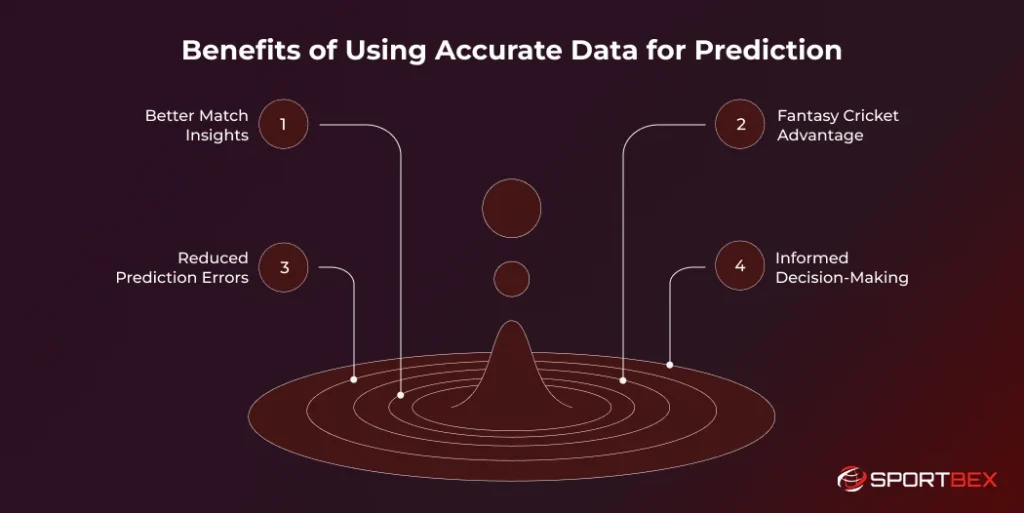
Accurate data significantly enhances cricket predictions in several ways. By providing precise and reliable information, it allows for more informed analyses of player performance, team strategies, and game conditions. Here are the main benefits:
Better Match Insights
Imagine knowing what’s coming next in a match! When we use predictive analytics and accurate data, we can figure out all sorts of game outcomes. This means fans, coaches, and analysts can all make super smart choices because they truly understand the game better.
Fantasy Cricket Advantage
Predictive models provide valuable insights to fantasy players, helping them analyze data and make informed decisions when selecting top-performing players. This increases their chances of building successful teams and improving their odds of winning.
Reduced Prediction Errors
Data-driven approaches reduce guesswork by relying on concrete insights, leading to more informed decisions and improved reliability. By analyzing trends and patterns, these approaches ensure outcomes are based on evidence rather than assumptions, enhancing precision and trustworthiness.
Informed Decision-Making
Stakeholders such as coaches, team managers, and analysts gain significant value from these insights, as they are equipped to make smarter, more informed, and strategic decisions. These choices can have a profound impact, often shifting the momentum of a game or influencing its outcome. Additionally, integrating Cricket Match Odds data with analytics provides a complete view of player and team performance trends.
How Analysts Use This Data to Predict Performance
Analysts use a simple step-by-step method to make Cricket Player Performance Prediction more accurate. They start by collecting all the important information like cricket player statistics, recent performance, match conditions, and past records.
After gathering the data, they clean it by removing mistakes and arranging it properly so it becomes easy to study. Next, they use special tools such as AI and machine learning to analyze the data and create predictions. These tools help them find patterns that a person might not notice.
Once the predictions are ready, analysts study the results to understand how a player might perform in different match situations.
In the end, these predictions are used in real life for fantasy cricket, team planning, and even betting insights through platforms that offer Cricket Prediction API. This whole process helps create accurate predictions, improves team strategies, and gives fans a better understanding of the game.
Conclusion
In the cricket world, accurate Cricket Player Performance Prediction has become essential. Using data like past match records, recent form, opponent analysis, pitch reports, weather conditions, player fitness, and advanced AI tools, predictions become more dependable and useful. Many users even explore a cricket API free trial to access reliable data and improve their analysis.
With the help of modern cricket performance analytics, analysts, fantasy cricket players and fans can make smarter decisions. Accurate information not only improves player performance prediction but also helps people understand match situations better and gives clearer insights into the prediction of cricket match outcomes.
Technology now makes it easier for everyone to access and analyze cricket data. This allows fans, teams and professionals to understand the game on a deeper level.
Overall, accurate cricket data is changing the way the sport is played and enjoyed. It helps everyone, from players to fans, make better decisions, turning performance prediction into a powerful part of modern cricket.
Take Your Cricket Platform Live Now
Tap into real-time updates & live data with minimal latency.
Frequently Asked Questions
Cricket Player Performance Prediction is the process of forecasting how a player might perform in upcoming matches using historical data, current form, match conditions, and statistical analysis.
Cricket performance analytics uses historical stats, match data, and advanced AI tools to analyze patterns, trends, and probabilities, making player performance predictions more accurate.
Data includes historical match records, recent player form, opponent team analysis, venue and pitch conditions, weather, player fitness, and advanced AI-based models.
Yes, injuries, fatigue, and workload directly impact a player’s performance. Accurate predictions always consider fitness and availability for better reliability.
Fantasy cricket players can use prediction data to select the best players for their teams, improve their chances of winning, and make smarter decisions based on player form and match conditions.
Recent Blog



Which Live Horse Racing Odds API Offers the Fastest Updates?
March 12, 2026
 6 min
6 min

How Soccer Live Score APIs Deliver Instant Match Updates
March 12, 2026
8 min
Start your free API key and get live cricket scores instantly
API Free Trial