
Sports have always been driven by data, from match scores to player performance stats. Earlier, collecting and using this data was slow and limited. With the growth of advanced technology, the way sports data is handled has completely improved, making it faster and more reliable.
A modern sports API helps connect different platforms and delivers real-time updates. When combined with AI and machine learning in sports API, this data becomes more meaningful. It supports better analysis, faster updates and improved user experiences across platforms.
The Role of AI and Machine Learning in Sports API is becoming more important as platforms move toward smarter data usage. AI in sports API are helping systems go beyond basic data and deliver deeper insights, predictions and real-time intelligence.
This article explains how AI-powered sports data API solutions improve accuracy, enable predictive analytics and enhance user engagement. It also covers real-world applications and how these technologies are shaping modern sports platforms.
What is a Sports API?
A sports API acts as a bridge that allows different systems to communicate and share sports-related data. It helps applications access structured and organized information without building everything from scratch.
In the context of modern platforms, a sports API is designed to deliver a wide range of data in real time. It works like a connection that continuously sends updated sports information to apps, websites and platforms that need it. This data can include multiple important elements:
- Schedules and Fixtures: Details about upcoming matches, including dates, timings and venues.
- Scores and Results: Live match scores, final outcomes and past match records.
- Player Statistics: Individual performance data such as goals, assists, runs, or other key metrics.
- Team Statistics: Overall team performance including win records, rankings and game analysis.
- Odds and Betting Data: Information used in betting platforms for odds calculation and insights.
- Event Timelines: Play-by-play updates that show what is happening during a live match.
Developers use a Sports Data API to build different types of applications. These can include score tracking platforms, fantasy sports apps and betting systems. For platforms that rely on speed and accuracy, a Live Sports Data API ensures real-time updates, helping improve user experience and engagement.
The Role of AI and Machine Learning in Sports Data
A standard sports API is useful for delivering raw data, but AI in sports API and machine learning in sports API take it much further. AI focuses on building systems that can process data intelligently, while machine learning allows systems to learn from past data and improve automatically without constant manual input.
In the context of sports data, AI and the role of machine learning in sports stats API include several important functions that improve how data is handled and used:
- Data Collection and Validation: Sports data comes from multiple sources like live matches, officials, and tracking systems. AI helps collect this data in real time and ensures it is accurate. Machine learning can detect unusual patterns or errors and flag them for review, improving the reliability of Real-Time Sports Stats APIs.
- Pattern Analysis: Machine learning in sports API can process large volumes of data and identify patterns that are not easy to detect manually. It can highlight trends such as player performance against specific teams or how conditions affect match outcomes.
- Predictive Insights: One of the key benefits of AI sports predictions API is forecasting future outcomes. By analyzing historical and live data, it can estimate match results, player performance and potential injury risks, helping platforms make smarter decisions.
- Natural Language Processing: AI also uses Natural Language Processing to understand unstructured data like news articles, interviews and social media content. This allows an AI-powered sports data API to extract useful insights such as player updates, public sentiment and match-related information.
AI and machine learning act like an intelligent layer over a sports API. They refine raw data, add meaningful insights and help create more advanced and engaging sports applications.
How AI and Machine Learning Enhance Sports APIs
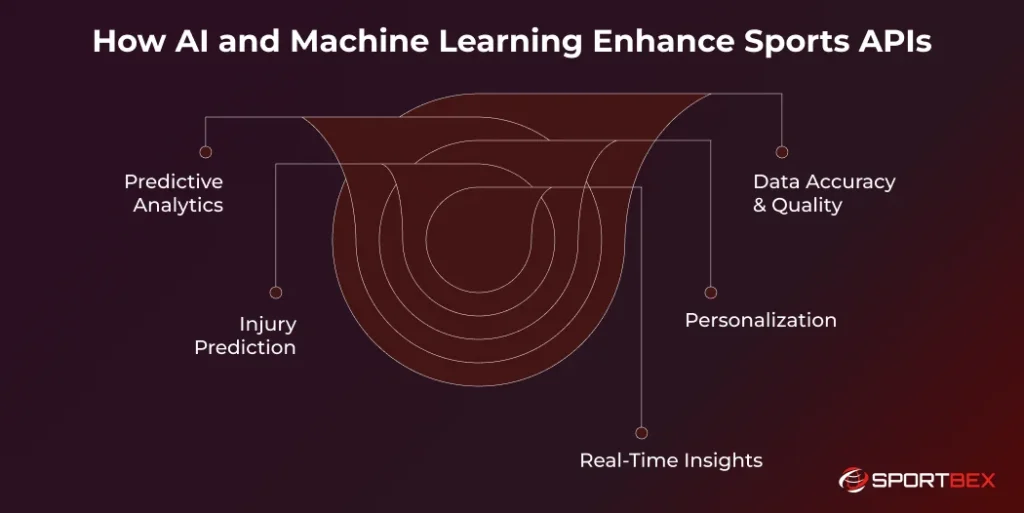
Adding AI-powered sports data API features improves overall performance and usability. It helps process large volumes of data faster and more accurately without manual effort. This transformation allows platforms to deliver smarter insights and better user experiences.
Data Accuracy & Quality
Accuracy is one of the most important factors for any sports API. Even a small error in data can affect user trust and platform performance. AI in sports API helps improve data reliability by processing information from multiple sources efficiently.
Machine learning in sports API compares data in real time and identifies mismatches instantly. It can flag errors and correct common issues automatically, ensuring reliable Real-Time Sports Stats APIs for users and platforms.
Predictive Analytics
Predictive analytics is a powerful feature of AI-powered sports data API systems. It uses past and live data to analyze patterns and estimate future outcomes. This helps platforms provide deeper insights instead of just raw data.
With the help of ai sports predictions api and ml in sports, platforms can offer match predictions, player performance insights and live probability updates. This is especially useful for fantasy sports and betting platforms.
Personalization
Personalization is becoming a key part of modern sports platforms. AI in sports API helps deliver content based on user preferences like favorite teams, players or leagues. This creates a more engaging and relevant experience.
An AI-powered sports data API allows platforms to show custom dashboards, alerts and updates. This is highly effective for apps built using sports API for fantasy app solutions, improving user interaction and retention.
Injury Prediction
Injury prediction is an important use of machine learning in sports API. It analyzes player workload, fitness levels and past performance data to identify potential risks. This helps teams take preventive actions early.
By using these insights, teams can manage training schedules and reduce injury chances. This improves player performance and adds value to professional sports management through smarter data usage.
Real-Time Insights
Real-time insights are a major advantage of using AI in sports API. It enhances the impact of real-time sports data by not only showing live updates but also explaining patterns and match situations.
This is especially useful in Live Sports Streaming, where users get deeper analysis during matches. It helps viewers understand the game better and improves overall engagement with the platform.
Real-World Applications of AI in Sports APIs
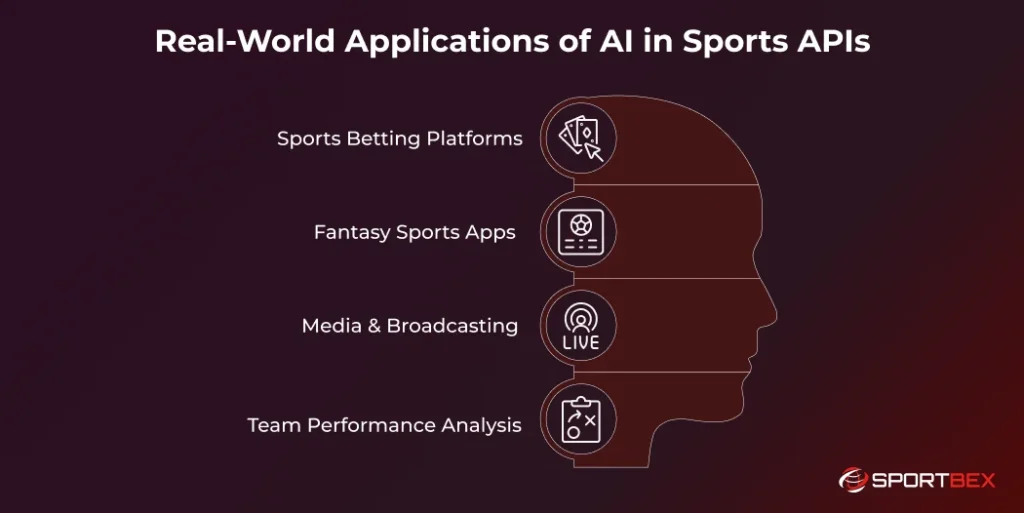
Sports Betting Platforms
The sports betting industry is one of the earliest adopters of AI in sports API. It also supports sportsbook risk management strategies by improving accuracy and helping platforms make better decisions.
- Odds Generation: Machine learning in sports API analyzes team form, player stats, injuries, and conditions to set accurate betting odds. AI-powered sports data API also updates odds in real time during matches.
- Arbitrage Betting: AI systems scan multiple platforms at once to identify pricing gaps. This helps users find opportunities where all outcomes can be covered efficiently.
- Predictive Tools for Bettors: Platforms use ai sports predictions api to provide match insights and value bet suggestions. This supports smarter decisions and improves user experience.
Fantasy Sports Apps
Fantasy sports platforms depend heavily on accurate and fast data. AI in sports API improves how player performance is analyzed, helping users build stronger and more competitive teams.
- Player Projections: Machine learning in sports API studies past and live data to predict player performance. This helps users make better team selection decisions.
- Draft Assistants: AI tools provide real-time suggestions based on player value and team needs. This makes fantasy platforms more interactive and user-friendly.
- Automated Insights: With the help of ml in sports, platforms deliver personalized tips like trade suggestions and player updates. This improves engagement and overall platform experience.
Media & Broadcasting
Media platforms use AI in sports API to enhance live coverage and provide more engaging content, especially in Live Sports Streaming where real-time insights improve viewer experience.
- Storytelling: AI uses Natural Language Processing to analyze match data and identify key narratives. This helps create engaging commentary and improves audience connection.
- Automated Highlights: AI scans live matches and detects key moments like goals or major plays. It quickly generates highlight clips for digital and social platforms.
- Real-Time Graphics and Stats: Real-Time Sports Stats APIs provide advanced metrics during matches. This adds depth and helps viewers understand the game better.
Team Performance Analysis
Professional teams use sports API data with AI to improve performance and strategy. It helps them make data-driven decisions across training and match preparation.
- Scouting and Recruitment: Machine learning in sports API analyzes global player data to identify talent that fits team requirements. This helps teams discover valuable players.
- Tactical Analysis: Coaches use AI insights to study opponent strategies and improve their own gameplay. This supports better planning and execution.
- Performance Monitoring: AI combines API data with fitness tracking to monitor player health and workload. This helps reduce injury risks and improve long-term performance and reflects growing Sports Technology Trends in data-driven sports management.
Get a Ready-Made Platform On Rent.
Get Started Today
Conclusion
AI in sports API and machine learning in sports API have changed how sports data is used. What started as simple data delivery has now become a system that provides deeper insights, predictions and real-time intelligence for modern platforms.
AI-powered sports data API is improving betting platforms, fantasy apps, and live broadcasting. Many platforms also offer a free trial to help users explore features, make better decisions, increase engagement and experience accurate analysis.
As technology grows, sports API solutions will continue to evolve with smarter features. The future of sports will depend more on data-driven systems powered by AI and machine learning.
Frequently Asked Questions
A Sports Data API is a tool that provides real-time sports data such as scores, player stats, schedules, and betting odds to applications, websites, and platforms.
AI adds intelligence to sports data APIs by analyzing raw data, recognizing patterns, and making predictions. This helps improve fan engagement, betting accuracy, and team performance analysis.
The role of machine learning in sports stats API is to process large volumes of historical and live data, identify hidden trends, and deliver accurate forecasts about player performance, game outcomes, and potential injuries.
AI-powered sports APIs are used in betting platforms for odds generation, fantasy sports apps for player projections, media for real-time highlights, and professional teams for scouting, training, and injury prevention.
Real-time sports data provides live match updates, and AI enhances it by delivering deeper insights, such as predicting game outcomes, highlighting key moments instantly, and suggesting personalized fan experiences.
Recent Blog



How to build a low-latency live sports streaming app using APIs
September 9, 2026
 12 min

Cricket API Uptime & Availability: What Developers Should Know
August 27, 2026
13 min
Integrate Live Scores, Player Stats, and Fixtures into Your App Instantly
API Free Trial