How Developers Can Create a Hockey Analytics App Using APIs

September 30, 2025

11 min read

Hockey is no longer just about goals, assists and match results. It has become a data-driven sport where real-time statistics, performance insights and analytics play an important role in decision-making. From fantasy players to professional coaches, everyone depends on accurate and timely data to gain an advantage.
This rising demand for data has opened up great opportunities for developers to create powerful digital solutions. One of the best ideas is building a Hockey Analytics App that provides live stats, advanced metrics and easy-to-use dashboards for users around the world.
However, developing such an app from scratch can be difficult and time-consuming. This is where APIs help. By using a Hockey API, developers can easily access structured and real-time data without worrying about complex data collection or infrastructure.
Whether you want to Build a Hockey App for fans, analysts or professionals, APIs make the development process faster and easier. In this guide, we will explain everything How Developers Can Create a Hockey Analytics App Using APIs and key challenges. If you are interested in Hockey App Development, this guide will help you turn sports data into a powerful and useful app.
What is a Hockey Analytics App?
A hockey analytics app is a digital platform that collects, analyzes and presents hockey data in a simple and user-friendly way. It provides deeper insights into player performance, team strategies and match trends.
A modern hockey analytics software includes features like real-time match tracking, advanced player stats, historical comparisons, predictive analysis and interactive dashboards. These apps are useful for many users, including fans who want better insights, fantasy players tracking performance, coaches planning strategies and analysts reporting accurate data.
For developers learning how to field hockey for developers, the main focus should be on organizing data clearly and turning raw statistics into meaningful insights that users can easily understand and use.
Types of Hockey Data You Can Use
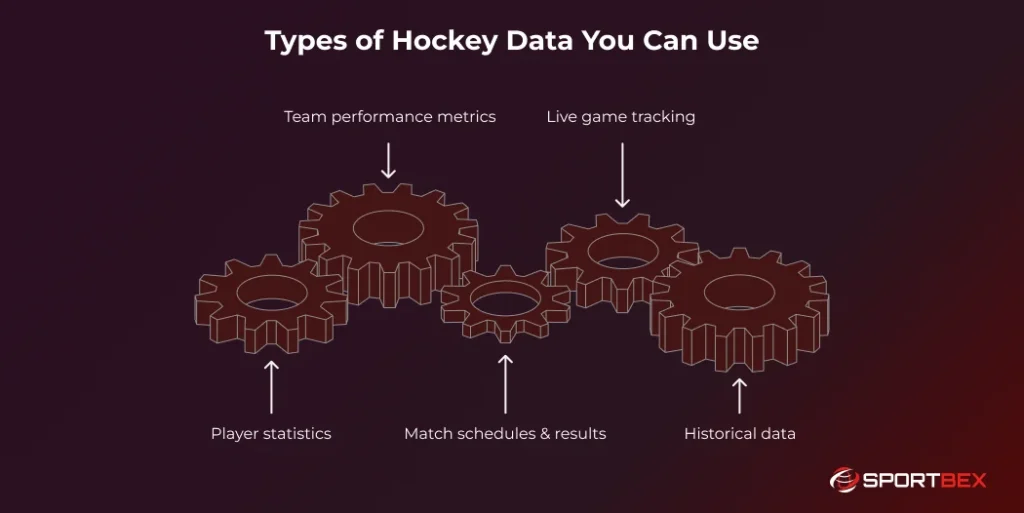
It’s important to understand the different types of data you can use. This data helps you create useful features and better user experience.
Player Statistics
This data focuses on individual player performance, such as:
- Goals, assists, penalties
- Ice time and efficiency
- Shooting accuracy
- Player performance trends
This data is essential for features like Hockey Player Tracking, which helps users analyze individual performance.
Team Performance Metrics
This data shows how teams are performing overall. It includes:
- Win/loss ratios
- Power play efficiency
- Defensive stats
- Team comparisons
These metrics are valuable for coaches, analysts and fans who want deeper insights into team strategies.
Match Schedules & Results
This includes basic match information like:
- Upcoming fixtures
- Match outcomes
- Tournament schedules
This data can power features like an Ice Hockey Scoreboard, keeping users updated with real-time match progress.
Live Game Tracking
Live data is one of the most important parts of a hockey analytics app. It includes:
- Real-time scores
- Play-by-play updates
- In-game events
This keeps users engaged by showing what’s happening in the game as it happens.
Historical Data
Historical data shows past performance and helps users:
- Compare past performances
- Identify trends
- Build predictive models
It is especially useful for analytics dashboards and long-term performance evaluation.
Step-by-Step Guide to Creating a Hockey Analytics App
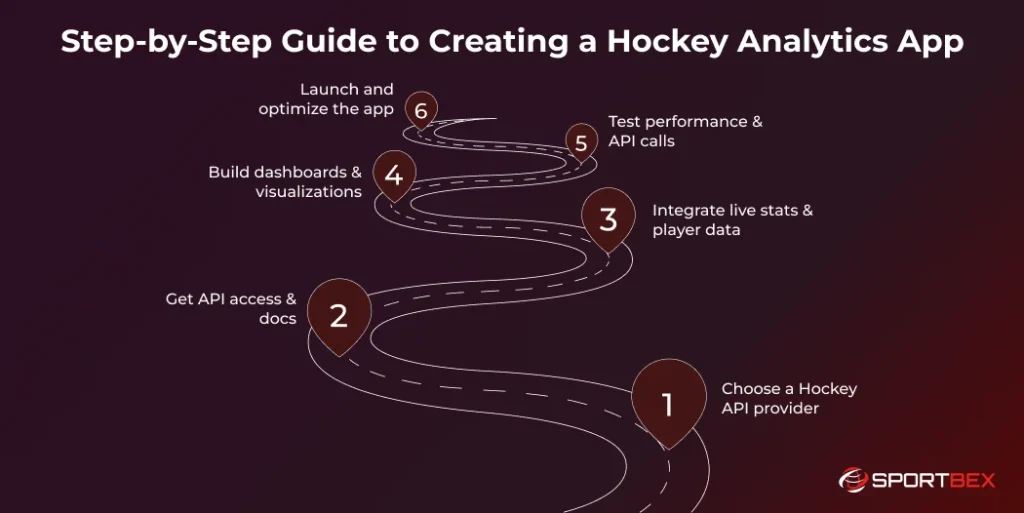
Step 1: Choose a Hockey API Provider
The first step in building your app is choosing the right API provider as it forms the base of your application. A good API should offer data from multiple Ice Hockey Leagues so your app can cover a wider audience. It should also be reliable with high uptime to avoid interruptions.
Flexible pricing is important especially for startups as it allows easy scaling. In addition, clear documentation helps developers integrate the API quickly. If you want the best API for hockey analytics app always, choose one that provides accurate and real-time data.
Get Live Odds for Every Game
Integrate real-time hockey betting odds, puck lines, and totals into your platform.
Step 2: Get API Access & Documentation
sign up on the provider’s platform and generate your API key, which is required to connect your app with the data source. Then, carefully review the usage limits, also known as rate limits, to avoid exceeding allowed requests.
It’s also important to study the API documentation, including endpoints and data formats. Taking time to understand these details early will help you avoid errors and make your development process much smoother and faster.
Step 3: Integrate Live Stats & Player Data
At this stage, you need to connect the API to your app and start bringing in real data. Begin by integrating live match updates and player statistics so users can see current scores and performance details. To keep your app running smoothly, use caching to reduce the number of API requests and improve speed.
You can also use webhooks or streaming APIs to get instant updates without constant checking. Avoid requesting unnecessary data, as it can slow down performance. This approach ensures your app stays fast, efficient and responsive.
Step 4: Build Dashboards & Visualizations
Raw hockey data can be difficult to understand, so it’s important to present it in a clear and simple way. Developers should use visualization tools to turn complex data into easy insights. Features like graphs and charts help users quickly see trends, while heatmaps can show player performance in different areas.
A clean and user-friendly dashboard makes navigation smooth and improves the overall experience. You can also include an NHL Hockey Leaderboard to highlight top players and teams, making the app more engaging and useful for fans and analysts.
Step 5: Test Performance & API Calls
Before launching your app, proper testing is very important to ensure everything works smoothly. You should check how fast the API responds and make sure the data loads quickly without delays. It’s also important to handle errors properly so the app doesn’t crash if something goes wrong.
Test how your app performs when many users are active at the same time, especially during live matches. This helps you understand real-world performance and ensures your app can handle high traffic efficiently without slowing down or failing.
Step 6: Launch and Optimize the App
Start by launching a beta version to a small group of users. This helps you identify issues early and understand how people interact with your app. Collect feedback through reviews, surveys or in-app tools to learn what users like and what needs improvement.
Based on this feedback, make necessary updates to features, design and performance. Always monitor user behavior and app performance after launch. Continuous improvement is important, so keep updating your app to match user needs and deliver a better experience over time.
Benefits of Using a Hockey API

Real-time Data Accuracy
Accuracy is very important for any sports analytics app because users depend on correct and up-to-date information during live matches. Even a small delay or wrong stat can reduce user trust. Your app must always show accurate data like goals, assists, penalties, and player performance without confusion or delay.
By using a Reliable Ice Hockey API, developers can provide the same level of accurate and real-time data as official league platforms. This is especially important for fantasy sports and betting apps where users make quick decisions based on live updates.
Easy Integration for Developers
One of the biggest benefits of using APIs is that they are very easy to integrate into your application, even if you are working on a tight deadline or have limited resources, because you don’t need to build complex systems like web scraping tools or spend time connecting with multiple data providers manually, instead you can simply use a Sports Data API to get structured and ready-to-use data in just a few hours.
Most APIs are designed to be developer-friendly and come with helpful resources such as detailed documentation that explains how everything works step by step, code samples that show how to use the API in real projects and SDKs that support popular programming languages like JavaScript, Python and Java, which makes the integration process much faster and smoother.
Scalable for Startups
Startups often have limited resources, small teams, and budget constraints, which makes building a full data system from scratch difficult and expensive. APIs solve this problem by providing ready-to-use data, so developers can focus on building features instead of managing infrastructure.
With a Hockey API, you can start with simple features like live scores and basic stats, then gradually add advanced analytics, multiple leagues and prediction tools as your app grows. This flexibility makes APIs ideal for modern Hockey App Development, allowing startups to scale easily without high initial investment.
Cost and Time Efficiency
Building a sports analytics platform from the ground up can take a lot of time and money because developers need to create data collection systems, manage servers, and handle ongoing maintenance, which can slow down the entire development process and increase overall costs for startups and businesses.
Instead of building everything manually, you can simply Integrate a Hockey Data API into your application to access live stats, player data and analytics instantly, which helps you launch your app faster, reduce development costs and test your idea in the market without making a huge upfront investment.
Use Cases of Hockey Analytics Apps Powered by APIs
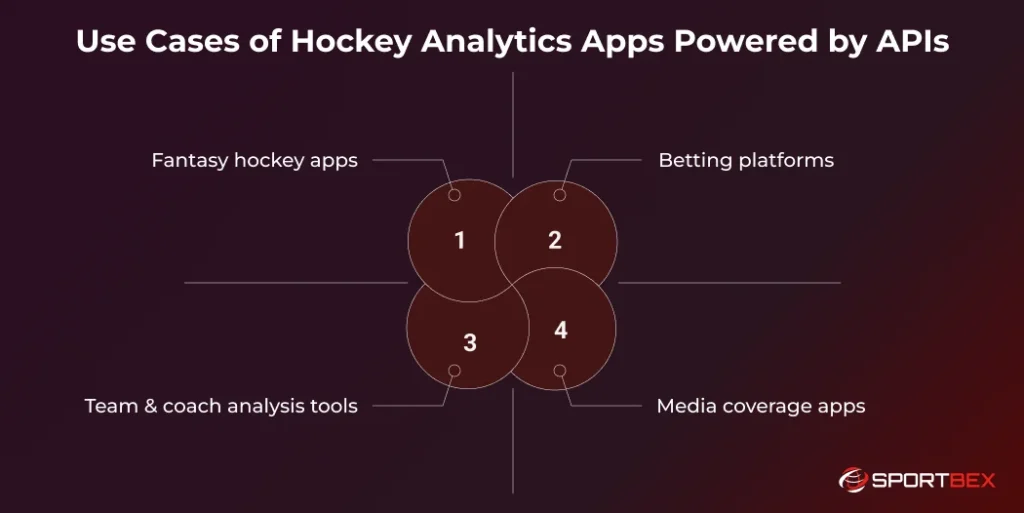
Fantasy Hockey Apps
Fantasy hockey apps rely on real-time data to keep users engaged. Using APIs, these apps get instant updates on player stats such as goals, assists and overall performance. This helps users make smarter decisions when managing their teams.
The quick accurate data makes the game more exciting, interactive and competitive, allowing fantasy players to stay ahead and enjoy a more dynamic experience.
Betting Platforms
Betting apps require accurate and fast data to function effectively. Using APIs, these apps can access live match statistics, detailed player performance and odds information from Ice Hockey Odds API Providers.
This real-time data helps users make smarter and more confident betting decisions, improving their overall experience.
Media Coverage Apps
Sports news and media apps use APIs to get live hockey data. This allows them to show real-time match updates, scores, and player stats instantly. They can also create visual dashboards and charts that make information easy to read and understand.
With the growing demand in the global hockey market, reporters and media outlets can use these tools to deliver accurate updates quickly, keeping fans engaged and informed. APIs make it simple to turn raw data into clear, interactive and exciting hockey content.
Team & Coach Analysis Tools
Hockey analytics apps help teams and coaches improve how they play. These apps show detailed information about each player’s performance, such as goals, assists and ice time.
Coaches can use this data to plan better strategies, decide player lineups and make adjustments during games. They can also study opponents to understand their strengths and weaknesses. By using these insights, teams can train smarter, make informed decisions and perform better on the ice.
Challenges in Building a Hockey Analytics App
Even though APIs make development easier there are still some challenges to keep in mind:
- API Rate Limits: Most APIs only allow a certain number of requests per minute or hour. If your app exceeds this, live updates may slow down or stop temporarily.
- Data Accuracy Issues: Even small mistakes in data can make users lose trust in your app. Ensuring the data is correct and reliable is very important.
- Handling Real-Time Updates: Keeping live scores, stats, and events up-to-date requires careful planning. Your app needs to manage real-time data efficiently to avoid delays.
- UI/UX Complexity: Showing a lot of stats and information in a simple, easy-to-read way can be tricky. Good design is important so users can find insights quickly without feeling overwhelmed.
Conclusion
Building a modern Hockey Analytics App is easier than ever with APIs. Developers can access real-time scores, player stats, historical data and advanced metrics without creating everything from scratch. APIs provide a reliable foundation for Hockey App Development making it faster and more efficient to integrate live updates dashboards and analytics tools.
Whether your goal is a fan-focused platform, a fantasy hockey app, or a professional analytics tool, APIs allow you to scale features and deliver accurate insights. They save time, reduce costs, and let developers focus on creating engaging user experiences. Many API providers even offer a free trial, allowing developers to test data quality and integration before committing.
As demand for data-driven sports solutions grows, investing in a Hockey Analytics Software platform is a smart choice. With the right strategy, you can turn raw hockey data into a dynamic app that keeps users informed, engaged and coming back for more.
The Complete Hockey Player Database
Access detailed player stats, career history, and real-time performance data.
Frequently Asked Questions
A hockey analytics app is software designed to collect, analyze, and display hockey data in a user-friendly way. It goes beyond scores by offering insights into player performance, team statistics, trends, and predictions. These apps are widely used by fans, fantasy players, sports bettors, coaches, and media outlets.
A Hockey API provides ready-made access to live scores, player stats, and historical data, removing the need to build complex data pipelines. This makes hockey app development faster, more cost-efficient, and scalable. Developers can focus on creating features instead of managing data collection and accuracy.
A fantasy hockey API delivers fantasy-specific stats, projections, and real-time player updates that are critical for fantasy users. This helps users draft stronger teams, make smarter trades, and follow live performance updates. By integrating it, developers can make fantasy hockey apps more engaging and competitive.
Yes, Hockey APIs are essential for betting platforms because they provide accurate, real-time stats and advanced analytics. They support live betting with in-game updates, player performance data, and win probabilities. This builds trust with users and helps platforms deliver smarter betting experiences.
Absolutely, Hockey APIs are ideal for startups because they save significant time and resources. Instead of building everything from scratch, startups can access accurate sports data through a subscription model. This reduces upfront costs while allowing them to quickly launch and scale their hockey apps.
Recent Blog



How to build a low-latency live sports streaming app using APIs
September 9, 2026
 12 min

Cricket API Uptime & Availability: What Developers Should Know
August 27, 2026
13 min
Offer Live Hockey Scores, Stats, and Odds to Engage Your Audience
API Free Trial