How to Create a Fantasy Sports App with Live Sports Data API

September 18, 2025

11 min read

The sports industry has evolved with digital technology, giving fans new ways to engage through fantasy sports platforms. Users can now create virtual teams, compete with others, and test their knowledge in real time. Fantasy Sports App Development is growing significantly with millions of users joining fantasy leagues across sports like cricket, football and basketball.
This makes the market highly competitive and fast-paced. However, a great design alone isn’t enough. The success of a fantasy app depends on delivering fast and accurate data. Users expect instant score updates and reliable player stats during live matches. Even small delays can affect their experience.
That’s why a Live Sports Data API is essential. It provides real-time scores, player data and match updates, helping developers create smooth, engaging and reliable fantasy sports apps.
In this guide, we will explain How to Create a Fantasy Sports App with a Live Sports Data API and their benefits to the steps for building a fantasy sports and selecting the Best API for Fantasy Sports Apps.
What is a Live Sports Data API?
A Live Sports Data API is a tool that helps apps collect real-time sports data in a simple and structured way. Instead of manually gathering information, developers can use this API to automatically get updates like live match scores, player statistics, match schedules, team lineups and injury news.
It acts as a bridge between data providers and your app, delivering information in easy-to-use formats like JSON or XML. For developers, using a Sports API for Developers makes data handling much easier. It removes the need to find, verify and organize data manually, allowing them to focus more on building better features and improving user experience.
Many platforms offering sports api development services also provide advanced features like real-time updates, historical data, and scalable systems. Overall, a Sports Data API ensures your app runs smoothly with fast, accurate and reliable information.
Why Use a Live Sports Data API for Fantasy Sports Apps?
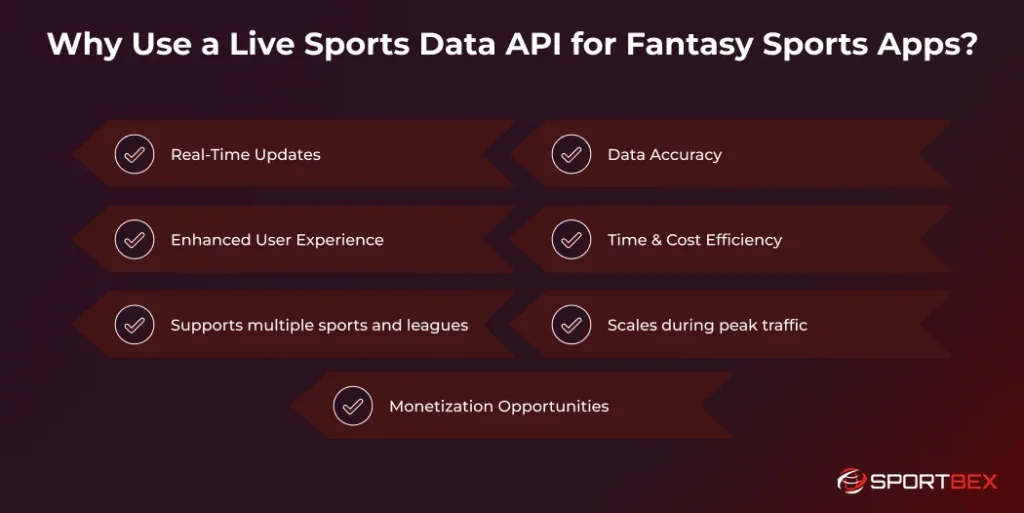
Real-Time Updates
Fantasy sports depend on live match action. Users want their scores to update instantly as events happen, like a goal, run or touchdown. A live sports stats API helps deliver these updates in real time, keeping the app fast and accurate.
If updates are slow or delayed, users can lose interest and may switch to another platform. Quick updates make the experience more exciting and engaging. In fantasy sports apps speed is not just a bonus feature it is essential for keeping users active and satisfied.
Data Accuracy and Reliability
Accuracy is very important in fantasy sports. Even a small mistake in player stats can change match results and reduce user trust. Players rely on correct data to make decisions and track their performance.A reliable API collects and checks data from multiple trusted sources to ensure it is correct and up to date.
By using a fantasy sports data api developers can provide consistent and accurate information to users. This builds trust and keeps users confident in the app, which is essential for long-term engagement and success.
Enhanced User Experience
A smooth and easy-to-use app helps keep users coming back. When users get real-time data, clear player stats, and past performance details, they can make better decisions while creating their teams. With Sports Data API Integration, developers can add useful features like live dashboards, performance tracking and simple recommendations.
These features make the app more interactive and helpful. When everything works quickly and clearly, users enjoy the experience more, stay longer on the app, and are more likely to use it regularly.
Time and Cost Efficiency
Building a sports data system from scratch takes a lot of time, money, and technical effort. You need teams, tools and systems to collect and manage data.By using a fantasy football API or similar service, developers can avoid this complexity. The API provides ready-to-use data, so you can focus on building important app features instead.
This makes the development process faster and more efficient. It also helps reduce costs, allowing you to launch your fantasy sports app quickly without heavy investment in infrastructure.
Supports Multiple Sports and Leagues
Modern users enjoy more than one sport and often join different leagues at the same time. A strong API makes it easy to add multiple sports like cricket, football, and basketball into one app. This helps your platform grow without needing separate systems for each sport.
Many APIs also provide access to global tournaments through Sports Data Feeds, so users can follow their favorite teams and events in one place. This flexibility improves user experience and allows your app to reach a wider audience.
Scales During Peak Traffic
During big sports events many users open the app at the same time, which increases traffic quickly. A strong and reliable API helps your app handle this load without slowing down or crashing.top API providers use advanced systems to manage large numbers of requests smoothly.
This also supports features like Online Sports Bookmakers Update, where users expect instant and accurate information. It ensures that users continue to get real-time updates without any interruption. For fantasy sports apps, handling peak traffic efficiently is very important to maintain performance, build user trust, and deliver a smooth overall experience.
Steps to Create a Fantasy Sports App with a Live Sports Data API
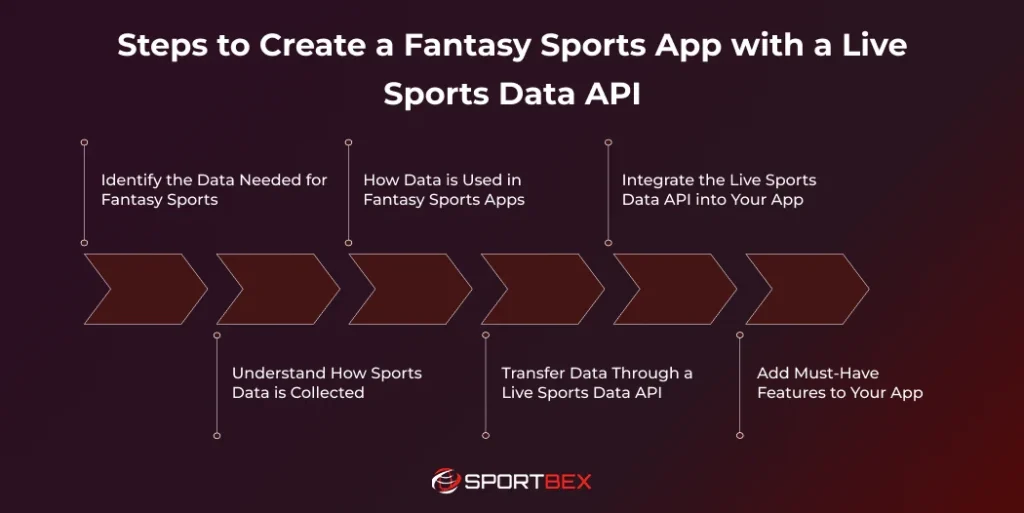
1. Identify the Data Needed for Fantasy Sports
The first step is to clearly understand what data your app needs. This depends on the sport and features you want to offer. You will typically need player details, team information, live match data and past performance stats. Defining these requirements early helps you build a more accurate and efficient fantasy sports app.
- Player profiles and stats
- Team information and standings
- Live match data
- Historical performance
The type of data your app needs depends on its features and goals. A Fantasy Sports API can provide all the required data, such as player stats, team details and match updates. This makes it easier to build your app and ensures you get accurate and useful information.
2. Understand How Sports Data is Collected
Sports data collection may look simple, but it involves multiple steps to ensure accuracy. Data is gathered from official leagues, on-ground analysts and advanced tracking systems. Technologies like AI and sensors help capture real-time match events.
This data is then checked and verified from different sources before being shared. This process ensures that the information used in fantasy sports apps is fast, reliable and accurate.
- Official league partnerships
- On-ground data tracking
- AI-powered analytics systems
- Multi-source verification
A reliable sports data API provider makes sure the data you receive is accurate, fast, and consistent. They collect information from trusted sources and verify it before sharing. This helps your app deliver correct updates in real time, improving user trust and ensuring a smooth and dependable experience.
3. How Data is Used in Fantasy Sports Apps
Once collected, data is used to power key features of a fantasy sports app. It helps show live scores, calculate fantasy points and track player performance. This data also supports leaderboards, user matchups and real-time notifications.
By using accurate and updated information. the app becomes more interactive, allowing users to make better decisions and stay engaged throughout the game.
- Live scoreboards
- Fantasy point calculations
- Player performance tracking
- User matchups and leaderboards
- Real-time notifications
Real time Sports Data is very important for creating a smooth and engaging user experience. It helps apps show instant updates, accurate scores and live player performance. This allows users to stay connected with the game and make quick decisions, making the overall experience more exciting and interactive.
4. Transfer Data Through a Live Sports Data API
Data transfer means getting sports data from the API into your app in a simple way. First, you use an API key to access the data. Then your app sends a request to the API and receives information like scores and stats in a structured format (such as JSON). After that, the data is processed, stored and shown to users in real time.
- API authentication using keys
- Sending HTTP requests
- Receiving structured responses
- Processing and storing data
Modern APIs use WebSockets to send updates instantly to the app. This means the app doesn’t need to keep checking for new data again and again. As a result, users get live updates without delay, making the experience faster, smoother and more responsive during matches.
5. Integrate the Live Sports Data API into Your App
Integration means connecting your app’s backend with the API so it can receive and use live sports data. Developers set up the system to request data, process it, and store it properly.
Once connected, the app can automatically fetch live scores, player stats and match updates. This ensures your app stays updated in real time and delivers a smooth, reliable experience to users.
Backend tasks:
- Fetch and process data
- Store it in databases
- Calculate fantasy scores
Frontend tasks:
- Display data in real time
- Ensure smooth UI updates
This stage is very important in sports API development because it affects how well your app performs. A smooth integration ensures fast data loading, accurate updates and a stable user experience. If this step is not done properly, it can lead to delays, errors, or app crashes.
6. Add Must-Have Features to Your App
Your app should include essential features that improve user experience and engagement. Add user login and profiles, allow users to create and join leagues, and provide team management options like selecting players or making changes.
Include live score updates, leaderboards and player statistics. These features make the app easy to use, interactive and enjoyable for users.
- User authentication and profiles
- League creation and management
- Live drafting system
- Team management tools
- Real-time leaderboards
A good Fantasy Sports App should offer more than basic features. It can include advanced analytics to help users understand player performance and trends. AI-driven recommendations can suggest better team choices, helping users make smarter decisions and improve their chances of winning in fantasy leagues.
Choosing the Best Live Sports Data API Provider
Selecting the right Sports data APIs Provider is a crucial decision that impacts your app’s success. A good provider ensures accurate data, fast updates, and smooth performance. It also helps your app handle more users and grow easily. Making the right choice can improve user experience and long-term reliability.
- Accuracy & Reliability: Choose a provider that offers correct and real-time data. Verified information ensures users trust your app and get accurate scores, player stats, and match updates without errors.
- Coverage: Look for API that supports multiple sports and leagues. This helps you expand your app easily and attract more users who follow different games and competitions worldwide.
- Ease of Integration: Choose a provider with simple documentation and helpful developer support. This makes it easier to connect the API, fix issues quickly and build your app without unnecessary complications.
- Scalability: The API should handle high traffic during peak events like big matches. It must stay fast and stable even when many users access the app at the same time.
- Pricing: Flexible pricing models allow you to control costs based on your needs. You can choose plans that fit your budget and scale easily as your app grows.
Get a Ready-Made Platform On Rent.
Get Started Today
Conclusion
The success of a fantasy sports app depends on providing real time, accurate, and engaging experiences. While design and features are important, strong data systems are what ensure smooth performance and reliability. A Live Sports Data API plays a key role by delivering instant updates, accurate player stats and seamless gameplay.
It helps developers build scalable and feature rich apps without handling complex data processes.As the industry grows, users expect more than basic features. They want real time insights, better analysis, and a smooth experience.
Using the right tools, including features like Live Sports Streaming, makes this possible. Whether you are starting new or expanding your platform, choosing the right API is important. With the Best API for Fantasy Sports Apps, you can create a platform that keeps users engaged and coming back.
Frequently Asked Questions
A Live Sports Data API is a tool that provides real-time sports data such as scores, player stats, schedules, and match updates. It helps developers integrate accurate and timely information into fantasy sports apps.
Fantasy sports apps rely on accurate and fast updates. A Live Sports Data API ensures instant delivery of scores, stats, and events, which keeps users engaged and improves the overall app experience.
Integration involves connecting your app’s backend with the API provider using API keys, making requests to endpoints, receiving data in formats like JSON, and displaying it on the app frontend in real time.
The best API for fantasy sports apps is one that offers accurate data, broad sports coverage, scalability during peak traffic, and easy integration. Providers like Sportbex are popular choices.
Yes. A good Sports API for Developers provides coverage across multiple sports such as football, basketball, cricket, baseball, and more, allowing you to scale your fantasy sports app for a global audience.
Recent Blog



How to build a low-latency live sports streaming app using APIs
September 9, 2026
 12 min

Cricket API Uptime & Availability: What Developers Should Know
August 27, 2026
13 min
Access Complete Sports Data Fast and Keep Updates Ready!
API Free Trial