Can Horse Racing Live Feed Handle High-Speed Race Updates?

July 20, 2026

9 min read

Horse racing is a very dynamic sports environment where every second matters in the race outcome. Information on changing odds, horse positions, timing and live statistics is as fast as the race itself.
Then it distributes that information to thousands of users with minimal lag time, so every odds update, leaderboard change and race event is accurate across every connected platform.
Here modern sports technology is based on the live stream of horse racing.
It streams live race data, odds, timings and other key updates continuously, straight to your platform as the race runs. A reliable Horse Racing odds API enables businesses to offer their customers a seamless, accurate and reliable experience.
In this article we will explore how modern horse racing live feeds handle high speed race updates, the technologies that make real-time delivery possible and why selecting the right data solution is so important for businesses operating in today’s competitive sports betting ecosystem.
What Is a Horse Racing Live Feed?
A live feed for horse racing is a stream of horse race data that is updated in real time using our api. Your platform is automatically updated with the latest race info as soon as it’s available, so you don’t have to wait for manual updates.
A typical live feed can include:
- Live race schedules
- Horse positions and progress
- Betting odds updates
- Jockey and runner information
- Track conditions
- Race timings and results
It is the primary source of factual race data for sportsbooks, betting apps, sports web sites and analytics platforms. This means that all users are guaranteed to get access live horse racing results and latest data without any delay, delivering a faster, more reliable and more compelling experience.
When coupled with a Horse Racing API, this low latency real-time data can easily be integrated into websites, mobile apps and betting platforms within a minutes not a days, enabling businesses to confidently deliver real-time race updates through api.
Why High-Speed Race Updates Matter in Horse Racing
Horse racing is one of the few sports where the situation can change in an instant. The odds alter as the race is run, horses can lose or gain ground and slight differences in the conditions of the track might make a difference. If these updates aren’t in real-time for the user, your platform information is fast outdated.
Late data results in a poor betting experience for the bettors who bet based on the latest odds and race progress and also damages the confidence in the platform.
The same applies to sports apps, fantasy platforms, and media companies. Users expect live race positions, instant notifications, and accurate statistics without refreshing the page or waiting for updates to appear.
High-speed race data also helps keep every connected system synchronized. Live odds, leaderboards, race statistics, and results update at the same time, giving users a consistent experience across web and mobile devices.
Providing customers with accurate, real-time racing information will keep them engaged and more inclined to come back to the platform. And that’s why quick data delivery is a pillar of every winning horse racing program.
Understanding how horse racing odds work also becomes easier when users receive live information without delays. If updates arrive late, users may view outdated odds or inaccurate race positions.
How Does a Horse Racing Live Feed Handle High-Speed Race Updates?
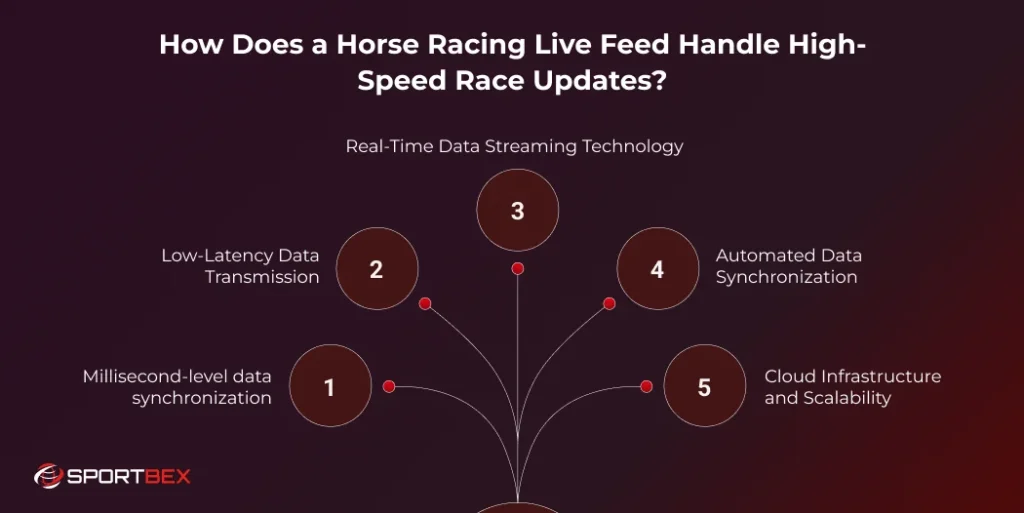
Delivering live horse racing data is not just about speed it’s about ensuring every update reaches users accurately and without interruption. Modern live feeds combine multiple technologies to process, synchronize, and distribute race data in real time.
Millisecond-level data synchronization
Every race provides a steady flow of information, from the positions of the horses to the changing odds. A reliable horse racing live feed will catch these updates in milliseconds and synchronise them across connected platforms so that users will view the latest race status without apparent delays.
Low-Latency Data Transmission
Latency refers to the delay between data generation and data delivery. Once race data is collected, it needs to reach users as quickly as possible.Low latency networks shorten the time it takes for information to get from the data source to betting platforms, mobile apps and websites, which helps to keep live odds, race positions and event updates accurate throughout the race.
Real-Time Data Streaming Technology
Modern platforms avoid repeatedly searching for fresh information by using real-time streaming technologies like WebSockets. This creates a persistent connection between the data provider and the application, allowing race updates to appear as soon as they happen. It also makes it easier to integrate horse racing leaderboards, ensuring rankings and race positions are updated instantly as the event progresses.
Automated Data Synchronization
Manual updates just don’t happen fast enough for live racing. Automated systems take data from the official race sources, process it in real-time and distribute it across multiple platforms. This increases speed and precision and minimizes the chance of human error, making horse racing API vs manual data an easy comparison for businesses that need reliable live updates.
Cloud Infrastructure and Scalability
For big racing events there can be thousands of users at the same time. The cloud-based architecture increases server resources in response to traffic spikes, so live race updates stay fast and reliable, even during the biggest betting moments.
Technologies Behind Fast Horse Racing Data Delivery
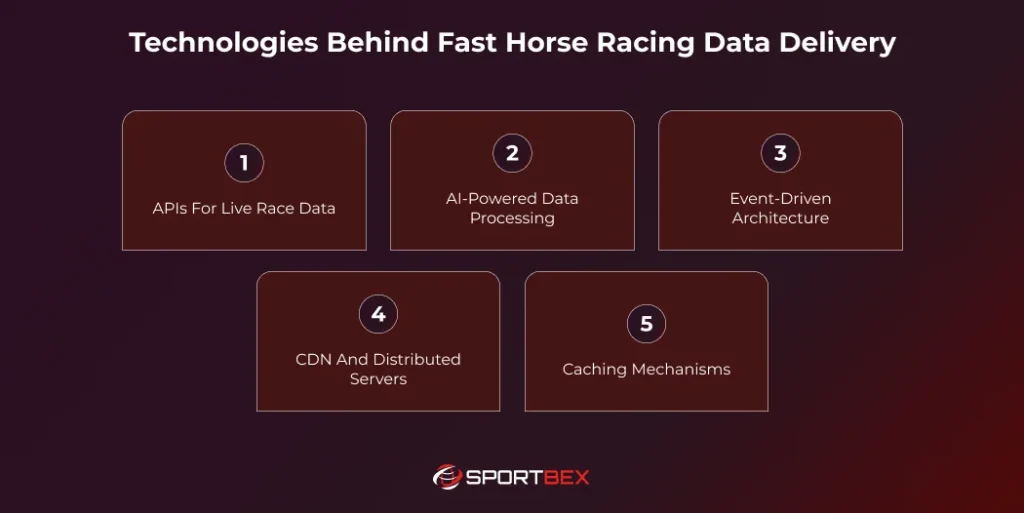
Behind the scenes, several technologies work in concert to ensure that horse racing data is delivered quickly, accurately and reliably. Here’s how each one contributes to real-time performance:
APIs for Live Race Data
- Combine betting sites, websites and mobile apps with real-time race data.
- Get live odds, horse positions, race schedule and results in one integration.
- Simplify data sharing between providers and apps.
Everything You Need for Horse Racing
Access live results, racecards, betting odds, and historical data with one API.
AI-Powered Data Processing
Some modern platforms use AI-assisted technologies to process large amounts of information more efficiently.
- Process large volumes of racing data quickly.
- Identify unusual patterns and data inconsistencies.
- Lower latency of processing and increasing data quality.
Event-Driven Architecture
- Only sends updates when a race event occurs, e.g. an odds change or a checkpoint update.
- Lowers system load and prevents unnecessary data requests.
- Allows faster and more efficient real-time data delivery.
CDN and Distributed Servers
- Server delivery brings data closer to users.
- Improve load times and decrease latency in different regions.
- Keep up performance during high-traffic horse racing events.
Caching Mechanisms
- Save static info: horse profiles, jockey info, track info
- Reduce duplicate server calls for unchanged data.
- Free system resources to focus on live race updates and odds for betting.
How Businesses Use Horse Racing Live Feed Solutions
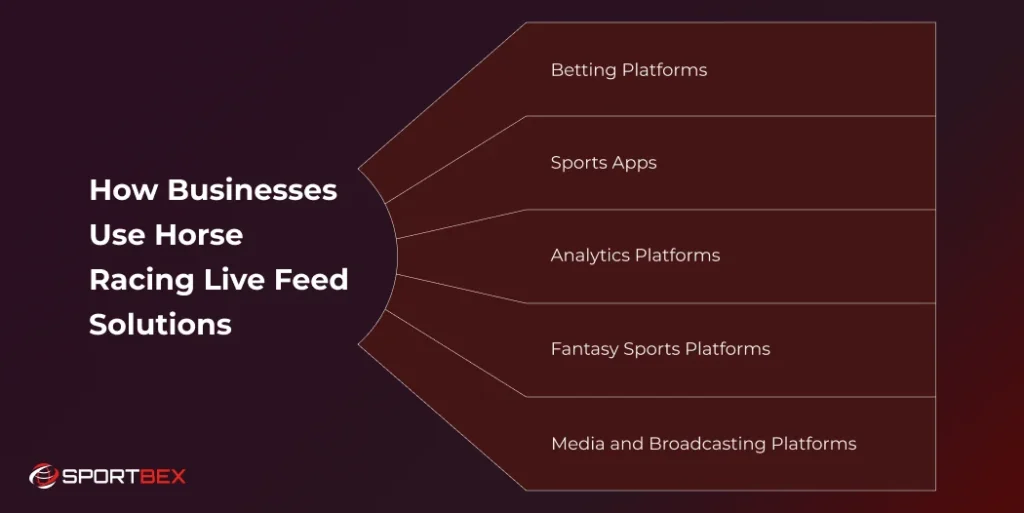
Various industries rely on a rapid horse racing live feed to power their daily operations and generate revenue.
Betting Platforms
Betting operators rely heavily on fast updates to manage live odds. Platforms using an accurate horse racing odds API can adjust information quickly and reduce inconsistencies between displayed and actual betting conditions.
Sports Apps
Consumer-facing applications use a Horse Racing API to send push notifications to users. Whether a user is tracking their favorite horse or monitoring track conditions, they expect instant alerts straight to their mobile devices.
Analytics Platforms
Analytical systems process both historical and live information. Businesses involved in historical horse racing data analysis often combine previous race records with current data to identify patterns and improve predictions.
Fantasy Sports Platforms
Fantasy sports games rely on real-world data to award points to players. High-speed horse racing data updates ensure that fantasy leagues update standings in real-time, keeping participants highly engaged throughout the event.
Media and Broadcasting Platforms
Broadcasters use live data feeds to power on-screen graphics and commentary statistics. When a network needs to show the exact speed of a leading horse, they rely on a robust horse racing live feed to deliver that metric flawlessly to television screens.
Why Reliable Live Feeds Matter for Betting Platforms
A reliable live feed is the foundation of any successful horse racing betting platform. Every odds update, race position, and event needs to reach users as soon as it happens. Even a small delay can affect the betting experience and reduce confidence in the platform.
Live betting depends on accurate, real-time information. When odds and race data stay synchronized with the action on the track, users can place bets with greater confidence and operators can manage live markets more effectively.
To ensure seamless performance, operators must integrate horse racing events into their systems with high-speed data delivery and minimal latency.
Reliability also becomes critical during major racing events. Thousands of users may access the platform at the same time, creating a sudden increase in traffic. A scalable live feed helps maintain consistent performance without slowing down race updates.
Over time, this consistency builds trust. Users are more likely to return to platforms that deliver fast, accurate, and uninterrupted race data throughout every event.
Conclusion
Real-time race updates have become an essential part of modern horse racing platforms. Whether it’s live odds, horse positions, or race results, users expect every update to appear as the action unfolds.
Meeting those expectations requires more than simply collecting race data. A reliable live feed must process, synchronize, and deliver information with speed and accuracy, even during high-traffic racing events. A live horse racing odds API can help platforms deliver real-time odds and market updates while keeping betting information synchronized with the action.
The right technology also helps businesses build a more dependable platform. When users consistently receive accurate and timely updates, it improves their overall experience and strengthens trust in the platform.
As the sports betting industry continues to evolve, investing in a high-performance horse racing live feed is no longer just a technical decision. It’s a foundation for delivering reliable services, supporting platform growth, and keeping users engaged throughout every race.
Build Your Premier Racing Platform
Get the fast, reliable horse racing data you need to launch your platform.
Frequently Asked Questions
Yes. Modern data feeds use WebSockets and low-latency networks to deliver updates in milliseconds, ensuring sports platforms receive information almost instantly.
A Horse Racing API uses automated sensors to capture and transmit data in real time. Manual entry is prone to human error and simply cannot match the speed required for live sports updates.
Cloud infrastructure provides scalable server resources. During major races with high traffic, the cloud automatically allocates more power to prevent the live feed from lagging or crashing.
Latency is typically caused by inefficient server routing, heavy user traffic or outdated API protocols. Using Content Delivery Networks (CDNs) and optimized streaming technology greatly reduces this delay.
No, most modern Horse Racing APIs are designed for easy integration. They offer comprehensive documentation, developer support and SDKs (Software Development Kits) to help you connect your application to the live feed quickly and efficiently.
Recent Blog



How to build a low-latency live sports streaming app using APIs
September 9, 2026
 12 min

Cricket API Uptime & Availability: What Developers Should Know
August 27, 2026
13 min
Instant Horse Racing Updates and Stats. Get Your API Key Now
API Free Trial