Watching a basketball game is exciting, but truly understanding what happens on the court takes your experience to another level.
For beginners, whistles, free throws and sudden turnovers may feel confusing. In reality, every decision made by referees follows the rules of basketball designed to keep the game fair, structured and competitive.
When you understand the rules of basketball, you begin to appreciate the strategy behind every move. Players are not just reacting randomly.
They follow specific patterns, avoid mistakes and make decisions based on timing and positioning. Coaches also rely heavily on the rules and regulations of basketball to manage players, control the pace and build winning strategies.
In this guide, we will explore the Rules of Basketball: Fouls, Violations and Gameplay Explain simply and professionally. Whether you are playing casually, analyzing performance using tools like basketball player efficiency rating, or working with modern solutions like a Basketball Data API to track real time game insights, understanding these basics will give you a strong foundation.
Basic Rules of Basketball Gameplay
Basketball is played between two teams of five players. The main objective is to score points by shooting the ball into the hoop. Teams must also defend to prevent the opponent from scoring.
Scoring System
- 2 points for a standard field goal
- 3 points for shots beyond the three-point line
- 1 point for each successful free throw
Game Structure
- The game is divided into four quarters or two halves
- The game clock stops during fouls, timeouts and out-of-bounds plays
- This ensures fair timing under the rules of basketball
Ball Movement Rules
- Players can move the ball by passing or dribbling
- Running with the ball without dribbling is not allowed
- Breaking these rules results in loss of possession
Standard Gameplay Rules
- Teams must follow the rules and regulations of basketball at all times
- Violations lead to turnovers and a change of possession
- These rules are consistent across the basketball leagues
What is a Foul in Basketball?
A foul is a violation of the rules of basketball involving illegal physical contact or unsportsmanlike behavior. Fouls are serious because they can directly affect scoring opportunities and player availability.
Understanding basketball foul rules is important for both offense and defense. Referees watch closely to ensure no player gains an unfair advantage. When a foul occurs, play stops and the opposing team may receive free throws or possession depending on the situation.
Types of Basketball Fouls
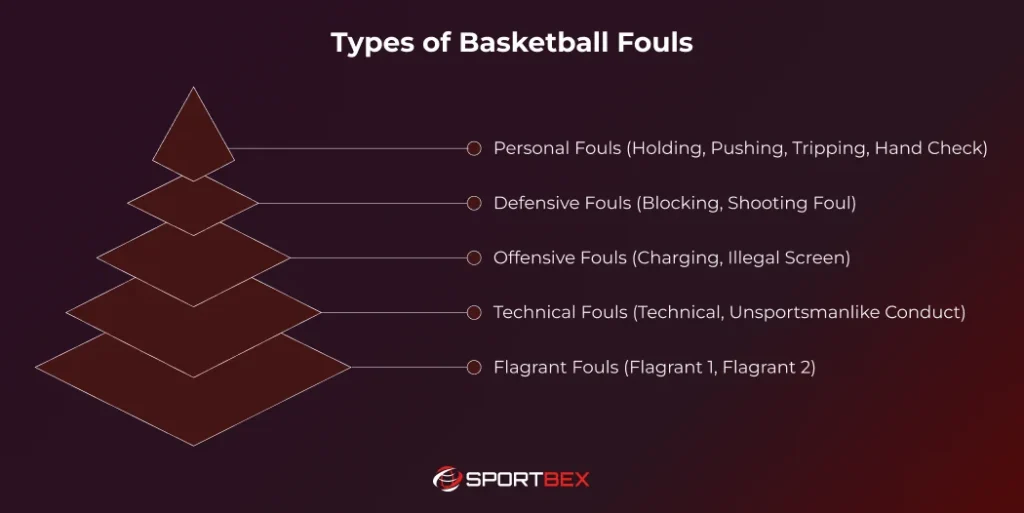
Referees categorize illegal physical contact and unsportsmanlike behavior into specific classifications. Each type of foul serves to penalize a different kind of rule-breaking.
Personal Fouls
- Holding: Grabbing or restricting an opponent’s movement to gain an unfair advantage.
- Pushing: Using force to move an opponent out of position during play.
- Tripping: Causing an opponent to lose balance or fall by obstructing their movement.
- Hand Check: Placing hands on a player to slow down or control their movement illegally.
Defensive Fouls
- Blocking: Preventing an offensive player’s movement without establishing a legal position.
- Shooting Foul: Making illegal contact with a player while they are attempting a shot.
Offensive Fouls
- Charging: Running into a defender who has already established a legal position.
- Illegal Screen: Moving while setting a screen and making contact with a defender.
Technical Fouls
- Arguing with Officials: Disputing referee decisions in an unsportsmanlike manner.
- Unsportsmanlike Conduct: Actions like taunting, delaying the game or inappropriate behavior.
Flagrant Fouls
- Flagrant 1: Unnecessary physical contact that is not considered excessive.
- Flagrant 2: Severe or dangerous contact that results in immediate ejection from the game.
Foul Penalties and Consequences
Basketball penalties for fouls play a key role in shaping the outcome of a game. When a player commits a foul, the opposing team may receive free throws or possession depending on the situation. These decisions follow the rules of basketball and ensure fair play.
Players must also manage their foul count carefully during the game. Too many fouls can lead to disqualification, which affects team performance and strategy. These basketball penalties influence both individual players and the overall flow of the match.
Basketball Violations Explained
Basketball violations are non-contact mistakes related to movement, positioning or timing. Unlike fouls, violations do not involve physical contact but still break the rules of basketball.
Common basketball violations include traveling, double dribbling and stepping out of bounds. Time-related violations like shot clock and backcourt violations also occur frequently.
The penalty for basketball violations is simple. The opposing team gets possession. These violations may seem small, but they can disrupt game momentum and strategy.
Key Differences: Fouls vs Violations
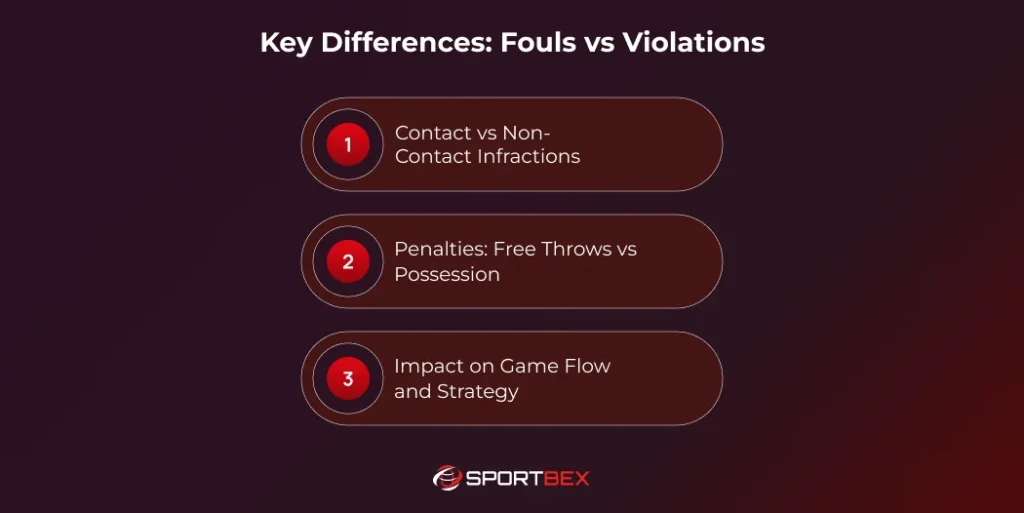
It is easy for beginners to confuse fouls and violations. However, distinguishing between the two is a critical component of understanding the rules of basketball.
Contact vs Non-Contact Infractions
Fouls involve illegal physical contact between players, such as pushing or blocking, which directly affects player movement. In contrast, basketball violations are non-contact mistakes related to ball handling or positioning, like traveling or double-dribbling. This clear distinction makes it easier to understand the rules of basketball.
Live Basketball Data, Straight from the Court
A simple, reliable API to power your platform with global basketball data
Penalties: Free Throws vs Possession
Basketball penalties for fouls often include free throws, especially when the foul occurs during a shooting attempt. In some cases, fouls also contribute to a player’s personal count, which can lead to disqualification. On the other hand, basketball violations always result in a turnover, giving possession to the opposing team.
Impact on Game Flow and Strategy
Fouls have a deeper impact on team strategy because players must avoid reaching the foul limit. Coaches often adjust lineups to protect key players from fouling out during important moments. Violations mainly disrupt the rhythm of play, but they can still shift momentum and create scoring opportunities for the opponent.
How Gameplay Works in Real Matches
In real matches, gameplay follows a continuous flow guided by the rules of basketball. Teams switch between offense and defense quickly. After scoring, the opponent restarts play and attempts to create scoring chances within the shot clock.
Defensive strategies include man-to-man and zone defense. Players aim to stop scoring without committing fouls. Coaches adjust tactics based on performance and foul counts.
Understanding this flow is useful not only for fans but also for developers working with sports data, including those learning to choose the best basketball API for real-time tracking.
Common Beginner Mistakes in Basketball Rules
Beginners often misunderstand important aspects of the rules of basketball. One common mistake is traveling, especially with modern movements like the gather step. Players are allowed controlled steps, but exceeding limits leads to a violation.
Another mistake is misunderstanding clean defense. Blocking the ball is legal, but hitting the player’s hand results in a foul.
Many also confuse fouls with basketball violations. Knowing the difference helps improve both gameplay and understanding. This is especially useful when analyzing performance data or exploring famous basketball players in India and their playing styles.
Conclusion
Understanding the rules of basketball transforms the way you watch and play the game. What once seemed random becomes structured and strategic. Fouls, violations and gameplay rules are not just restrictions. They are the foundation that keeps basketball fair and competitive.
By learning basketball foul rules, recognizing basketball violations and understanding basketball penalties, you gain a deeper connection to the sport. You can analyze plays, understand referee decisions and even predict outcomes based on player behavior.
Whether you are a beginner, a player or someone working with sports technology, mastering the rules and regulations of basketball is essential. It is the first step toward enjoying the game at a professional level.
Build a Winning Sports Platform
Use our flexible Basketball API for your website, platform, or service.
Frequently Asked Questions
A foul is illegal physical contact or unsportsmanlike behavior that breaks the rules of basketball and can result in free throws or possession.
Basketball violations are non-contact rule breaks like traveling or double-dribbling that result in a turnover.
Fouls involve contact and may lead to free throws, while basketball violations involve gameplay mistakes and result in possession loss.
Players are disqualified after reaching the foul limit, usually five or six depending on the league.
Basketball penalties include free throws, turnover and player disqualification depending on the violation or foul.
Recent Blog



How to build a low-latency live sports streaming app using APIs
September 9, 2026
 12 min

Cricket API Uptime & Availability: What Developers Should Know
August 27, 2026
13 min
Looking for Fast & Scalable Basketball API Solutions?
API Free Trial