What Is VAR in Football? Full Explanation of Video Assistant Referee

April 24, 2026

7 min read
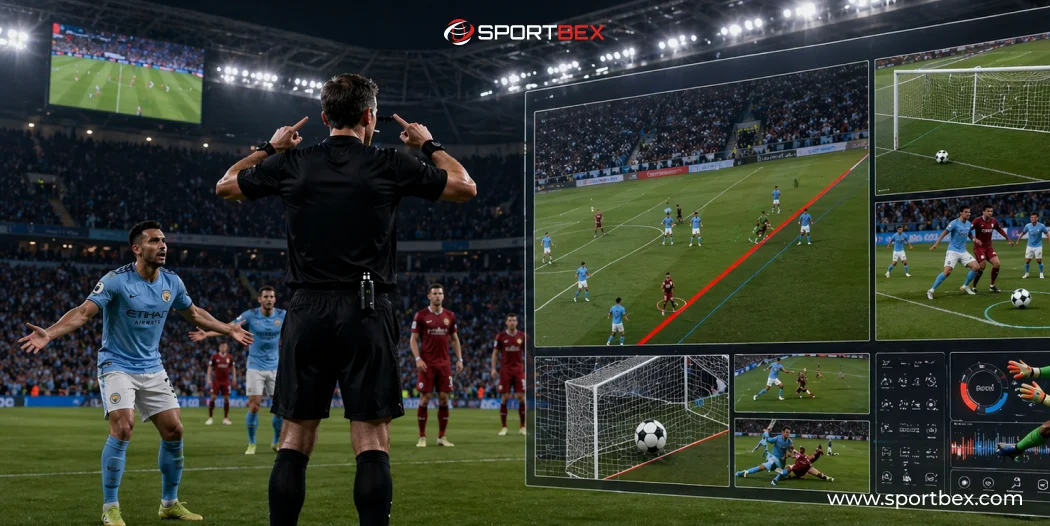
For decades, football relied entirely on human judgment. Referees had only a few seconds to make decisions that could define the outcome of a match. A missed offside call or an unnoticed foul often led to controversy, debates and frustration among fans and players.
As the game became faster and more competitive, the need for accuracy grew stronger. Football authorities recognized that relying only on the human eye was no longer enough.
This shift toward precision is similar to how modern platforms use a Soccer Odds API to ensure real-time accuracy in match data and betting insights. They needed a system that could support referees without interfering with the natural flow of the game. This is where technology started playing a key role.
If you are searching for a clear answer to What Is VAR in Football? Full Explanation of Video Assistant Referee: This guide will help you understand everything in a simple and practical way.
From its origin to how it works in real matches, this article explains how VAR in Football has changed the modern game.
What Is VAR in Football?
VAR in Football stands for Video Assistant Referee. It is an official who supports the on-field referee by reviewing decisions using video footage and communication tools. The purpose is not to replace the referee but to assist in correcting clear errors.
When people ask what is var in football, the simplest answer is that it is a review system that uses multiple camera angles to ensure fair decisions. The concept of video assistant referee football is based on accuracy and fairness.
VAR in Soccer follows a principle called minimum interference and maximum benefit. This means the system only steps in when necessary. It does not interrupt every decision but focuses on major incidents that can change the outcome of a match.
Many modern platforms that rely on live updates depend on systems like Soccer APIs for Live Scores to reflect these real-time decisions accurately.
When Was VAR Introduced in Football?
A common question is when was VAR introduced in football. The system was first approved for testing in 2016 by the International Football Association Board. Early trials were conducted in smaller competitions to evaluate its effectiveness.
The global introduction of VAR in Football came during the 2018 FIFA World Cup. This was the first major tournament where the system was used on a large scale. After its success, VAR in Soccer was gradually adopted by major leagues and competitions worldwide.
It is used in many top tournaments, including events like the FIFA Club World Cup League, making it a standard part of modern football.
Why VAR Is Used in Football
The main reason VAR in Football exists is to improve fairness and accuracy. Football is a fast-paced sport where referees often have limited time to react. Even small mistakes can impact the outcome of important matches.
Reasons why VAR is used in football:
- Improves decision accuracy in critical moments
- Reduces human errors in fast-paced situations
- Ensures fair outcomes in match-defining incidents
- Supports referees under high pressure
- Maintains the integrity of the game
The video assistant referee football system supports officials by providing multiple camera angles for review. It helps ensure decisions are not based on a single perspective. Similar to big data in football analytics, it improves accuracy and confidence in decision-making.
How VAR Works in Football (Step-by-Step Process)
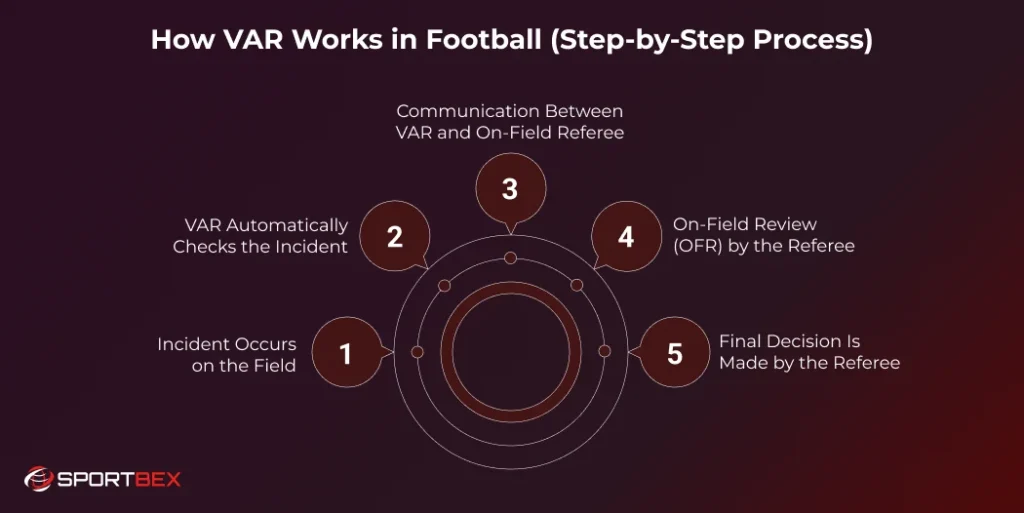
VAR in Football follows a structured process designed to ensure accurate decisions without disrupting the natural flow of the game. Each step is carefully managed to balance speed and correctness. This system helps referees handle critical moments more effectively.
Step 1: Incident Occurs on the Field
The process begins when a key incident takes place during the match, such as a goal, foul or potential red card. The referee makes an initial decision based on what they see in real time. Play usually continues unless the situation requires immediate stoppage.
Step 2: VAR Automatically Checks the Incident
The VAR team continuously monitors the match from a video operation room using multiple camera angles. Every important incident is checked silently without interrupting the game. This ensures that no major error goes unnoticed during play.
Step 3: Communication Between VAR and On-Field Referee
If the VAR team identifies a possible mistake, they communicate directly with the referee through a headset. The referee is informed about the nature of the incident and whether a review is needed. This communication is quick and ensures the game flow is maintained.
Step 4: On-Field Review (OFR) by the Referee
The referee may choose to review the incident on a pitch-side monitor for a clearer understanding. This is known as an on-field review and is used for more complex or subjective decisions. Watching the replay helps the referee make a more informed judgment.
Step 5: Final Decision Is Made by the Referee
After reviewing the footage or receiving advice from the VAR team, the referee makes the final decision. The authority always remains with the on-field official, not the VAR team. Once the decision is made, the referee signals it clearly to players and fans.
What Decisions Can VAR Review in Football?
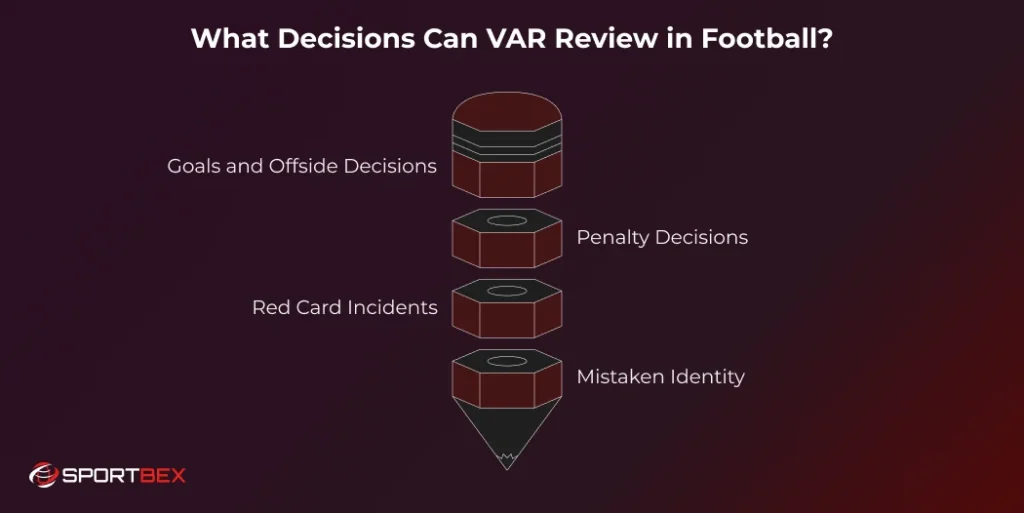
VAR in Football is limited to four specific types of incidents to ensure the game flow is not disrupted unnecessarily. These situations are considered match-changing moments where accuracy is most important. By focusing only on key decisions, VAR in Soccer maintains a balance between fairness and continuity.
Goals and Offside Decisions
Every goal scored is automatically reviewed by the VAR team to ensure no rule has been broken during the build-up. This includes checking for offside positions, fouls or whether the ball went out of play. These reviews are crucial because even a small error can completely change the outcome of a match.
Get Your Soccer Data Here
Live scores, player stats, and team data from one simple API.
Penalty Decisions
VAR reviews incidents inside the penalty area to confirm whether a foul actually occurred. It helps referees decide if a penalty should be awarded or overturned based on clear evidence. This ensures that incorrect or unfair penalty decisions are minimized during important moments.
Red Card Incidents
Only direct red card situations are reviewed under VAR in Football, not second yellow cards. The system checks for serious fouls, violent conduct or dangerous challenges that could affect player safety. This helps ensure that major disciplinary decisions are fair and justified.
Mistaken Identity
Mistaken identity occurs when the referee penalizes the wrong player during a confusing situation. VAR helps correct these errors by reviewing footage and identifying the actual player involved. This ensures that the right individual is held accountable for the incident.
Advantages of VAR in Football
VAR in Football has improved how decisions are made by bringing more accuracy and fairness to the game. It helps referees handle important moments with better clarity and confidence.
- Improved Decision Accuracy: VAR reviews key decisions like goals, penalties and red cards using multiple camera angles to reduce errors.
- Reduction in Unfair Play: Players are less likely to dive or commit fouls knowing their actions can be reviewed.
- Better Support for Referees: Referees get additional help through video reviews, allowing for more confident decisions.
- Increased Transparency for Fans: Fans can see that decisions are checked carefully, which builds trust in the game.
- Enhanced Match Integrity: VAR ensures match results are based on fair and accurate decisions rather than mistakes.
Overall, VAR in Football plays a key role in improving the quality of officiating. Despite some delays, its contribution to fairness makes it essential in modern football.
Conclusion
VAR in Football has become an essential part of modern football. It has changed how matches are officiated by reducing errors and improving fairness. While it may sometimes slow down the game, the benefits it brings in terms of accuracy and integrity are undeniable.
What is var in football helps fans appreciate the complexity behind every decision. The video assistant referee football system ensures that results are based on correct judgments rather than human limitations.
As technology continues to evolve, VAR in Soccer will become faster and more efficient. Just like how platforms rely on a Soccer Data API to deliver accurate and real-time insights, VAR continues to improve the reliability of decisions on the field.
The goal remains the same: to protect the spirit of the game while ensuring fair outcomes for everyone involved.
All Your Soccer Data in One Place
Build your platform on reliable data with our 99.9% uptime guarantee
Frequently Asked Questions
VAR in Football is used to review four key situations: goals, penalty decisions, red card incidents and mistaken identity.
No, the on-field referee always makes the final decision. VAR only provides assistance and recommendations.
VAR was officially introduced in major tournaments during the 2018 FIFA World Cup after trials began in 2016.
Some decisions require multiple camera angles and careful analysis, which can take time to ensure accuracy.
Yes, VAR significantly improves decision accuracy by reducing clear errors in matches.
Recent Blog



How to build a low-latency live sports streaming app using APIs
September 9, 2026
 12 min
Cricket API Uptime & Availability: What Developers Should Know
August 27, 2026
13 min
Track Matches, Goals, and Stats Instantly with Our Live Soccer API
API Free Trial