Challenges Developers Face When Working with Live Soccer API Data

April 6, 2026

9 min read
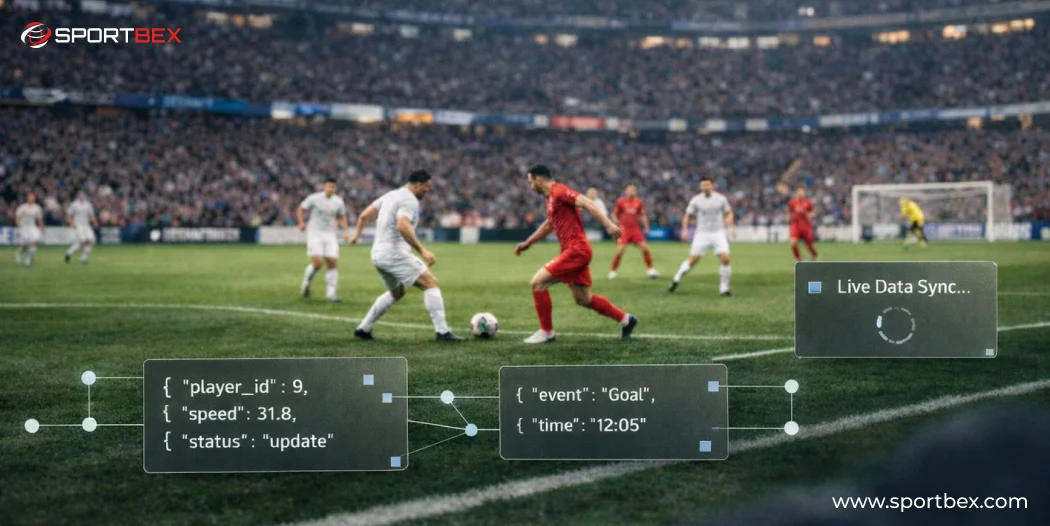
Building a successful sports application requires more than just a good interface. Users expect instant access to live scores, player statistics, match events, and accurate updates without delays.
For developers working on live score apps, sportsbook platforms, or fantasy sports products, fast and reliable data delivery through a soccer odds API and live match feeds is essential for user trust and engagement.
A dependable live soccer API is the backbone of these real-time experiences, delivering continuous match updates, scoreline changes, and league data. However, integrating a football API is more complex than simply connecting an endpoint. Teams must ensure smooth synchronization between frontend and backend systems while managing traffic spikes during major matches.
Challenges Developers Face When Working with Live Soccer API Data remain a key part of sports app development. From delayed score feeds and schema changes to rate limits and data inconsistencies, these technical issues can directly impact application performance and user satisfaction.
What Is the Live Soccer API Data
A live soccer API provides real-time football match data that applications can use to display scores, events, team statistics and player performance.
This data often includes:
- live scores
- match timelines
- player stats
- possession data
- cards and substitutions
- betting odds
A football live scores api helps developers automate live updates instead of manually managing match data. This is why many platforms rely on Soccer APIs for Live Scores to deliver faster and more accurate match updates.
Using a reliable football API allows teams to maintain data accuracy and improve user engagement during live games, especially when the live soccer API supports real-time event delivery.
Common Challenges Developers Face with Live Soccer API Data
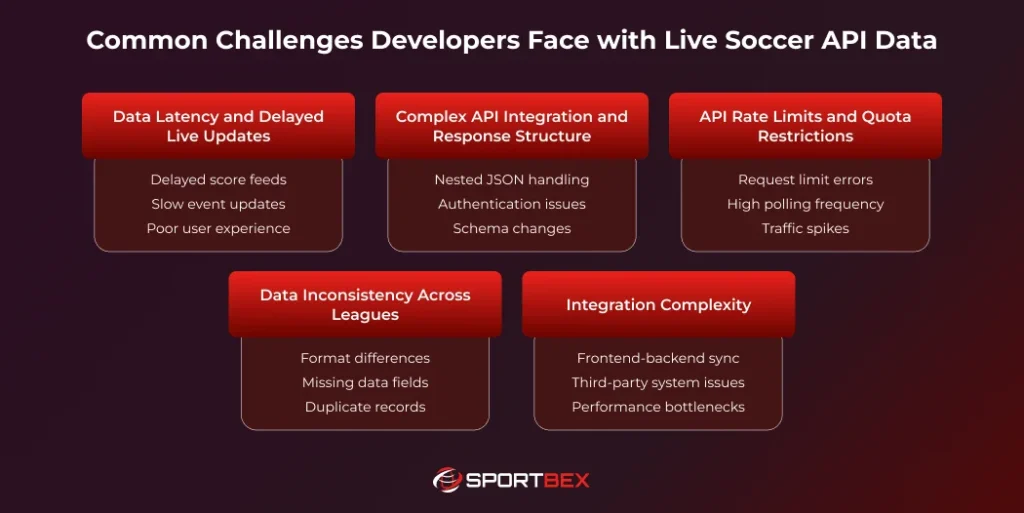
One of the most common soccer API integration challenges is delay in real-time updates. Users expect goals, cards and substitutions to appear instantly while the match is in progress. Even a small delay in updates can reduce trust and negatively impact the overall user experience.
1. Data Latency and Delayed Live Updates
Data latency is one of the most common challenges when working with a live soccer API, as users expect match events to appear instantly. Even a few seconds of delay in score or event updates can negatively impact user trust and overall app experience.
Delayed score feeds
Delayed score feeds usually occur when the provider’s servers take extra time to process and push match events. This often happens because of slow network routing, overloaded systems or delays in receiving official stadium data during high-profile matches. This is one of the most common issues developers face when relying on a live soccer API during high-profile matches.
Slow event updates
Apart from goals, other events like corners, fouls and player substitutions may also update slowly. This creates a frustrating experience for users who rely on the app for live tracking and real-time decision-making.
Poor user experience
When updates are not delivered quickly, users may feel the platform is unreliable and move to a competitor’s app. This directly affects engagement, retention and trust in the product.
2. Complex API Integration and Response Structure
A football API often returns deeply nested and complex response structures that require careful parsing. Teams that plan to integrate soccer API provider solutions must build flexible backend parsers and validation layers.
Nested JSON handling
Live sports APIs usually provide data in multi-level JSON objects that are difficult to process efficiently. Extracting scores, lineups and event timelines from these responses requires clean backend logic and proper field mapping.
Without structured parsing, important match details may fail to appear correctly. A well-structured live soccer API should provide predictable response formats to reduce backend complexity.
Get Your Soccer Data Here
Live scores, player stats, and team data from one simple API.
Authentication issues
Authentication issues such as expired tokens, invalid API keys or permission restrictions can interrupt live data flow. These problems often lead to failed requests and missing score updates during active matches. A secure and properly managed authentication system is essential for stable performance, especially for platforms like an API for online soccer betting where real-time accuracy is critical.
Schema changes
API providers may update field names or endpoint structures without prior notice. If the backend system is not flexible, even small changes can break major sections of the application. This makes regular monitoring and response validation extremely important.
3. API Rate Limits and Quota Restrictions
Another major API integration challenge is staying within the provider’s request limits. Live score applications require frequent API calls to keep data fresh during matches. Without optimization, the request quota can be consumed very quickly.
Request limit errors
When too many requests are sent in a short time, the provider may return temporary errors or block access. This can stop scoreboards and match events from refreshing in real time. Proper request control helps avoid these interruptions.
High polling frequency
Frequent polling increases the number of requests sent to the API and puts additional load on the system. This can also increase server costs and reduce performance stability. Using smart refresh intervals and caching can help reduce unnecessary calls. Optimizing how often the live soccer API is queried is essential for long-term performance.
Traffic spikes
Popular league matches and major tournaments often create sudden traffic spikes. A large number of users checking scores at once can rapidly multiply API requests. Without scalable infrastructure, this may trigger quota issues and slow updates.
4. Data Inconsistency Across Leagues
Different leagues often follow different reporting standards and data structures. This creates consistency issues when building a single platform that covers multiple competitions. Developers need to normalize the data before sending it to the frontend.This issue becomes more visible when handling multiple Soccer Leagues with different reporting standards.
Format differences
Some leagues provide detailed player metrics and advanced event data, while others only include basic scores. These differences can make the user interface look inconsistent. A standardized data layer helps solve this issue.
Missing data fields
Lower-tier leagues may not provide complete lineups, player stats or event timelines. Missing fields can lead to incomplete match pages and reduce user trust. Validation checks are important before displaying the data.
Duplicate records
Duplicate team names, repeated events or inconsistent match IDs can appear in the data feed. If not cleaned properly, this can create confusion for users. Data normalisation and duplicate filtering are essential steps.
5. Integration Complexity
Integration involves much more than simply connecting an endpoint. It requires stable communication between systems while maintaining speed and reliability. Performance issues often appear when both live and historical data are processed together.
Frontend-backend sync
The backend must process live events quickly and push updates to the frontend without delay. Smooth synchronisation ensures users receive accurate score updates in real time. Any lag in this process affects the live match experience.
Third-party system issues
Downtime or slow responses from third-party providers can directly affect your application’s reliability. If the external system fails, users may see outdated or missing scores. Fallback mechanisms help maintain trust during such issues.
Performance bottlenecks
Processing large volumes of live and historical data together can slow database performance. Heavy queries may increase page load time and delay live updates. Proper caching and optimised database queries are necessary for scalability. Performance issues are common when processing both live scores and historical data within the same system.
Best Practices for Working with Live Soccer API Data
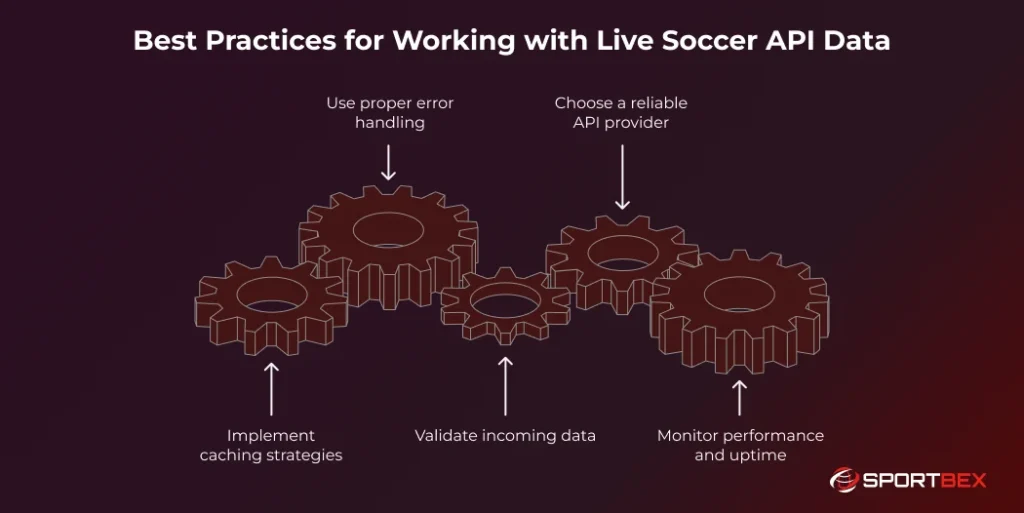
To overcome these challenges, developers should focus on strong system architecture and consistent data reliability. Following the right development practices helps improve performance, reduce downtime and build user trust during live matches.
Implement caching strategies
Caching helps reduce repeated API requests by temporarily storing frequently used match data. This improves response speed and also prevents rate-limit issues during high-traffic events.
Use proper error handling
Applications should always display fallback data or a clear user-friendly message during temporary outages. Proper error handling ensures the platform remains stable even when the external API fails.
Validate incoming data
Always verify missing fields, incorrect values and response format changes before sending data to the frontend. This helps avoid broken scoreboards and inaccurate match details.
Choose a reliable API provider
A stable football live scores api with strong documentation and low latency reduces development complexity. It also helps teams manage updates and integrations more efficiently. Selecting the best soccer data provider helps reduce integration complexity and improve uptime.
Monitor performance and uptime
Track response times, latency and error rates during live matches using monitoring tools. This allows teams to quickly identify issues before they affect the user experience.
How to Choose the Right Football API for Long-Term Scalability
Choosing the right provider is critical for long-term growth and platform stability. Before selecting a live soccer API, developers should carefully evaluate the provider’s technical capabilities and support standards to ensure smooth long-term integration.
Key factors to consider include:
- response speed
- uptime SLA
- documentation quality
- multi-league support
- WebSocket availability
- pricing flexibility
A scalable football API should continue to perform reliably during peak traffic, especially during finals, international tournaments and high-demand league matches. Selecting the right provider helps reduce future integration issues and supports a consistent user experience as the platform grows.
Why Sportbex Helps Avoid Many of These Common Mistakes
Sportbex is built to help teams reduce common integration issues in live sports applications and simplify the development process. By providing reliable infrastructure and live soccer API data delivery, it helps improve both application performance and long-term scalability.
It helps by offering:
- structured and clean JSON responses
- stable authentication flow
- strong uptime
- low-latency updates
- scalable infrastructure
This allows developers to focus more on product experience and less on backend troubleshooting. A dependable live soccer API partner can significantly reduce engineering overhead while supporting faster and more reliable sports application development.
Conclusion
Working with live sports data requires much more than simply connecting an endpoint. Developers must manage challenges such as latency, traffic spikes, inconsistent league data and performance bottlenecks while ensuring users receive fast and accurate updates throughout the match.
Building a successful sports application depends on strong system architecture, smart caching strategies, proper error handling and continuous performance monitoring. Choosing a dependable live soccer API provider also plays a major role in maintaining stability and delivering real-time experiences that users can trust.
Every growing platform eventually reaches the stage where a Sports App Needs a Soccer Score API to maintain real-time user engagement. By understanding these common development challenges and following the right best practices, teams can build scalable platforms that perform reliably during peak match traffic.
A well-structured integration approach not only improves technical performance but also helps create a seamless and engaging match-day experience for users.
All Your Soccer Data in One Place
Build your platform on reliable data with our 99.9% uptime guarantee
Frequently Asked Questions
The most common challenges include delayed live updates, complex response structures, API rate limits, inconsistent league data and performance bottlenecks during high-traffic matches. These issues can directly affect user experience and platform reliability.
Data latency usually occurs due to slow provider servers, network delays, high traffic volume or inefficient polling intervals. During major tournaments, increased demand can further slow down score and event updates.
Developers can reduce rate-limit problems by implementing caching strategies, optimizing polling frequency and using WebSocket connections where available. This helps minimize repeated requests and improves performance.
Different leagues and data providers often follow different reporting standards and formats. Some competitions offer detailed player stats while others provide only basic match events, which creates data inconsistencies.
Choose a provider based on response speed, uptime SLA, documentation quality, scalability, WebSocket support and multi-league coverage. A reliable provider helps reduce integration complexity and supports long-term platform growth.
Recent Blog



How to build a low-latency live sports streaming app using APIs
September 9, 2026
 12 min

Cricket API Uptime & Availability: What Developers Should Know
August 27, 2026
13 min
Track Matches, Goals, and Stats Instantly with Our Live Soccer API
API Free Trial