Protect Your Bookmaking Business from sports betting syndicates

May 22, 2026

11 min read

Sports betting syndicates are organized groups of professional bettors who use advanced tools, data analysis, and automated betting systems to find weaknesses in sportsbook platforms. These groups often target slow odds updates, promotional offers, and weak security systems to gain an advantage.
Some syndicates operate legally, while others use unfair methods such as multiple betting accounts and betting bots. For bookmakers and online sportsbooks, syndicate betting can lead to major financial losses, market manipulation, and increased fraud risks.
As the online betting market grows, sportsbooks need stronger security, real-time monitoring, and advanced risk management tools to stay protected.This guide explains Protect Your Bookmaking Business from sports betting syndicates, why sportsbooks are vulnerable, the warning signs to watch for, and the best strategies bookmakers can implement to secure their businesses against syndicate betting activities.
What Are Sports Betting Syndicates?
Sports betting syndicates are groups of professional bettors who work together to place bets on different sportsbooks. These groups use data analysis, betting software, and market research to find profitable betting opportunities before bookmakers update their odds.
Unlike regular bettors, syndicates operate like organized businesses. They often have analysts, traders, and betting experts who work as a team to increase profits. Many syndicates place large bets across multiple accounts and platforms to avoid detection.
The main goal of betting syndicates is to take advantage of weak odds, betting delays, and market inefficiencies. Some syndicates use advanced technology and automated betting tools to place bets quickly.
While some syndicates follow legal betting practices under Sports Betting Legal guidelines, others may use unfair methods that can create risks for sportsbooks and bookmakers.
How Do Sports Betting Syndicates Work?
Sports betting syndicates work as organized groups of professional bettors who use advanced data, statistics, and technology to place strategic bets across multiple sportsbooks. Instead of relying on luck, these groups analyze player performance, team trends, market movements, and betting odds to identify profitable opportunities before bookmakers adjust their lines.
Many syndicates use automated software and betting bots to place wagers quickly, especially during live events where odds change rapidly. They also operate through multiple betting accounts and different locations to avoid detection and maximize profits.
Some syndicates focus on arbitrage betting, while others target soft odds or delayed market updates. Their coordinated approach allows them to place large-volume bets efficiently, giving them a significant advantage over sportsbooks with weak monitoring systems.
Why Sportsbooks Are Vulnerable to Betting Syndicates
Sportsbooks are vulnerable to betting syndicates because many platforms still rely on slow odds updates, weak risk management systems, and limited fraud detection tools.
Syndicates use advanced software, real-time data, and coordinated betting strategies to identify pricing mistakes before sportsbooks can react. Some bookmakers also struggle with poor player verification, making it easier for syndicates to create multiple accounts and exploit promotions.
Niche sports markets and live betting events are especially risky because odds can change quickly. Without strong monitoring systems and automated protection, sportsbooks can face significant financial losses from organized betting activity.
Major Risks Betting Syndicates Create for Bookmakers
Sports betting syndicates can affect nearly every aspect of a bookmaker’s business. From financial losses to compliance issues, the risks are substantial.
Financial Risks
Sports betting syndicates can cause major financial losses for sportsbooks by placing large and well-planned bets on favorable odds. If bookmakers do not react quickly, they can lose significant amounts of money in a short time. Syndicates also reduce profit margins through consistent sharp betting and often abuse bonuses, free bets, and promotional offers using multiple accounts and coordinated betting strategies.
Operational Risks
Sports betting syndicates can create serious operational challenges for sportsbooks, which is why Sportsbook API Integration becomes essential for real-time control and monitoring. Coordinated betting activity across multiple platforms may influence odds and create artificial market movements.
Sudden betting spikes can increase liability risks during major events. Without automated monitoring tools, sportsbook teams may struggle to investigate suspicious activity and manage operational pressure effectively.
Reputation and Compliance Risks
Betting syndicates can create serious compliance and reputation problems for sportsbooks. Suspicious betting activity may increase anti-money laundering concerns and attract regulatory attention. If bookmakers fail to detect fraud, they may face penalties, fines, and loss of customer trust. Maintaining secure, transparent, and fair betting environments is essential for long-term sportsbook credibility and business growth.
Effective Solutions to Protect Your Bookmaking Business

Protecting a sportsbook from syndicate betting requires a combination of technology, monitoring, and proactive risk management strategies, especially for operators learning How To Start A Sportsbook and building a secure platform from the beginning.
Advanced Risk Management Tools
Modern sportsbooks need intelligent systems capable of detecting suspicious betting behavior in real time. Advanced risk management tools help bookmakers monitor betting activity, identify unusual patterns, and reduce potential losses before they become serious problems.
These tools include AI-powered fraud detection, automated exposure monitoring, real-time risk scoring, behavioral analysis systems, and market movement tracking.
By using these technologies, sportsbooks can quickly detect suspicious wagers, coordinated betting activity, and sudden betting spikes, allowing risk management teams to take fast action and protect sportsbook operations more effectively.
Strong Player Verification
Identity verification is one of the most effective defenses against betting syndicates. Sportsbooks should use strong KYC verification processes, document authentication, device fingerprinting, geo-location tracking, and multi-account detection systems to identify suspicious users.
These technologies help prevent fake identities and duplicate accounts from being used for coordinated betting activities.
In addition, behavioral monitoring tools can track unusual login activity, betting habits, and account behavior in real time. This allows sportsbooks to detect potential fraud early and improve overall platform security and compliance.
Limit Management Strategies
Dynamic betting limits help sportsbooks reduce exposure to sharp betting activity by adjusting Dynamic Odds in real time. Sportsbooks can use different strategies such as restricting stakes for suspicious users, setting limits for specific markets, delaying bet approvals, and reviewing risky accounts automatically.
These methods help bookmakers control losses and manage betting risks more effectively. Limit management systems also allow sportsbooks to react quickly when unusual betting activity appears.
To improve protection, sportsbooks should regularly adjust betting limits based on customer behavior, market changes, betting patterns, and the risk level of major sporting events.
Data Analytics and Monitoring
Data analytics plays a critical role in sportsbook security. Real-time monitoring systems help bookmakers track suspicious betting behavior, unusual market movements, and betting activity across multiple accounts.
These tools can quickly identify coordinated bets, repeated soft odds exploitation, and sudden betting spikes that may indicate syndicate activity. By comparing historical betting data with live market activity, sportsbooks can detect irregular patterns more accurately.
Many operators also use machine learning and automated analytics systems to improve fraud detection and reduce potential financial risks before they grow larger.
API Integration for Sportsbook Protection
Modern sportsbooks rely heavily on APIs to strengthen security and automate risk management. A reliable Sports Betting API helps bookmakers access real-time odds, betting activity, and market updates instantly.
APIs also help detect suspicious betting patterns, multi-account activity, and betting bots in real time. Risk management APIs allow sportsbooks to monitor liabilities, adjust odds automatically, and control exposure.
In addition, KYC and AML APIs support player verification, payment monitoring, and regulatory compliance, helping sportsbooks improve security and reduce operational risks efficiently.
Role of Technology in Preventing Syndicate Betting
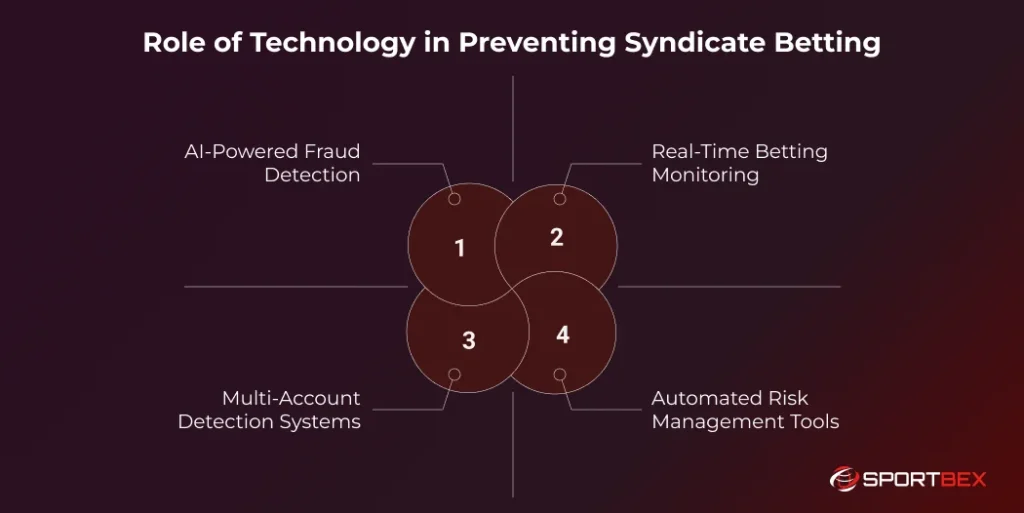
Technology has become one of the most important defenses against betting syndicates. Modern sportsbooks use AI, automation, and advanced analytics to identify threats quickly and protect betting markets.
AI-Powered Fraud Detection
Artificial intelligence systems can analyze massive amounts of betting data in real time. These systems help sportsbooks detect suspicious betting patterns, coordinated betting activity, multi-account usage, and unusual market movements quickly.
By learning from past betting behavior and adapting to new fraud trends, AI improves detection accuracy and helps bookmakers identify potential threats faster than traditional manual monitoring methods.
Real-Time Betting Monitoring
Real-time monitoring tools track betting activity across all markets and customer accounts. These systems help sportsbooks detect unusual betting spikes, monitor exposure levels, identify rapid odds exploitation, and track betting activity from different regions.
By analyzing betting patterns instantly, especially through Live Sports Betting Odds, sportsbooks can quickly respond to suspicious activity and reduce risks. Fast response times are extremely important when dealing with organized betting syndicates.
Multi-Account Detection Systems
Syndicates frequently use multiple accounts to avoid detection. Sportsbooks use advanced detection systems to identify suspicious activity and linked betting accounts. These systems analyze device fingerprints, IP addresses, browser activity, betting behavior, and geo-location data.
By monitoring these patterns in real time, bookmakers can quickly detect coordinated betting networks, prevent account abuse, and reduce the risk of fraud and syndicate betting activities.
Automated Risk Management Tools
Automated Risk Management Tools allow sportsbooks to react instantly to suspicious activity. These systems can automatically adjust betting limits, suspend risky markets, trigger fraud alerts, restrict suspicious accounts, and update odds in real time.
Since betting syndicates use speed and automation to exploit sportsbooks, modern bookmakers must use advanced automated tools to improve security, reduce risks, and protect their sportsbook business effectively.
Key Warning Signs of Sports Betting Syndicates

Recognizing early warning signs is critical for preventing major sportsbook losses.
Multiple Accounts Placing Identical Bets
One of the clearest indicators of syndicate activity is multiple accounts placing the same wagers within seconds of each other. This usually happens when a group is trying to hide coordinated betting behavior by using different accounts.
These accounts often show similar betting patterns, use the same or related IP addresses, have linked payment methods, and even matching device fingerprints, making it easier for sportsbooks to detect suspicious activity and potential syndicate involvement.
Consistent Betting on Soft Odds
Syndicates focus on soft odds meaning prices that are slightly wrong compared to other sportsbooks or the real probability of an event. They quickly spot these value bets and place large wagers before odds change.
If a user or group repeatedly bets only when odds look unusually favorable, it may indicate syndicate activity. Sportsbooks should monitor such patterns closely and review these accounts for possible coordinated betting behavior early detection.
High Win Rates and Closing-Line Advantage
Professional syndicates often beat the closing line consistently. This means they are able to place bets at better odds before the sportsbook adjusts the market to its most accurate pricing.
They act quickly on mispriced odds and use data-driven strategies to gain an edge. When the same accounts repeatedly achieve closing-line value and maintain high win rates, it becomes a strong signal of sharp, coordinated, or syndicate-style betting activity in the market.
Sudden Betting Spikes in Niche Markets
Sudden betting spikes in niche markets happen when there is a sudden and unusual increase in betting activity on low-profile sports or regional events. This may indicate coordinated syndicate activity where multiple bettors place large wagers at the same time.
Niche markets usually have lower liquidity and weaker odds protection, making them easier to exploit. Such sudden movements can create imbalance in the sportsbook and increase financial risk for bookmakers.
Simultaneous Bets from Different Regions
Syndicates frequently operate across multiple countries and betting platforms. This means they place the same or highly similar bets at the same time using different accounts and locations to avoid detection.
Such activity is often done through VPNs, proxies, or coordinated users in different regions. For sportsbooks, this pattern is a strong warning sign of organized betting networks trying to exploit odds or market weaknesses quickly.
Shared IP Addresses and Device Fingerprints
Linked technical data is one of the strongest signals of multi-account abuse in sports betting. Sportsbooks should monitor shared IP addresses, device identifiers, browser configurations, and login patterns to detect suspicious activity.
When multiple accounts show similar technical fingerprints, it often indicates coordinated betting or syndicate behavior. Modern monitoring systems use advanced technology to automatically connect and flag these patterns in real time for faster fraud detection and prevention instantly effectively.
Conclusion
Sports betting syndicates are now highly advanced and use modern technology, data analysis, and automated systems to find weaknesses in sportsbooks. This makes it difficult for bookmakers who are not well prepared in the modern Sports Betting Industry.
Syndicate betting can lead to financial losses, unstable markets, and serious reputation issues for betting businesses. However, sportsbooks can protect themselves by using strong security tools like AI fraud detection, real-time monitoring, and proper player verification systems.
In the competitive betting industry, using modern technology and smart risk management is very important. Bookmakers who stay updated will be safer and more successful in the long run.
Get a Ready-Made Platform On Rent.
Get Started Today
Frequently Asked Questions
Sports betting syndicates are organized groups of professional bettors who work together to place large, strategic wagers using data, models, and coordinated betting systems to gain an advantage over sportsbooks.
Betting syndicates can cause financial losses, manipulate odds, exploit market delays, and create imbalance in sportsbook exposure through coordinated betting activity.
Sportsbooks can detect syndicates by monitoring unusual betting patterns, multiple accounts placing similar bets, shared IP addresses, and consistent winnings on soft odds.
The best protection includes AI-powered fraud detection, real-time monitoring, strong KYC verification, multi-account detection systems, and automated risk management tools.
Sportsbook API Integration helps sportsbooks manage real-time odds, monitor betting activity, detect fraud, and automate risk controls for faster and more accurate protection.
Recent Blog



How to build a low-latency live sports streaming app using APIs
September 9, 2026
 12 min

Cricket API Uptime & Availability: What Developers Should Know
August 27, 2026
13 min
Boost your betting app with instant Sports API data feeds.
API Free Trial