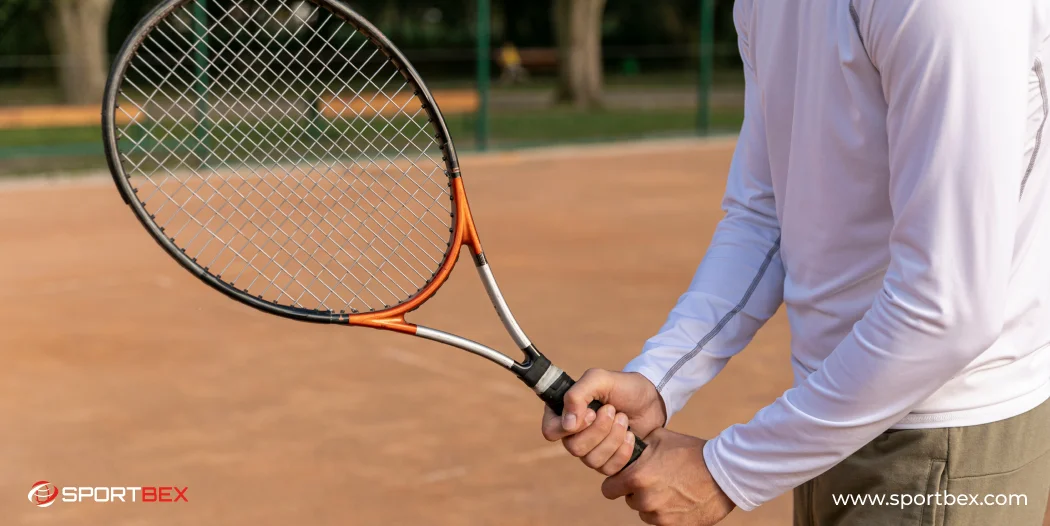
Choosing the right tennis racket can improve your performance on the court. The wrong one can lead to poor control, weak shots, and discomfort during play.
A well-matched tennis racket helps build consistency and confidence. When it suits your style, your shots feel smoother and more controlled.
With so many options available, it can be confusing to decide. Factors like tennis racket weight, tennis racket grip size, and racket length tennis play an important role.
Ignoring these details can lead to issues like tennis elbow over time. A proper grip and balanced tennis racket weight improve comfort and reduce strain.
In this guide, How to Choose a Tennis Racket (Size, Weight & Grip Guide), you will learn a simple method to choose the right tennis racket based on your playing style, along with how insights from a tennis API can help you understand performance data better.
What Size Tennis Racket Do I Need?
Choosing the right size is the first step when picking a tennis racket. It directly affects your control, comfort, and shot accuracy. A wrong size can make even simple shots feel difficult, which is why understanding how to choose a tennis racket correctly becomes important from the start.
The size of a tennis racket mainly depends on head size, grip, and racket length tennis. Each of these factors plays a role in how the racket feels in your hand and performs on the court.
For adults, the standard racket length tennis is 27 inches. Some players prefer longer rackets for extra reach, especially in professional matches like those seen in top-level events, as discussed in Biggest Tennis Tournaments, while juniors should always use smaller rackets based on their height and strength.
To quickly understand what works best, focus on these key points:
- Head Size: Larger heads give more power and a bigger sweet spot
- Grip Size: Correct tennis racket grip size improves comfort and prevents injuries
- Racket Length: Standard 27 inches for adults, shorter for juniors
- Weight Balance: Affects control, power, and ease of handling
Step-by-Step Guide to Choose the Right Tennis Racket
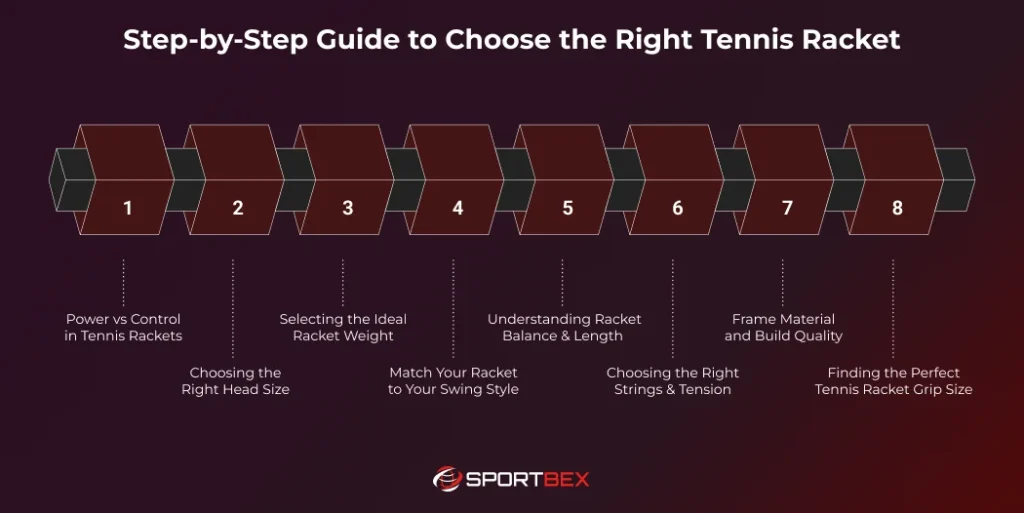
Choosing a tennis racket becomes easier when you follow a structured approach. Instead of guessing, these steps help you match the racket with your game style and physical ability, making it easier to understand how to choose a tennis racket correctly.
Step 1 – Power vs Control in Tennis Rackets
Every tennis racket is designed to offer a balance between power and control. Understanding this difference helps you pick a racket that matches your playing style and improves performance.
- Power Rackets
These rackets help generate more speed with less effort. They are ideal for beginners or players who struggle to hit deep shots consistently. - Control Rackets
Control rackets focus on precision and accuracy. Advanced players prefer them as they already generate their own power and need better shot placement.
Choosing between power and control is a key part of learning how to choose a tennis racket that suits your game.
Live, Point-by-Point Tennis Data
Deliver every serve, break-point, and match-point as it happens on the court.
Step 2 – Choosing the Right Head Size
Head size is one of the most important factors in a tennis racket. It affects power, forgiveness, and consistency during shots.
- Midsize (85–97 sq in)
Offers maximum control but has a smaller sweet spot. Best suited for experienced players. - Midplus (98–104 sq in)
Provides a balance of power and control. This is the most popular choice for intermediate players. - Oversize (105+ sq in)
Gives more power and a larger sweet spot. Ideal for beginners who need forgiveness on off-center hits.
A larger head size makes it easier to hit consistent shots, especially for new players, which is also important in professional settings like Largest Tennis Stadium.
Step 3 – Selecting the Ideal Racket Weight
Tennis racket weight directly impacts how the racket feels during play. It influences swing speed, control, and comfort.
- Lightweight Rackets
Easy to handle and swing quickly. Great for beginners and players who prefer faster reactions. - Medium Weight Rackets
Offer a balance between power and control. Suitable for most intermediate players. - Heavy Rackets
Provide stability and better shock absorption. Preferred by advanced players for stronger shots.
The right tennis racket weight helps you avoid fatigue while maintaining control, making it easier to understand how to choose a tennis racket based on your physical comfort.
Step 4 – Match Your Racket to Your Swing Style
Your swing style plays a major role in selecting the right tennis racket. It determines whether you need more power or control.
- Slow or Compact Swing
Players with shorter swings need rackets that generate more power to support their shots. - Fast or Full Swing
Players with faster swings should use control-oriented rackets to keep shots accurate, similar to insights shared in Data Analytics Is Transforming Cricket.
Matching your racket with your swing is essential when deciding how to choose a tennis racket effectively.
Step 5 – Understanding Racket Balance & Length
Balance and racket length tennis affect how the racket feels and performs during play. They influence both power and maneuverability.
- Head-Heavy Balance
Provides more power and is easier for beginners to use. - Head-Light Balance
Offers better control and faster handling, preferred by advanced players. - Racket Length
Standard racket length tennis is 27 inches, while longer rackets give extra reach but slightly less control.
Choosing the right balance improves both comfort and performance.
Step 6 – Choosing the Right Strings & Tension
Every tennis racket is designed to offer a balance between power and control. Understanding this Strings are a crucial part of any tennis racket because they directly impact how the ball reacts on contact.
- Low String Tension
Provides more power and comfort. Helps reduce strain on the arm. - High String Tension
Offers better control and spin. Suitable for players who want precision.
The right string setup enhances the overall feel of your tennis racket during matches and plays a key role in how to choose a tennis racket for better performance.
Step 7 – Frame Material and Build Quality
Every tennis racket is designed to offer a balance between power and control. Understanding this The material of a tennis racket determines its durability, flexibility, and performance level.
- Aluminum Frames
Affordable and durable. Best for beginners and casual players. - Graphite Frames
Lightweight with better control and power. Widely used by most players. - Carbon Fiber Frames
High-performance material offering excellent precision and stability.
Modern tennis racket designs mostly use graphite for better gameplay experience, reflecting innovation trends highlighted in Sports Technology Trends.
Step 8 – Finding the Perfect Tennis Racket Grip Size
The correct tennis racket grip size ensures comfort and reduces the risk of injuries. It is one of the most overlooked but important factors.
- Grip Size Range
Usually between 4 1/8 to 4 5/8 inches, depending on hand size. - Index Finger Test
Place your index finger between your palm and fingers while holding the racket. If it fits well, the grip size is correct.
Choosing the right tennis racket grip size improves control and prevents issues like tennis elbow.
Best Tennis Racket by Skill Level
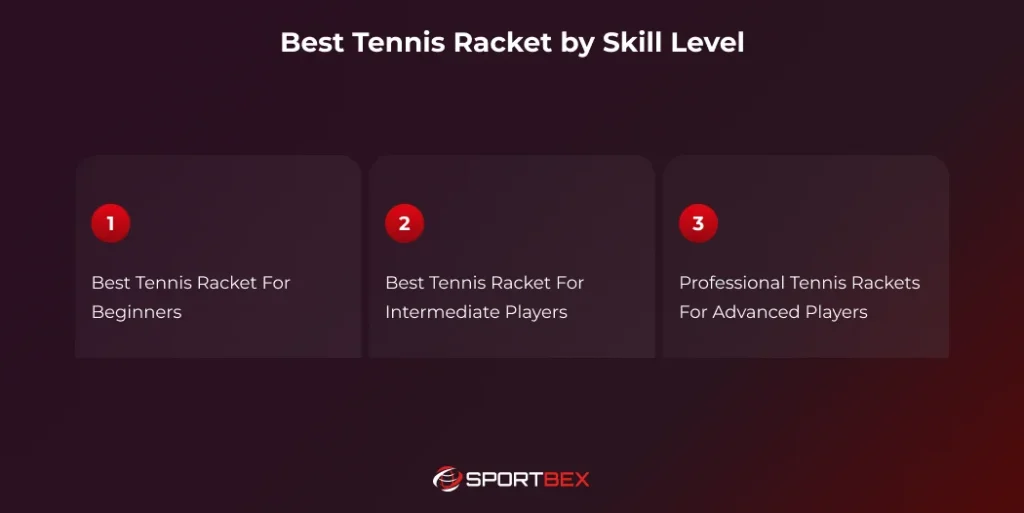
Choosing a tennis racket based on skill level makes the selection process easier and more practical. It helps you narrow down options that match your playing style and overall comfort.
Different players need different features depending on their experience and technique, just like the progression seen in Famous Tennis Players. A beginner, intermediate, and advanced player all require a different tennis racket setup for better performance.
Best Tennis Racket for Beginners
Beginners should focus on ease of use.
- Oversize head for larger sweet spot
- Lightweight tennis racket weight
- Head-heavy balance for extra power
This setup helps build confidence and consistency.
Best Tennis Racket for Intermediate Players
Intermediate players need a balanced setup.
- Midplus head size
- Medium tennis racket weight
- Balanced power and control
This stage is about improving technique and consistency.
Professional Tennis Rackets for Advanced Players
Advanced players require precision.
- Midsize head for control
- Heavier tennis racket weight
- Head-light balance for maneuverability
At this level, players already understand how to choose a tennis racket based on their playing style.
Leverage Tennis Data with the Sportbex Tennis API
Modern tennis is not just about playing on the court. Data now plays a big role in improving performance and decision-making.
The Sportbex Tennis API helps players, coaches, and developers access real-time match data and insights. It provides detailed stats, scores, and tournament information.
This data helps you understand your strengths and weaknesses more clearly. You can track performance patterns and identify areas that need improvement.
By analyzing these insights, you can decide if you need more power, control, or a better tennis racket setup. This makes your equipment choices more accurate and effective.
Conclusion
Choosing the right tennis racket is not just about brand or price. It depends on your skill level, playing style, and physical comfort, which is why understanding how to choose a tennis racket is essential for long-term improvement.
Taking time to understand these elements helps you avoid common mistakes. It also ensures that your racket supports your game instead of limiting it.
Before making a final decision, try testing a few rackets if possible. The right tennis racket should feel natural in your hand and give you confidence on every shot.
Build Your Ultimate Tennis Platform
Get all the live scores and stats you need with our developer-friendly API.
Frequently Asked Questions
The most important factor is comfort, especially the correct tennis racket grip size and weight. A well-balanced racket improves control and reduces the risk of injury.
The right tennis racket weight depends on your strength and playing style. Beginners should choose lighter rackets, while advanced players can handle heavier ones for better control.
The standard racket length tennis for adults is 27 inches. Some players use longer rackets for extra reach, but they may reduce control.
You can use the index finger test to check your tennis racket grip size. If your finger fits comfortably between your palm and fingers, the grip size is correct.
Beginners can use them, but it is not recommended. Advanced rackets are heavier and less forgiving, making it harder to learn proper technique with a tennis racket.
Recent Blog



How to build a low-latency live sports streaming app using APIs
September 9, 2026
 12 min

Cricket API Uptime & Availability: What Developers Should Know
August 27, 2026
13 min
Deliver Live Tennis Scores and Stats Ready for Your Users Fast!
API Free Trial