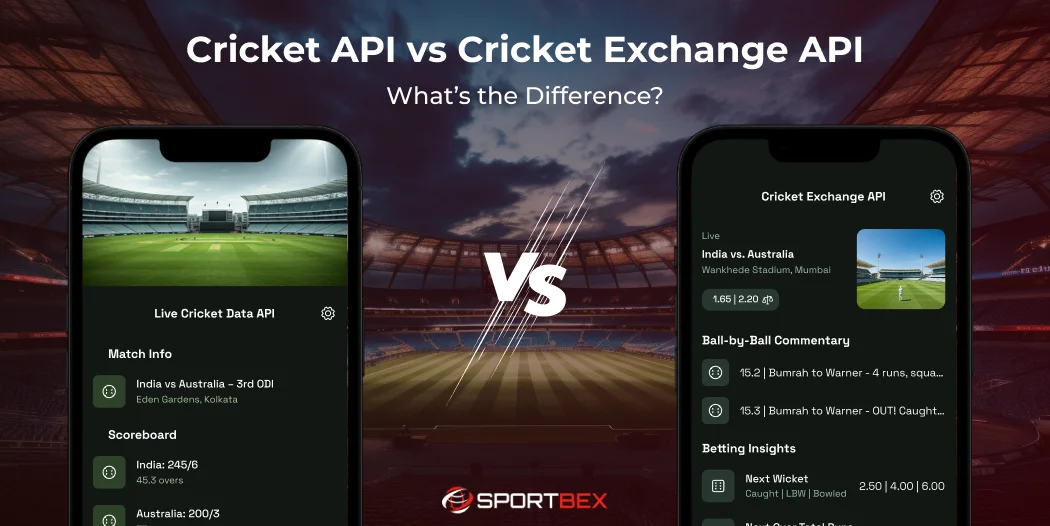
Cricket is no longer just a sport people watch on TV. It has become a digital experience powered by real time data. Every ball, run, and wicket creates information that apps and websites use to keep users updated and engaged. If you are building a fantasy cricket app, live score website, sports blog, or betting platform, choosing the right cricket data source is very important.
Many developers get confused between Cricket APIs and Cricket Exchange APIs. Both provide cricket related data, but they are built for different purposes. One focuses on match details and player statistics, while the other focuses on betting odds and market movements.
Understanding the difference between Cricket API vs Cricket Exchange API: What’s the Difference? will help you make the right choice for your project. In this guide, you will learn how each one works, their benefits, and which option, including features like live scores and betting data, suits your platform best.
What is a Cricket API?
A Cricket API is a structured data service that provides official cricket match information in formats like JSON or XML, making it easy for apps and websites to use. It works as a connection between sports data providers and digital platforms that need real time or historical cricket information.
In simple words, it is the foundation of most cricket based applications. A Cricket API usually provides live match scores, ball by ball commentary, player profiles, career statistics, team rankings, match schedules, series details, and past match records.
For example, a cricket live score api helps platforms show real time match updates, while a cricket stats api allows developers to access detailed performance data such as batting averages, strike rates, bowling figures, and player comparisons for deeper analysis.
What is Cricket Exchange API?
A Cricket Exchange API works differently from a standard sports data API. Instead of focusing on player statistics or match records, it provides betting market information and exchange based financial data.
In this Cricket Exchange API guide, we explain how it connects directly to betting exchanges and delivers real-time feeds such as back and lay odds, market liquidity, matched and unmatched bet volumes, session markets, fancy markets, and live odds movements.
A cricket exchange score api can combine live match updates with changing market rates, allowing platforms to show both score and odds together.
The live cricket exchange environment updates within milliseconds, making speed essential. These APIs are mainly used by betting platforms, trading systems, and advanced odds comparison tools.
Key Differences Between Cricket API and Cricket Exchange API
The main difference between these two APIs is their purpose. A Cricket API is made for sports apps and websites that need match scores, player statistics, schedules, and other cricket information. Using a cricket live data api, developers can provide real-time updates for fantasy apps, live score platforms, and sports news websites.
A Cricket Exchange API is made for betting and trading platforms. It provides live odds, market changes, and other betting related data. In simple terms, Cricket API is for match information, while Cricket Exchange API is for betting market information.
| Feature | Cricket API | Cricket Exchange API |
|---|---|---|
| Primary Focus | Match data, player stats, tournament details | Betting markets, trading insights, exchange activity |
| Update Frequency | Real time with slight delay possible | Ultra fast updates in milliseconds |
| System Automation | Mostly automated data delivery | May require advanced processing for trading logic |
| Integration Level | Developer friendly via REST or WebSocket | Requires high performance streaming setup |
| Data Reliability | Verified official sports data | Live market driven financial data |
| Operational Effort | Low maintenance | Moderate to high depending on usage |
| Flexibility | Supports scores, commentary, rankings | Supports odds feeds, liquidity tracking, volumes |
| Pricing Model | Flexible plans for startups and enterprises | Higher pricing due to market grade data |
| Best For | Fantasy apps, score websites, analytics tools | Betting platforms, trading dashboards |
Get Live Cricket Data Now
Integrate Sportbex Cricket API for real‑time scores, stats & odds.
Pros and Cons of Using a Cricket API
Pros
- Wide Range of Data: A Cricket API gives access to live scores, player statistics, match schedules, and even historical tournament records. This makes it useful for both international and domestic cricket coverage.
- Reliable and Accurate Information: Leading providers use trusted data sources, ensuring that your platform shows correct and up to date match details. This helps build user trust and credibility.
- Suitable for Professional Platforms: Cricket APIs are commonly used by sports news websites, team apps, and fantasy platforms because they provide structured and dependable data feeds.
- Easy and Flexible Integration: Most providers support REST and WebSocket connections, allowing developers to smoothly integrate live or historical match data into apps and websites.
- Scalable Pricing Options: Many Cricket APIs offer flexible pricing plans, and solutions like the Cricket Fast Live Line API make it easy for Startups to begin with basic packages and upgrade as their platform grows.
Cons
- Limited Coverage of Smaller Leagues: Some Cricket APIs mainly focus on international and major tournaments. They may not provide complete data for local or regional matches. This can be a problem if your platform targets smaller leagues or specific local cricket audiences.
- Learning Curve for Beginners: Setting up real-time data feeds can be difficult for new developers. Proper Cricket API Integration using WebSocket connections and handling live updates requires basic technical knowledge. If someone is new to API integrations, they may need extra time to understand and correctly connect the system.
- Documentation May Differ by Provider: The quality of API documentation is not always the same across providers. Some offer clear and detailed guides, while others provide limited or confusing instructions, which can slow down development and make integration more challenging for developers.
Pros and Cons of Using Cricket Exchange API
Pros
- Real-Time Odds and Market Data: Cricket Exchange APIs show live betting odds and market activity as it happens. This helps platforms and apps display up-to-date scores and trading information instantly, making them ideal for fast-paced sports platforms and data dashboards.
- Supports Advanced Trading Platforms: These APIs update in milliseconds, making them perfect for fast and responsive trading platforms. They allow apps to track live market changes instantly, ensuring users always see the most current odds and betting information.
- Integration with Financial Metrics: Cricket Exchange API lets you combine live match events with financial data, so your platform can show both cricket scores and real-time market information. By integrating a Cricket Score Widget, users can view match updates alongside betting data, helping them make smarter decisions quickly.
- Market Transparency: Gain visibility into betting volumes, matched bets, and liquidity levels, helping users or systems make better-informed decisions.
- Compliance-Friendly Features: Many APIs include tools to meet local regulatory requirements, ensuring your platform stays within legal guidelines.
Cons
- 1. Limited Cricket-Specific Data: These APIs often do not provide detailed player stats, ball-by-ball commentary, or historical records, so you may need another API for full coverage.
- 2. Higher Costs: Due to advanced financial-grade data and compliance features, Cricket Exchange APIs are generally more expensive than standard cricket APIs.
- 3. Regional Restrictions: Access may be limited in certain countries depending on local betting regulations, which could restrict your platform’s reach.
- 4. Technical Complexity: Integrating and maintaining these APIs requires more advanced architecture and data handling capabilities compared to standard cricket APIs.
Cricket API vs Cricket Exchange API: Which One Should You Use?
Choosing the right API depends on what you want your platform to do.
Use a Cricket API if:
- You are creating a live score website
- You are building a fantasy cricket app
- You need match stats and player information
- You want historical match data
- You plan to show Cricket Live Streaming with analytics.
A Cricket API is best for apps focused on fans, stats, and content.
Use a Cricket Exchange API if:
- You are developing a betting or trading platform
- You need real-time odds updates
- You want insights into market liquidity
- You are building arbitrage or trading tools
- You want features like Fancy Cricket API for special markets
Cricket Exchange APIs are ideal for platforms where betting, trading, and market movements are the main focus.
Conclusion
Choosing between Cricket API vs Cricket Exchange API is not about which one is better, but about which one suits your platform’s goals. If your focus is on delivering scores, player stats, and match insights for fans across different Cricket Leagues, a Cricket API provides reliable, structured, and scalable data. It is ideal for live score apps, fantasy platforms, media sites, and analytics dashboards.
If your platform deals with betting, trading, or financial modeling of sports outcomes, a Cricket Exchange API is essential. It offers real-time odds, market depth, and transparency needed for fast, decision-driven environments.
Consider your target audience, regional regulations, budget, technical capabilities, and long-term growth before deciding. The right API ensures your platform delivers accurate data, engages users effectively, and supports future growth.
Take Your Cricket Platform Live Now
Tap into real-time updates & live data with minimal latency.
Frequently Asked Questions
A Cricket API provides general match data like scores, player stats, and schedules, while a Cricket Exchange API focuses on live odds and market data for trading platforms.
For live score apps, a standard Cricket API is more suitable as it offers reliable real-time match data, player updates, and tournament information.
Yes, many developers integrate both APIs to offer a complete experience—combining match stats with real-time odds and market movements.
Cricket Exchange APIs can support fantasy platforms with odds-based insights, but most fantasy apps still rely primarily on Cricket APIs for player and match data.
Yes, Cricket Exchange APIs often come with regional restrictions due to regulatory laws, so it's important to check compliance in your target market.
Recent Blog



How to build a low-latency live sports streaming app using APIs
September 9, 2026
 12 min

Cricket API Uptime & Availability: What Developers Should Know
August 27, 2026
13 min
Start your free API key and get live cricket scores instantly
API Free Trial