How to Use Sports Data Feed API for Fantasy Sports Platforms

April 15, 2026

8 min read
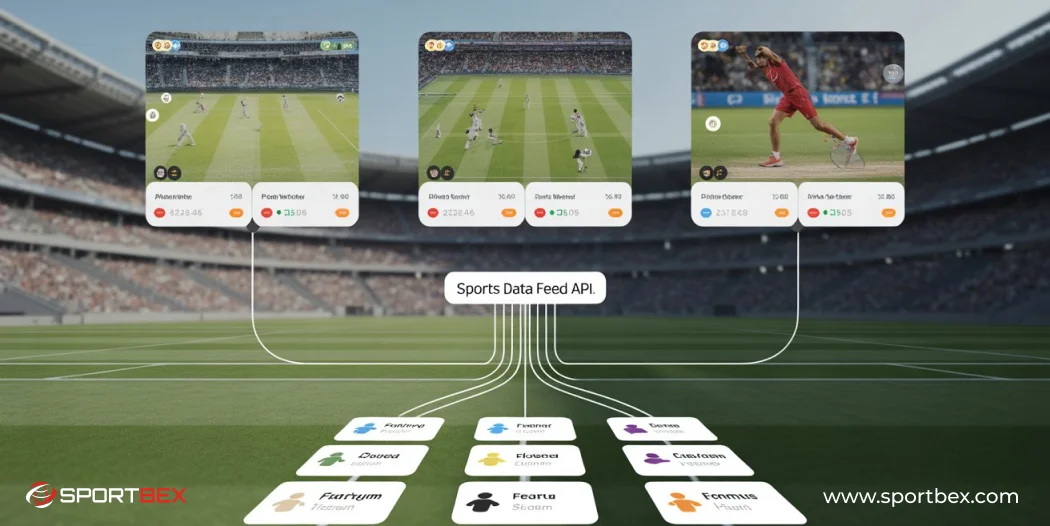
Building a successful fantasy sports application starts with one thing: accurate and fast live sports data. Users expect instant score changes, real-time player performance updates and live leaderboard movement during every match. If your platform delays even by a few seconds, user trust and retention can drop significantly.
For modern Fantasy Sports Platforms, the quality of live data directly impacts user experience. Whether it is football, cricket, basketball or baseball, players want their fantasy points to reflect real-world events as they happen. This is where a reliable sports data feed API becomes the foundation of the entire system.
If you are planning to build or scale a fantasy app, this guide on How to Use Sports Data Feed API for Fantasy Sports Platforms will help you understand the complete workflow, from integration to real-time usage, simply and practically.
What Is a Sports Data Feed API in Fantasy Sports?
A sports data feed API is a digital bridge that connects your application to live sports information. It allows your software to communicate with external databases to retrieve accurate match details and real-time updates.
Developers use this technology to automatically pull player statistics, match scores and team rosters. Many modern systems are built using the Fastest live score APIs to ensure users receive instant score updates without delays. If you want to understand the technical side, you might research what a sports data API is to see how endpoints deliver structured JSON or XML data.
Fantasy Sports Platforms rely on these interfaces to function properly. Without a reliable sports data feed API, users would have to calculate their scores manually. Instead, the system works in the background to fetch metrics and translate them into fantasy points.
Why Fantasy Sports Platforms Need Real-Time Sports Data
Speed and accuracy are critical in fantasy sports. Users continuously monitor their teams during live matches and expect instant changes in points and rankings. This is where the importance of sports data feeds becomes clear. A delayed score update can frustrate users and reduce engagement, especially during high-traffic tournaments.
A premium sports data feed API ensures every goal, wicket, assist, rebound or injury update reflects instantly on the user dashboard. This helps Fantasy Sports Platforms maintain trust and increase session duration.
Many developers also study how Fantasy Sports APIs work to prepare their infrastructure for peak-time traffic spikes during tournaments like IPL, FIFA or NBA playoffs.
How to Integrate the Sports Data API in a Fantasy App
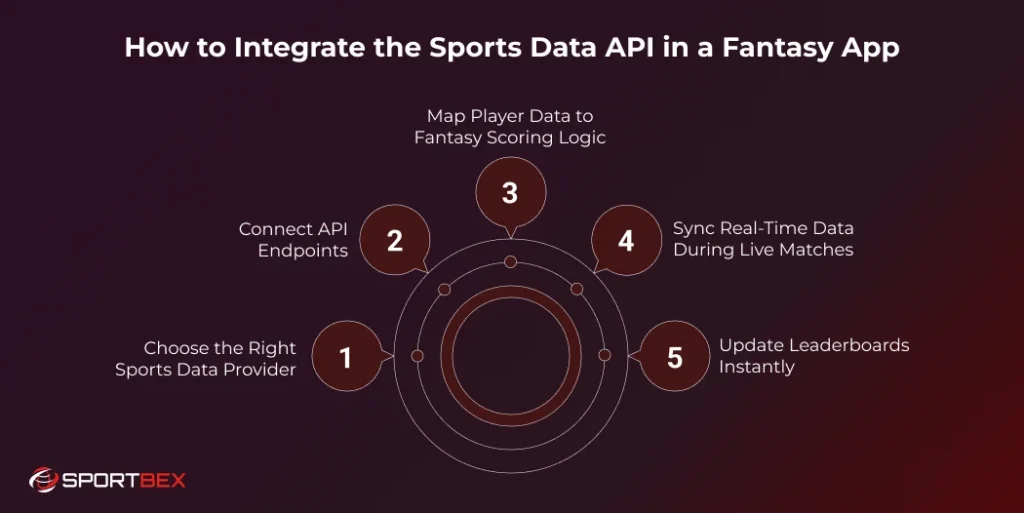
How to integrate sports data API in fantasy app architecture is one of the most important parts of development. If your goal is to fantasy sports app with live data, follow these essential steps.
Step 1: Choose the Right Sports Data Provider
The first step in learning how to integrate sports data API in fantasy app development is selecting a reliable data provider. Your platform needs a sports data feed API that supports the leagues, tournaments and sports your users follow the most. Accuracy and speed should be your top priorities at this stage.
It is always a smart approach to compare the sports data API providers as well as global solutions before making a decision. Check their uptime, response speed, documentation quality and pricing plans. A provider with low latency and strong technical support will make long-term scaling much easier.
Step 2: Connect API Endpoints
Once the provider is finalized, the next step is connecting the API endpoints to your backend system. Developers usually use authentication tokens or unique API keys to securely access live sports information. This allows your application to fetch schedules, rosters, live match events and player updates.
When you use sports data feed endpoints, proper error handling becomes extremely important. If one request fails, the system should continue working without affecting the user experience. Building retry logic and fallback responses helps keep Fantasy Sports Platforms stable during high-traffic matches.
Step 3: Map Player Data to Fantasy Scoring Logic
Every fantasy sports platform follows its own scoring rules, so raw data must be mapped carefully. The information coming from a sports statistics API should connect directly with your fantasy points engine. This is where goals, assists, wickets, catches, and other match actions are converted into points.
For example, a goal may give five points to a striker but seven points to a defender. When you use a Sports Data API, it should correctly identify player roles, positions and event types. This ensures your scoring logic remains accurate and builds user trust over time.
Step 4: Sync Real-Time Data During Live Matches
Real-time synchronization is the most critical technical part of the integration process. During live matches, users expect instant score changes and immediate point updates. For this, you need a reliable live sports data provider that supports WebSockets or fast polling intervals.
This ensures every event on the field is reflected in the fantasy app without delay. Many developers study the impact of real-time sports data to improve their server performance and reduce latency during peak match traffic. A fast sync system directly improves user retention.
Step 5: Update Leaderboards Instantly
The final step is refreshing the leaderboard as soon as new points are calculated. Once your system processes the incoming data, rankings should update instantly across contests, leagues and private rooms. This keeps the experience highly interactive and competitive.
When you properly use sports data feed, these updates happen within seconds. Instant leaderboard movement gives users quick feedback and keeps them engaged throughout the match. This real-time interaction is one of the biggest strengths of successful Fantasy Sports Platforms.
How Fantasy Sports Platforms Use Sports Data APIs in Real Time
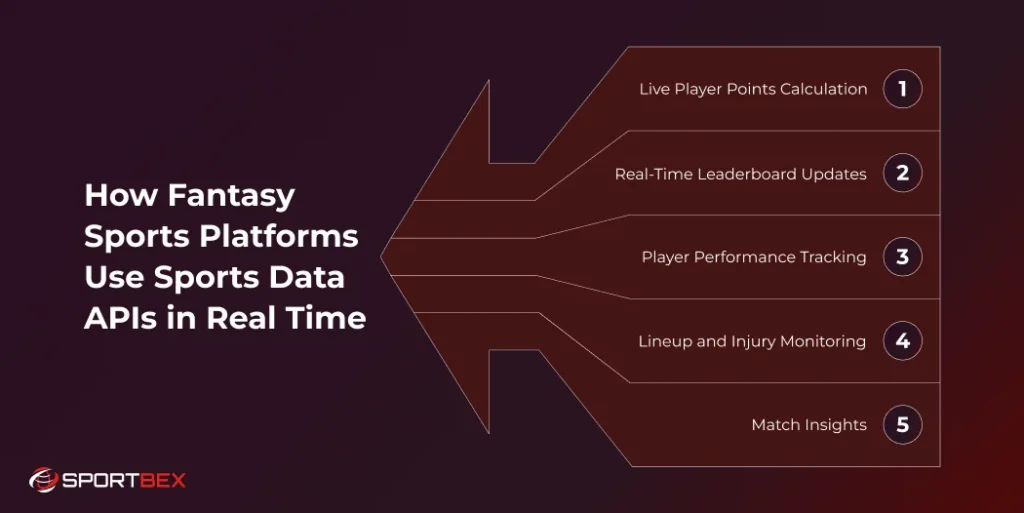
There are many ways developers use these tools to make the user experience better. Looking at different sports API use cases helps you understand how useful this technology can be for fantasy sports apps.
Live Player Points Calculation
The most common use is calculating user scores during live matches. The sports data feed API sends live actions like goals, assists, rebounds, wickets or penalties and the fantasy system quickly converts them into points based on your scoring rules. A reliable sports statistics API is important here to keep every score update accurate and avoid user disputes.
Real-Time Leaderboard Updates
Users often check their rank against friends and other players during the match. A reliable sports data feed API helps update the leaderboard instantly whenever points change, which keeps the contest exciting. Understanding static vs live sports data is important because only live data can support instant leaderboard updates.
Player Performance Tracking
Fantasy users like to check player form before creating their teams. By using a sports data feed API, you can show recent performance, past match records and important stats in one place. Many companies looking for a sports data API for startups prefer providers that also offer strong historical data.
Lineup and Injury Monitoring
Last-minute lineup changes and injuries can greatly affect fantasy results. Using a sports data feed API, you can send instant alerts when a player is injured, benched or replaced before the match starts. This clearly shows why Sports API Data Is Important for building user trust and improving decision-making.
Match Insights
Adding match insights gives extra value to your platform and helps users build stronger teams. With a sports data feed API, you can show weather updates, venue details, head-to-head records and team form before the game starts. These insights help users make smarter lineup choices and stay active on the platform.
Why Sportbex Is the Right Sports Data Feed API for Fantasy Sports Platforms
Choosing the right technology partner plays a major role in the success of your platform. Sportbex offers a scalable sports data feed API built specifically for Fantasy Sports Platforms, helping developers deliver fast, accurate and real-time sports updates to users. This helps improve both user trust and engagement.
The platform supports low-latency live feeds, detailed historical stats, multiple sports coverage and easy-to-use documentation. Compared with the best sports data API providers, Sportbex stands out for performance and technical support, making it a reliable choice for long-term platform growth.
Conclusion
Building a successful fantasy sports application requires more than just a good-looking interface. The real strength of the platform comes from a reliable sports data feed API that provides fast and accurate updates during live matches.
From live player points to instant leaderboard changes, real-time data helps improve user trust and keeps users engaged throughout the game. This directly supports better retention and long-term growth for Fantasy Sports Platforms.
If you understand how to integrate sports data API in fantasy app workflows, the next step is to start implementation with the right provider and scoring logic. A smooth and fast experience will help keep users coming back match after match.
Get a Ready-Made Platform On Rent.
Get Started Today
Frequently Asked Questions
A sports data feed API provides real-time and historical sports information such as live scores, player statistics, team lineups, schedules and injury updates. It helps developers integrate this data into fantasy sports applications.
Fantasy sports platforms use the API to fetch live match events and convert them into fantasy points. It is also used for leaderboard updates, player performance tracking and lineup alerts during live matches.
For live matches, data should ideally update in real time using WebSockets. If WebSockets are not available, polling every few seconds is a good option to keep scores and rankings accurate.
Yes, many premium providers support multiple sports such as cricket, football, basketball, baseball and tennis. You only need to use the relevant endpoints for the sport you want to show in your app.
Look for fast live updates, high uptime, detailed historical statistics, multi-sport coverage, easy documentation and scalable pricing. These features are important for building a reliable fantasy sports platform.
Recent Blog



How to build a low-latency live sports streaming app using APIs
September 9, 2026
 12 min

Cricket API Uptime & Availability: What Developers Should Know
August 27, 2026
13 min
Access Complete Sports Data Fast and Keep Updates Ready!
API Free Trial