
In modern tennis success on the court is no longer only about talent or practice or instinct. Players at every level use tennis analytics to improve their game, gain advantages and make smarter decisions during matches. With tennis performance data professionals can measure, analyze and optimize every part of their game including serves, shots movement and mental choices.
Advanced technologies like tennis analytics software have made tennis a data-driven sport. Coaches and players now rely on insights instead of just observation. Real-time match updates and historical data from tennis data analysis, combined with information from a Tennis API help discover trends that can directly affect match outcomes
Whether you are a professional player, a coach or a tennis fan trying to understand the game, understanding tennis data analytics can give a deeper appreciation of the strategies behind every shot.
In this guide we will explore How Tennis Analytics Helps Pros Use Data to Boost Performance. The key metrics analyzed and how these insights are shaping the future of tennis.
What is Tennis Analytics?
Tennis analytics is the use of tennis performance data to help players improve how they play and plan their strategies. Unlike traditional coaching that depends mostly on observation and instinct, tennis analytics uses technology to give clear and measurable insights.
Data comes from different sources such as match statistics, practice sessions, wearable devices, and high-speed video systems. By looking at this data, coaches and players can see what a player does well, where they need to improve, and what strategies can work best.
The goal is not just to collect numbers but to turn them into useful plans like improving shot placement, making serves more effective, and deciding how to play against different opponents. Wearable devices can show how efficiently a player moves, how much energy they use, and details about their body movements.
Why Tennis Professionals Use Data
At the professional level even small differences can decide who wins a match. Using tennis data analytics helps players and coaches make smart decisions that give them an advantage. The benefits include:
- Pattern Recognition: Players can spot trends in their own performance and understand how their opponents play.
- Objective Evaluation: Data helps measure strengths and weaknesses based on clear evidence.
- Strategic Adjustments: Coaches and players can change game plans based on what is happening during a match.
- Performance Monitoring: Tracking progress over time helps players keep improving.
For example a player may notice their serve accuracy drops in the final set because of fatigue. Tennis match analytics can show this pattern so coaches can adjust shot choices or manage energy.
Analyzing professional tennis data and using tools that Use a Tennis API, coaches can also uncover opponent weaknesses, such as struggling with wide backhands or performing under pressure, and develop strategies to take advantage of them during matchesds when stretched wide, especially under fast-paced rallies or when forced to move quickly across the court.
Key Data Points Used in Tennis Analytics
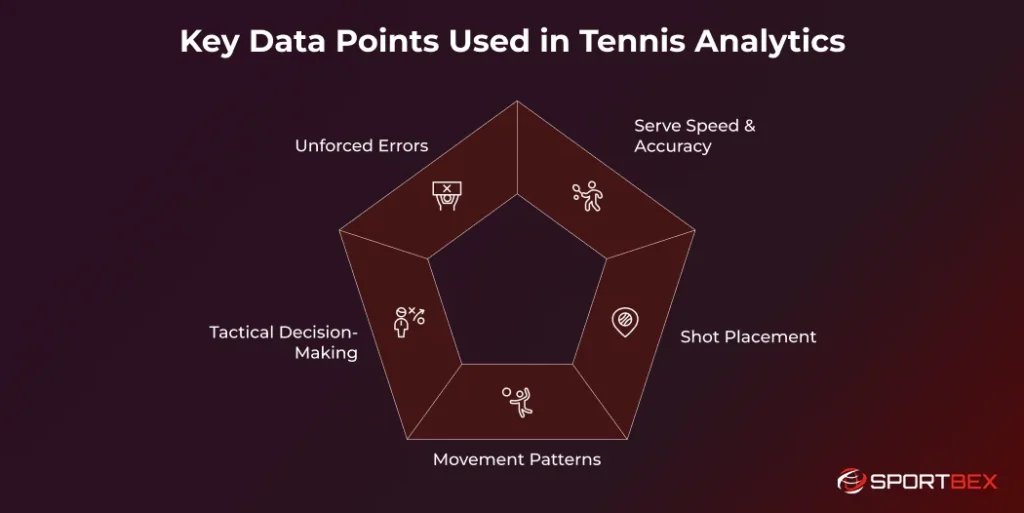
Serve Speed & Accuracy
The serve is one of the most important shots in tennis. Analyzing tennis performance data helps players understand both the speed and placement of their serves. Serve speed shows the power a player can generate, while accuracy measures how well they can target specific areas of the court.
A fast and well-placed serve can put opponents on the defensive, forcing weaker returns and giving the server control of the rally. By using tennis data analysis and a Tennis API, coaches can track serve performance over multiple matches. Working with reliable Tennis API Providers allows them to access accurate data, identify patterns, and make informed adjustments to improve results.
Shot Placement
Where a player hits the ball on the court plays a big role in strategy. Shots to the corners usually indicate an aggressive approach, while consistent baseline shots suggest a defensive style that relies on precision and endurance.
With tennis analytics software, analysts can track shot locations, detect patterns, and determine which areas of the court are most effective. By combining this with data from a Tennis Data API, coaches can create strategies that help players hit the ball more effectively in every match situation.
Movement Patterns
Efficient movement is essential for high-level tennis performance. Tennis performance analysis looks at footwork, recovery steps, split-step timing, and how well a player moves sideways or forward on the court.
Improving movement helps players conserve energy during long rallies, maintain better defensive coverage, and switch smoothly between offense and defense. Using insights from tennis match analytics, players can refine agility, positioning, and overall court coverage to stay consistent throughout the match.
Tactical Decision-Making
Tennis is as much a mental game as a physical one. Tactical decision-making focuses on choosing the right shot in high-pressure situations.
By analyzing past matches through tennis analytics, players can determine when to play aggressively, approach the net, or stay at the baseline. Understanding patterns in tennis performance data allows athletes to make smarter choices, increasing their chances of winning critical points.
Unforced Errors
Minimizing unforced errors is crucial to keeping control during a match. Tracking how and when mistakes happen helps identify weaknesses in timing, focus, or technique.
Using tennis data analysis and insights from a Tennis statistics API, coaches and players can pinpoint areas for improvement. Reducing errors not only boosts confidence but also helps maintain momentum throughout the game.
Tools and Technologies for Tennis Analytics
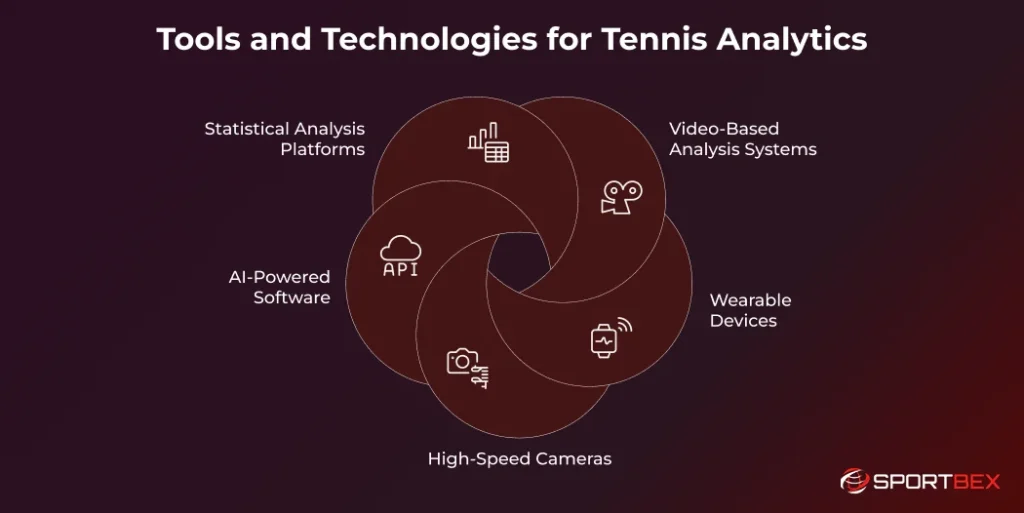
Video-Based Analysis Systems
High-resolution video lets coaches review every moment of a tennis match frame by frame. This helps them see exactly how players move, hit shots, and react in different situations. Advanced systems like Hawk-Eye track ball paths, show where players spend the most time on the court with heatmaps, and provide accurate line calls.
Using these insights, coaches can improve positioning, shot choices, and overall match strategy. Players can also use video analysis to spot weaknesses, refine techniques, and practice smarter. By combining video with tennis performance data, it becomes a powerful tool for improvement.
Live, Point-by-Point Tennis Data
Deliver every serve, break-point, and match-point as it happens on the court.
Wearable Devices
Smart wearable devices help tennis players track their movements, heart rate, types of strokes, and energy use during practice and matches These devices collect real-time tennis performance data so players can see how efficiently they are playing and identify areas to improve
By analyzing this data, players can refine their techniques, build endurance, and reduce the risk of injuries Wearables also help coaches monitor progress and adjust training plans Integrating these devices with a Tennis Live API allows continuous tracking and instant feedback, helping players make smarter decisions on and off the court.
High-Speed Cameras
High-speed cameras record hundreds or even thousands of frames every second, letting coaches and players study every detail of a match This includes strokes, serves, footwork, and movement patterns Unlike regular video, these cameras reveal small mistakes or inefficiencies that are hard to notice during a Real-Time Tennis Match.
By using tennis performance analysis with high-speed cameras, players can identify issues in their technique, timing, or positioning They can then make adjustments to improve accuracy, power, and consistency over time This technology is especially useful for refining serves, backhands, and fast movements on the court.
AI-Powered Software
Artificial intelligence helps tennis players and coaches by analyzing large amounts of match footage and professional tennis data to find patterns and trends. It can predict possible outcomes, highlight strengths and weaknesses, and suggest smarter strategies for training and matches.
Tennis analytics software powered by AI makes this information easy to understand and use, turning raw data into practical insights. Players can improve their techniques, plan better game strategies, and make quick decisions during matches. Coaches can use these AI insights to create personalized training plans and help players perform at their best.
Statistical Analysis Platforms
Advanced platforms combine historical performance, player habits, and live match data from a Tennis API to give players and coaches a complete view of performance. These platforms help track strengths, weaknesses, and patterns over time, allowing smarter decisions during training and matches.
Real-time updates from tools like a Tennis Odds API make it easy to adjust tactics instantly based on opponent behavior or match conditions. By using these insights, players can improve techniques, reduce mistakes, and gain a competitive edge on the court, making every practice and match more effective and strategic.
How Data Improves Player Performance
The use of tennis data analytics leads to significant improvements in player performance by providing actionable insights across multiple areas.
Technical improvement comes from video analysis and performance data, which highlight inefficiencies in strokes, serves, and movement, allowing players to focus on targeted drills that enhance precision and consistency.
Strategic development benefits from detailed opponent analysis, helping players identify weaknesses, such as difficulty returning high-bouncing shots, and adjust their game plans to exploit them during Tennis Tournaments.
Mental preparation is strengthened by understanding personal performance trends, including strengths in tiebreakers, which improves decision-making under pressure and builds confidence during critical points.
Physical conditioning also improves when movement data is analyzed, enabling coaches to optimize training, court positioning, and endurance strategies, reduce fatigue, and enhance overall match performance.
The Future of Tennis Analytics
The future of tennis is becoming increasingly data-driven, with tennis analytics software and AI-powered tools providing real-time recommendations during matches.
Augmented reality may allow players to simulate opponent patterns using historical tennis match statistics, helping them plan strategies more effectively. Tools like the Tennis Data API will become standard for both professional and junior players, making advanced insights accessible to a wider audience.
Predictive modeling will play a key role in preventing injuries, optimizing training schedules, and improving overall performance, ensuring that players can compete smarter and reach their full potential.
Conclusion
Tennis analytics has completely changed the way tennis is played, coached, and followed. By using tennis performance data, players can make smarter decisions, improve techniques, and gain an advantage over their opponents.
Combining tennis data analysis with tennis analytics software and a tennis statistics API gives a complete approach to improving performance. From improving serve accuracy to planning shot placement, making better tactical decisions, and moving more efficiently on the court, data helps players refine every part of their game.
Professional tennis players are not just relying on talent or practice they are using insights from tennis data analytics and resources like an API Tennis guide to compete smarter. By blending skill, strategy, and data, they can perform at their best and become the champions of the future.
Build Your Ultimate Tennis Platform
Get all the live scores and stats you need with our developer-friendly API.
Frequently Asked Questions
Tennis analytics is the process of collecting, analyzing, and interpreting tennis performance data to improve player outcomes. Professionals use it to evaluate serve speed, shot placement, movement efficiency, and tactical decisions. These insights help coaches and players make strategic adjustments during training and matches.
Tennis match analytics collects a wide range of information, including serve statistics, rally lengths, shot placement maps, unforced errors, winners, and player movement patterns. This data is often captured using high-speed cameras, sensors, and advanced tracking systems.
A tennis statistics API allows developers, coaches, and analysts to access real-time and historical tennis data from matches worldwide. This can be integrated into performance dashboards, apps, and analysis tools, making it easier to track and visualize player performance trends.
Absolutely. While top-ranked pros use highly advanced systems, amateur players can still benefit from professional tennis data by identifying strengths and weaknesses in their game. Affordable wearables, video analysis apps, and tennis data APIs have made performance tracking more accessible than ever.
The future will likely see increased use of AI, machine learning, and predictive analytics. Soon, tennis live API integration could enable real-time strategic adjustments during matches, while augmented reality could be used in training to simulate opponent behavior based on historical data.
Recent Blog



How to build a low-latency live sports streaming app using APIs
September 9, 2026
 12 min

Cricket API Uptime & Availability: What Developers Should Know
August 27, 2026
13 min
Deliver Live Tennis Scores and Stats Ready for Your Users Fast!
API Free Trial