
Every time a soccer match is played, data is collected from every action on the field. Goals, passes, tackles, possession, and sprint speed are all tracked in real time. Today, these numbers play a major role in modern football.
Accurate data is now used by clubs, coaches, broadcasters, betting platforms, and fans worldwide. Soccer Player Statistics help teams improve tactics, analyze player performance, and make smarter decisions during matches.
That is Why Data Accuracy Matters in Soccer Player Statistics has become an important topic in the football industry. Even a small error in football data can affect coaching decisions, betting odds, fantasy sports, and player analysis.
In this article, we will explain why accurate football data matters, how statistics providers maintain quality, and what problems can happen when the data is incorrect.
What Are Soccer Player Statistics?
Soccer Player Statistics are data points used to measure a player’s performance during a match or throughout a season. These statistics help coaches, clubs, analysts, and fans understand how well a player performs on the field.
Some of the most common statistics include:
- Goals scored
- Assists
- Pass accuracy
- Tackles won
- Saves made
- Distance covered
- Possession percentage
- Expected goals (xG)
These stats also power the Soccer Leaderboard rankings that fans and analysts follow every week to track top performers. Advanced technology now tracks every movement on the field, from player speed to passing patterns, and this has greatly improved the quality of statistics in football and soccer match statistics worldwide.
Why Data Accuracy Is Important in Soccer
Accuracy is the backbone of any reliable data system. In soccer, wrong statistics can mislead coaches, confuse analysts, and even impact betting outcomes.
If a player is credited with a goal that actually went off another player’s foot, that is a stat error. These kinds of mistakes happen more than you think, and they matter deeply. Precise soccer player statistics ensure that every decision made from the data is grounded in reality.
For data to be truly useful, it must be collected correctly, updated in real time, and verified before it is published. Without this process, even the most advanced platforms cannot be trusted.
The Role of Soccer Data Analytics in Modern Football
Soccer data analytics has completely changed the way the game is understood today. Coaches use data to make better tactical decisions, clubs use it to study opponents, and broadcasters use it to make the viewing experience more engaging for fans.
Statistics in football now go far beyond just goals and assists. Modern analytics covers player heat maps, pressing intensity, expected goals (xG) and pass accuracy under pressure. All of this detail is only useful when the underlying data is fully accurate.
The role of data analytics in football is growing faster than ever. From tactical planning on the training ground to fan engagement on digital platforms, accurate data is what makes all of this possible.
How Football Statistics API Providers Ensure Accuracy
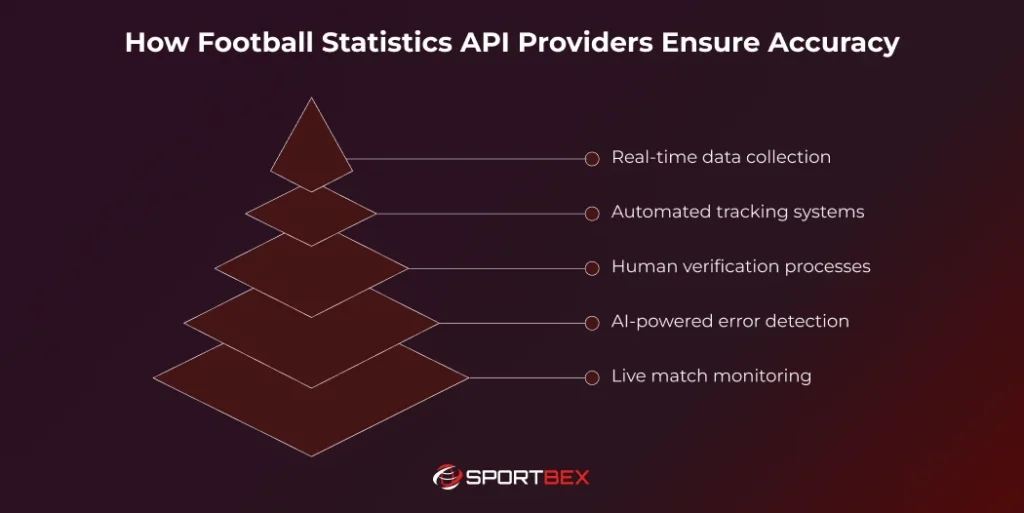
A football statistics API is a software tool that delivers live and historical football data to apps, websites, and platforms. The best providers go to great lengths to make sure their data is correct.
Real-time data collection
Real-time data collection helps providers deliver accurate soccer player statistics during live matches. Advanced systems track goals, assists, fouls, possession and substitutions instantly, which improves Real-Time Data Accuracy for betting platforms, fantasy sports apps, and live score websites around the world.
Automated tracking systems
Advanced tracking technologies such as high-speed cameras and GPS systems help collect football data automatically during matches. These systems monitor player movements in real time and improve the overall accuracy of football performance analysis.
Automated systems can track:
- Sprint speed
- Distance covered
- Ball possession
- Passing angles
- Player positioning
Get Your Soccer Data Here
Live scores, player stats, and team data from one simple API.
Human verification processes
Human analysts still play an important role in football data verification, even with advanced tracking technology. They manually review match events to reduce errors and improve the accuracy of Soccer Match Statistics, especially during complex situations like disputed goals, deflections, or unclear assists.
AI-powered error detection
Artificial intelligence helps football data providers detect errors and improve data quality automatically. AI systems can identify unusual patterns, compare player actions with past performance data, and help Football statistics API providers deliver more accurate football statistics over time.
Live match monitoring
Live monitoring teams review matches in real time to verify events, update missing information, and fix errors quickly when needed. This process is very important for broadcasters, betting companies and live score platforms that depend on fast and accurate football updates.
Key Areas Where Accurate Soccer Match Statistics Matter
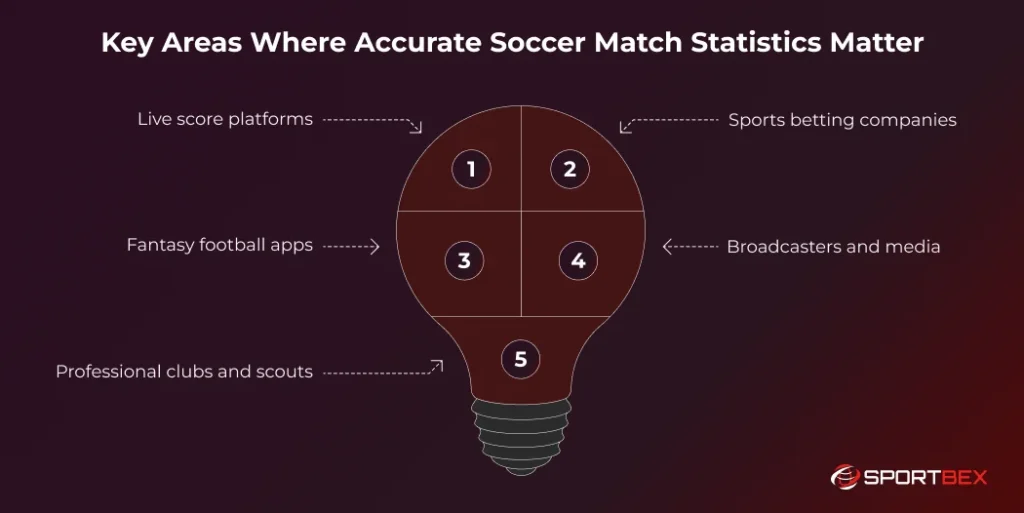
Accurate soccer match statistics are not just important for one group; they power an entire ecosystem.
Live score platforms
Live score platforms depend on accurate Soccer Match Statistics to provide real-time updates for fans worldwide. Users expect instant goal alerts, match events, and player statistics during live games and incorrect data can quickly reduce platform trust and credibility.
Sports betting companies
Sports betting companies use Soccer Player Statistics to calculate match odds and manage betting markets. A Soccer Odds API provides real-time updates and accurate betting data during live matches. A single wrong stat can affect betting results and even cause financial losses.
Fantasy football apps
Fantasy football apps assign points based on player actions during matches. Incorrect statistics can directly affect league results, rankings, and user trust in fantasy football platforms.
Broadcasters and media
Sports broadcasters and media companies use football data during live matches and analysis. Accurate statistics help commentators explain player performance, team strategies and match insights in a simple and engaging way.
Professional clubs and scouts
Professional clubs and scouts use football data to identify talent and evaluate player performance across different soccer Leagues. Inaccurate reports can lead to poor recruitment decisions that may cost clubs millions of dollars and affect long-term team development.
How Inaccurate Soccer Statistics Create Problems
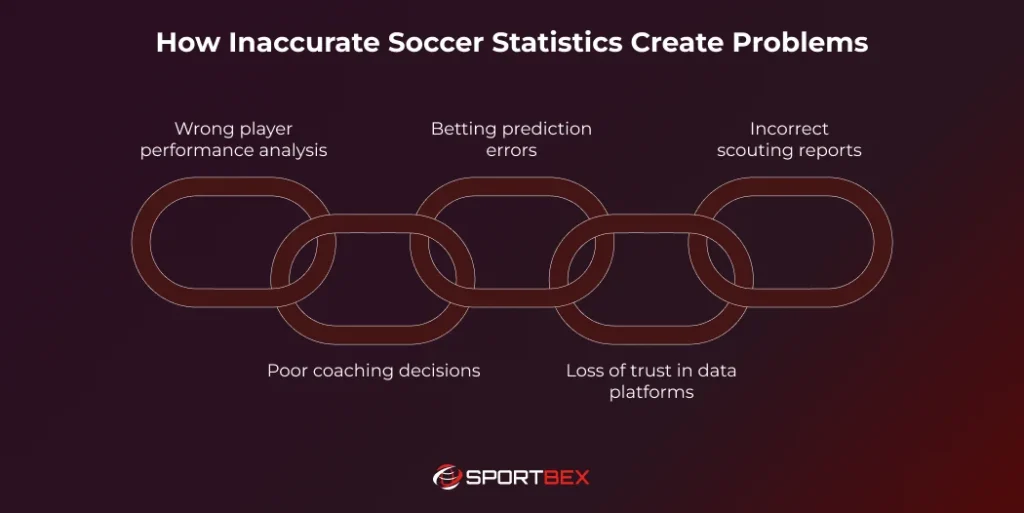
Inaccurate football data can create serious problems for clubs, analysts, betting platforms, and fans.
Wrong player performance analysis
Incorrect football statistics can create a false image of a player’s actual performance. Wrong passing, defensive, or attacking data may lead coaches and analysts to misunderstand a player’s contribution during the match.
Poor coaching decisions
Coaches studying incorrect statistics may use the wrong tactics for upcoming matches, which can negatively affect team performance on the field.
Betting prediction errors
Betting companies and prediction platforms rely heavily on soccer player statistics. If the underlying data is flawed, their models can produce unreliable results and reduce user trust.
Loss of trust in data platforms
Platforms that repeatedly show incorrect stats lose users quickly. In a competitive market, one major data error can damage a brand’s reputation permanently.
Incorrect scouting reports
Scouts comparing players with some of the Greatest Soccer Players in football history need accurate historical data to evaluate talent fairly. Incorrect reports can cause clubs to miss future superstars or make expensive transfer mistakes.
Challenges in Maintaining Accurate Soccer Data
Even with the best systems in place, keeping soccer player statistics accurate is not easy. The sheer volume of matches played globally every week means there is always a risk of errors slipping through.
Match officials sometimes make borderline calls, like whether a shot was on target or an attempt was blocked. These judgment calls can vary between different match reporters covering the same game.
Some of the world’s most prestigious games take place in the Biggest Football Stadiums, where large crowds and complex camera angles can occasionally cause tracking systems to misread player actions on the pitch.
Delivering correct stats on time while also verifying them is a constant challenge for every data provider in the industry.
Conclusion
Soccer Player Statistics are far more than just numbers on a screen. They help coaches, scouts, broadcasters, betting companies and fans make important decisions every day.
Advanced tracking systems, AI tools, and human verification processes continue to improve football data accuracy across the industry. Reliable football statistics help teams analyze performance, improve strategies and provide better experiences for fans worldwide.
As football becomes more technology-driven, accurate data will continue to play a major role in the sport. Reliable statistics are not just important for analysis. They also help maintain trust and integrity across the entire football industry.
All Your Soccer Data in One Place
Build your platform on reliable data with our 99.9% uptime guarantee
Frequently Asked Questions
Accuracy is important in football because teams, coaches, analysts, and betting platforms rely on correct statistics to make decisions, analyze performance, and improve match strategies.
Football teams use data analytics to study player performance, improve tactics, analyze opponents, track fitness levels, and make smarter coaching decisions.
Major challenges in soccer include maintaining accurate data, preventing injuries, improving tactics, handling pressure, and making fast decisions during matches.
The 80/20 rule in soccer suggests that a small number of actions, players, or moments often create most of the match impact, such as goals, chances, or key passes.
Statistics in soccer are performance data points such as goals, assists, passes, tackles, possession, saves, and player movement collected during football matches.
Recent Blog



How to build a low-latency live sports streaming app using APIs
September 9, 2026
 12 min

Cricket API Uptime & Availability: What Developers Should Know
August 27, 2026
13 min
Track Matches, Goals, and Stats Instantly with Our Live Soccer API
API Free Trial