
The sports betting industry moves fast, and few sports require quicker updates than tennis. A single serve or quick volley can instantly shift match momentum and change the live market. For in-play betting platforms, even a one-second delay can lead to outdated Tennis Odds, financial risk and reduced user trust.
To keep up with this fast moving environment, operators need reliable technology that can process and transmit data in real time. This is where a tennis odds API, a reliable Tennis Data API, and a well structured REST API for tennis odds play a critical role, ensuring users always see accurate, up-to-date information on their screens.
In this guide, we explore Low-Latency Tennis Odds Delivery Using REST API Systems, explaining how these frameworks work, why tennis odds latency matters, and how they can be optimized for peak performance.
What Are Tennis Odds with Low-Latency Systems
Tennis Odds represent the probability and payout values for different match outcomes, such as match winner, set winner, and live point-by-point betting markets. In a low-latency environment, these values are updated within milliseconds after every key on court event. This ensures users always receive the latest tennis market movement and accurate live betting information.
Low-latency systems offer several important advantages:
- instant odds updates after every serve and break point
- Better live betting accuracy
- improved user trust and engagement
- lower risk of stale odds
- faster response during major tournaments
If you are exploring a complete tennis API Guide, reducing delays in live updates should be a top priority. When comparing tennis API providers, response speed often becomes the deciding factor. A reliable tennis data API ensures smooth performance, while a strong REST API for tennis odds supports fast and consistent delivery.
How REST APIs Deliver Tennis Odds in Real-Time
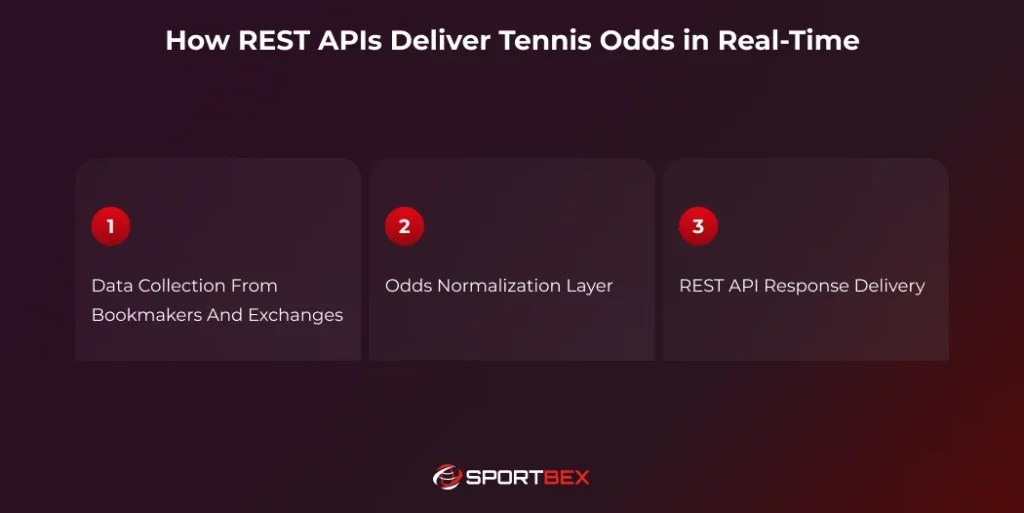
A REST API for tennis odds acts as the bridge between raw data sources and the betting platform. Developers often rely on a fast tennis match update API to keep applications synchronized with live events.
Data Collection from Bookmakers and Exchanges
The first step in real-time odds delivery is collecting live data from bookmakers, betting exchanges and official sports feeds. Every serve, break point and score change is captured instantly from trusted data sources. This ensures that Tennis Odds reflect the match’s live state without delay.
Odds Normalization Layer
Once the raw data is received, it passes through an odds normalization layer. This stage converts different formats from multiple providers into one consistent structure. A clean format helps the tennis data API deliver reliable and accurate updates across all betting platforms.
REST API Response Delivery
The normalized data is delivered to the client. A REST API for tennis odds sends lightweight JSON responses that are easy to parse. This is where API Integration for Tennis Match Statistics becomes especially valuable, as it allows real-time updates to reach the end user without delay.
Best Practices to Reduce Tennis Odds API Latency
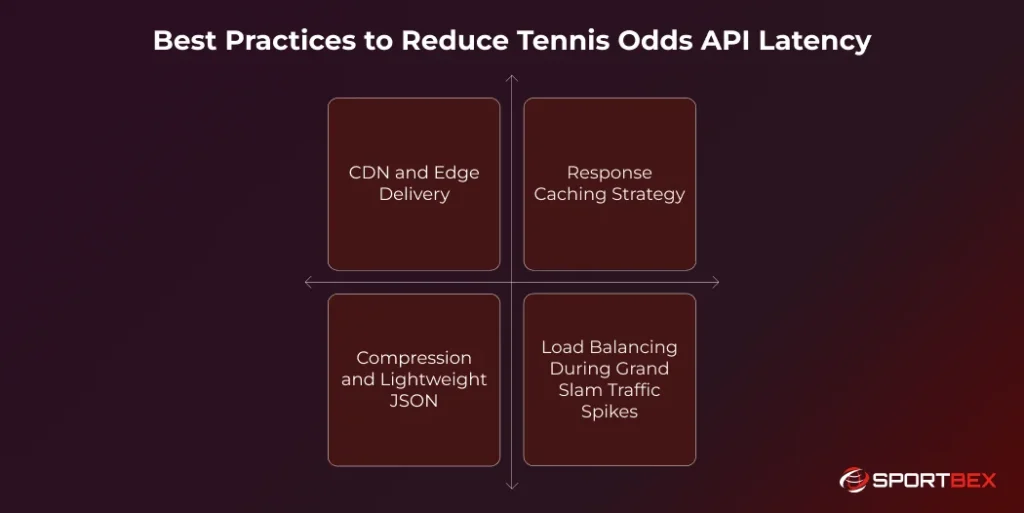
Reducing tennis odds latency requires a combination of smart architecture and efficient coding. If you want to optimize your tennis analytics and integrate a powerful tennis betting odds API, follow these best practices.
CDN and Edge Delivery
Using a CDN helps deliver data from the server closest to the user’s location. This significantly reduces the time required for requests and responses to travel across the network.
For live tennis betting, even milliseconds matter. Edge delivery ensures faster access to updated Tennis Odds, especially during global tournaments with high traffic.
Live, Point-by-Point Tennis Data
Deliver every serve, break-point, and match-point as it happens on the court.
Response Caching Strategy
Not all data changes every second during a live match. Static information such as player names, tournament names and venue details can be cached to reduce repeated server requests.
By caching fixed data, the tennis odds API only needs to refresh live odds values. This improves response speed and reduces unnecessary server load.
Compression and Lightweight JSON
API responses should always be lightweight for faster transmission. Using compressed formats such as GZIP or Brotli reduces payload size and improves speed.
A well structured JSON response also helps front end applications parse updates quickly. This directly supports lower tennis odds latency in live betting environments.
Load Balancing During Grand Slam Traffic Spikes
Major events like Wimbledon and the US Open can create massive traffic spikes. Load balancing distributes requests across multiple servers to prevent downtime.
This ensures stable performance even when thousands of users request live updates at the same time. It is essential for maintaining a reliable REST API for tennis odds.
Benefits of Using Low-Latency REST APIs for Tennis Odds
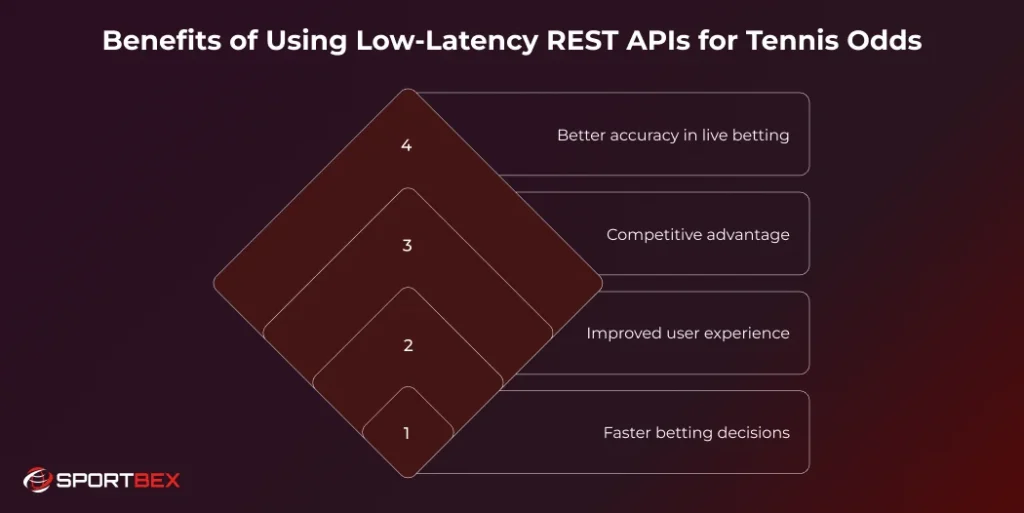
Choosing to integrate live tennis odds into platform architecture using a low-latency setup offers massive benefits for both operators and users.
Faster betting decisions
Bettors rely on split second decisions during live matches, where every point can instantly change the market. By providing accurate tennis betting odds, users can place wagers before the next serve begins. This improves betting confidence and remains one of the most important use cases of tennis betting API solutions for modern sportsbooks.
Improved user experience
A slow platform can quickly reduce user trust and overall engagement. When users can track tennis odds movement in real time, they feel more confident about the platform’s accuracy and reliability. A responsive tennis live odds API helps improve retention and keeps users active throughout the match.
Competitive advantage
Platforms that deliver faster updates gain a strong edge over competitors in the live betting market. Speed plays a major role in improving user trust and bettor satisfaction. Understanding Why Live Tennis Odds Matter clearly shows why low latency should be a core business priority.
Better accuracy in live betting
Live betting depends heavily on precision and instant market reflection. A robust ATP and WTA tennis API ensures that displayed Tennis Odds accurately match the live state of the match at every point. This helps reduce risks for sportsbooks and improves fairness for users.
Why Low Latency Matters for Live Tennis Odds
Tennis is a fast moving sport where momentum can change within seconds. There are many factors affecting tennis odds, including serve breaks, player injuries, and sudden weather changes. Even a slight delay in market updates can affect betting accuracy and user trust.
If a platform’s tennis odds API lags, users may place bets on outdated values. To maintain fairness, operators must compare live tennis odds with real-time match events. Reliable live tennis odds tracking helps improve confidence and overall platform credibility.
How Sportbex Provides the Right REST API for Tennis Odds
Sportbex is built to meet the growing demands of modern sports betting platforms, especially where live match speed and data accuracy are critical. If you need to monitor live tennis odds movement, it provides a highly optimized infrastructure that supports fast, reliable, and uninterrupted data delivery throughout the match.
The platform is specifically designed to reduce tennis odds latency during live events, ensuring that updates reach users without noticeable delay. With a scalable REST API for tennis odds, developers can build secure, high performing betting applications that improve user trust and deliver a better live betting experience.
Conclusion
In the fast paced world of sports betting, speed is everything, especially in live tennis where every second can influence the market. Fast and accurate Tennis Odds form the foundation of any successful betting application and help users make informed decisions during every point of the match.
A strong technical infrastructure is equally important for maintaining platform trust and performance. By prioritizing efficient data delivery and stable server architecture, developers can create systems that improve user engagement and support sportsbook profitability over the long term.
A reliable tennis odds API is more than just a technical solution; it is a strategic investment for future growth. With faster updates and consistent performance, platforms can deliver a fair, seamless, and high quality live betting experience for every user. For platforms expanding into multi-sport coverage, integrating a tennis odds API for sportsbooks can further strengthen real-time data capabilities and overall performance.
Build Your Ultimate Tennis Platform
Get all the live scores and stats you need with our developer-friendly API.
Frequently Asked Questions
It is an interface that uses HTTP requests to quickly retrieve and deliver Tennis Odds and match data in a structured format, usually JSON.
High latency means data arrives late. In live tennis, where points are scored quickly, late data can lead to unfair bets and financial losses for sportsbooks.
JSON is lightweight and easy for web and mobile applications to parse, which helps reduce overall latency when delivering rapid odds updates.
A low-latency API is designed for speed, using efficient data protocols, optimized server infrastructure and content delivery networks (CDNs) to deliver data with minimal delay.
Yes, a low-latency REST API is ideal for building live betting features, as it provides the real-time data needed to offer odds that reflect the current state of the match.
Recent Blog



How to build a low-latency live sports streaming app using APIs
September 9, 2026
 12 min

Cricket API Uptime & Availability: What Developers Should Know
August 27, 2026
13 min
Deliver Live Tennis Scores and Stats Ready for Your Users Fast!
API Free Trial